
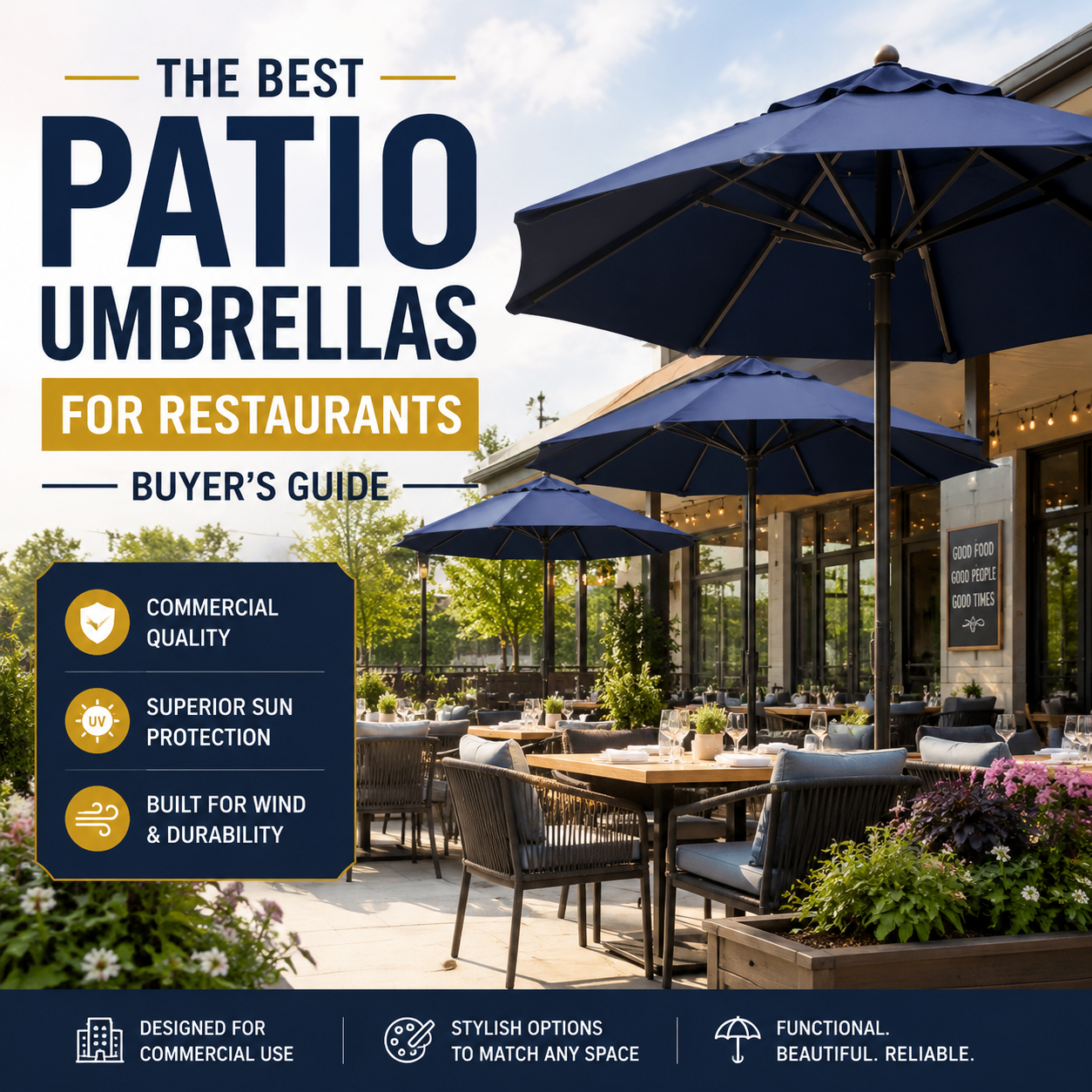
Choosing the right outdoor shade is one of the fastest ways to improve a restaurant patio. Guests don’t just notice comfort—they decide whether they’ll stay based on heat, glare, and the overall look of the space. The right choice of commercial patio umbrellas for restaurant use can make your dining area feel inviting in midday sun and more pleasant during light drizzle, while still looking professional for every service.
This buyer’s guide covers what makes an umbrella “restaurant-ready,” how to select the right size and style, and how to plan for wind, maintenance, and day-to-day operation. If you want umbrellas that perform reliably through busy seasons, you’ll find practical recommendations below.
For restaurants comparing outdoor shade options, a well-chosen umbrella can do more than block sun. It can help define seating zones, support a cleaner patio layout, and create a more polished guest experience from the moment customers sit down. In many cases, commercial patio umbrellas are one of the most cost-effective upgrades a hospitality business can make.
- Why Restaurants Need Commercial Patio Umbrellas
- What Makes a Patio Umbrella Suitable for Restaurant Use
- Choosing the Right Size
- Center-Post vs. Cantilever Umbrellas
- Material Matters
- Wind Resistance and Stability
- Matching Umbrellas to Restaurant Design
- How Many Umbrellas Does a Restaurant Need?
- Common Questions About Patio Umbrellas for Restaurant Use
- Maintenance Tips for Long-Term Use
- Buying Tips for Restaurant Owners
- Planning for Day-Part Service and Guest Flow
- Shade, Comfort, and Guest Experience
- Final Checklist Before You Buy
Why Restaurants Need Commercial Patio Umbrellas
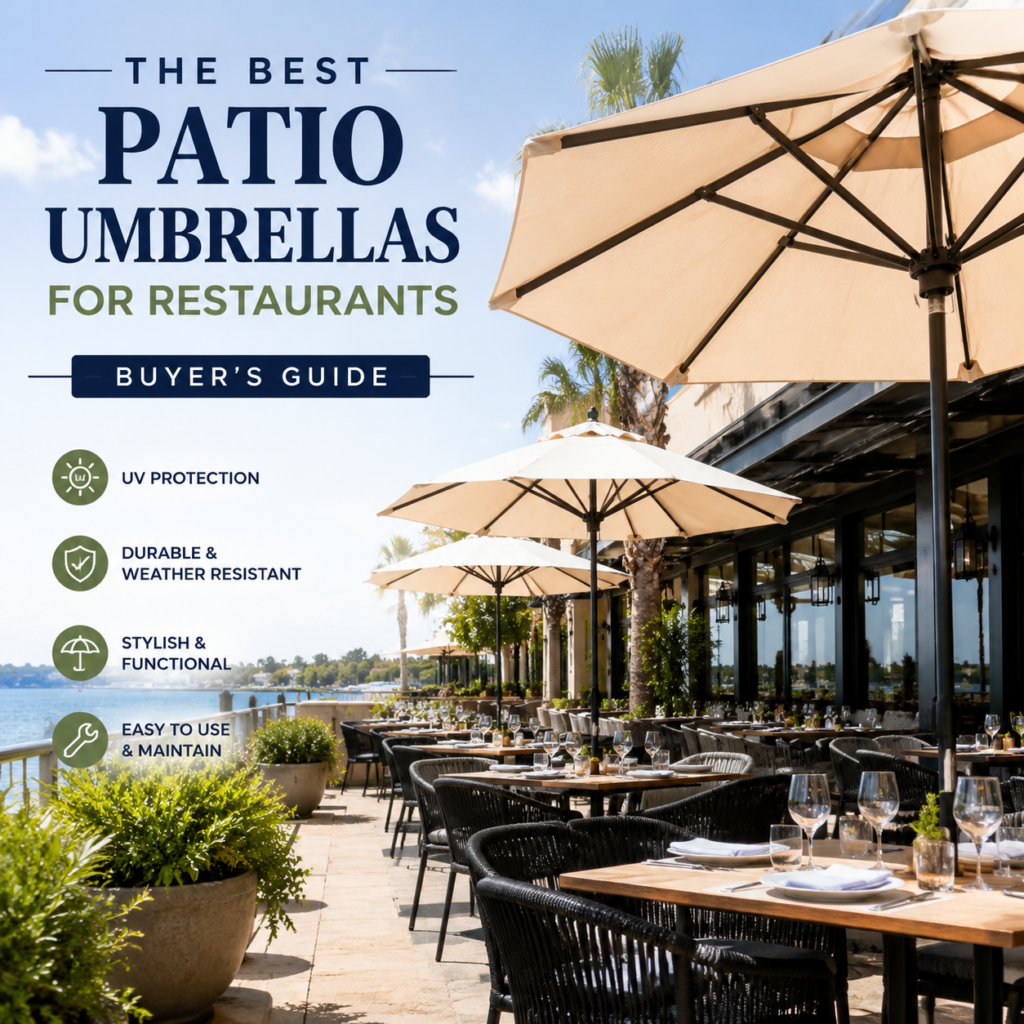
A restaurant patio is profitable only when guests want to use it. Sun and glare can quickly turn an outdoor dining area into a place where guests leave early, order less, or avoid the patio entirely. Temperature comfort and visual comfort work together: even if the air is warm, well-designed shade can reduce perceived heat and make tables feel usable for longer.
Commercial Patio Umbrellas help restaurants with:
- Improving guest comfort during lunch and dinner service
- Increasing usable seating capacity in high-sun areas
- Enhancing the visual experience of the patio
- Supporting outdoor dining in warm climates year after year
- Providing limited protection from light drizzle and harsh glare
Just as important, commercial patio umbrellas are built to handle real service conditions—frequent open/close cycles, frequent movement by staff, constant foot traffic nearby, and daily exposure to sun, wind, and moisture.
In a busy hospitality setting, durability is not optional. A weak shade solution can interrupt service, distract staff, and create inconsistent comfort for guests seated at nearby tables. That’s why restaurants often focus on commercial patio umbrellas rather than residential models when planning outdoor dining spaces.
What Makes a Patio Umbrella Suitable for Restaurant Use
Not every patio umbrella is designed for restaurant operations. Many residential models look attractive, but they often fall behind on stability, fabric fade resistance, and the quality of moving parts. The difference is in how the umbrella is engineered and how easy it is to use correctly every day.
When selecting commercial patio umbrellas for restaurant use, look for these practical features:
- Heavy-duty frame materials such as aluminum or fiberglass ribs
- Fade-resistant, weather-resistant canopy fabric
- Easy operation (crank lift, tilt systems, or smooth pulley mechanisms)
- Stable bases or mounting options designed for outdoor environments
- Commercial-grade hardware for hinges, ribs, and adjustment points
- Replacement parts availability so you can repair rather than fully replace
The best match depends on your service style (how often umbrellas open during the day), local wind exposure, and whether umbrellas stay in a fixed position or get adjusted frequently. Restaurants that use shade all day often need stronger hardware than venues that only open umbrellas for limited lunch service.
A practical purchase also accounts for staff training. If a team can open, close, and secure the umbrella easily, it is more likely to be used correctly and maintained properly. That makes the system more reliable across seasons.
Choosing the Right Size
Size affects both comfort and efficiency. A canopy that’s too small can leave guests partially exposed, while a canopy that’s too large can crowd circulation paths or block nearby sightlines and service movements.
When you’re evaluating commercial patio umbrellas for restaurant seating, compare canopy dimensions to your table sizes and the layout of your patio. Common size ranges include:
- 6 to 7.5 feet: Best for smaller tables or compact seating areas
- 8 to 9 feet: A strong fit for many standard restaurant tables
- 10 to 13 feet: Helpful for larger dining sections and seating clusters
- 15 feet and above: Used for wide coverage over broader zones or premium patio sections
A helpful rule of thumb is to aim for canopy coverage that extends at least a couple of feet beyond the tabletop edge where possible. That extra margin helps reduce direct sun on guests’ shoulders and faces and allows for minor umbrella adjustments throughout the day.
In tight patios, you may get better results with side-post or cantilever designs because they minimize the amount of pole interference in walkway areas. In open layouts, larger round or square canopies can cover multiple chairs without making the room feel crowded.
It also helps to measure the exact radius of shade at different times of day. Morning light, afternoon glare, and late-day low sun can all change where the most useful coverage falls. Choosing the right size is easier when you know which tables need protection during peak seating windows.
Center-Post vs. Cantilever Umbrellas
Restaurant patios typically use two main umbrella styles: center-post and cantilever. Both can work, but the right selection depends on layout, table placement, and how guests move through the space.
Center-post umbrellas
Center-post umbrellas have a main pole that runs through the middle of the canopy and typically through an umbrella hole in the table.
Best for:
- Standard table setups
- Smaller patios with simpler layouts
- Budget-conscious installations
- Stable, straightforward seating arrangements
Advantages:
- Simple design and familiar operation
- Easy placement with table umbrella holes
- Often more affordable than cantilever setups
- Good coverage for individual tables
Limitations:
- The pole takes up space in the center of the table
- Less flexible for covering wide open seating areas
Cantilever umbrellas
Cantilever umbrellas (offset umbrellas) have a side-mounted pole with a canopy that overhangs the seating area. This design helps you shade guests without placing a pole directly in the center.
Best for:
- Lounge seating areas
- Flexible patio layouts
- Large open dining zones
- Tables or setups without umbrella holes
Advantages:
- Frees up tabletop space for seating convenience
- Can cover more seating configurations without pole obstruction
- Often creates a more modern, “designed” look
- Allows repositioning to better follow sun angles
Limitations:
- Can be more expensive
- Requires a very stable base for safe operation
- May require additional wind-management strategies
Many restaurants combine both styles: center-post units for fixed standard tables and cantilever options for larger flexible areas.
If your patio layout benefits from side coverage and you’re comparing designs, review the cantilever patio umbrella buying guide for 2026 for guidance on sizing, base considerations, and placement.
Material Matters
For restaurants, umbrella performance is strongly influenced by frame construction and canopy fabric. Materials determine fade resistance, how well the umbrella holds up to repeated use, and how effectively it manages typical outdoor conditions.
Frame materials
Aluminum is a common choice for commercial outdoor shade. It’s lightweight, resists corrosion, and holds up under frequent operation. Powder-coated aluminum adds additional protection against wear and weather.
Wood can deliver a classic appearance, but it usually requires more upkeep. In wet or humid climates, the right protective care matters to prevent deterioration and keep the frame stable.
Fiberglass is widely used in commercial umbrella ribs. It can flex under stress and recover more smoothly than rigid materials—an important quality when umbrellas face gusty conditions.
Canopy fabrics
A quality canopy balances UV resistance, weather resistance, and long-term color stability. Many commercial canopies use solution-dyed acrylic or performance polyester blends, selected to maintain appearance through regular sun exposure.
Focus on canopy characteristics like:
- Fade resistance and stable color over time
- Water resistance for normal outdoor conditions
- Ease of cleaning so daily buildup doesn’t become permanent
- Mold and mildew resistance where appropriate
- Strong stitching and reinforced stress points
In practice, the “best” commercial patio umbrellas for restaurant seating are those that provide real shade comfort—not just a good look from a distance. A thick, well-constructed canopy typically reduces glare and improves guest comfort.
If you want a broader overview of umbrella styles and outdoor performance factors, the best patio umbrella guide for lasting shade can help compare everyday features that also matter in restaurant settings.
Wind Resistance and Stability
Wind is one of the biggest threats to outdoor umbrellas in a restaurant setting. Even a beautiful umbrella isn’t useful if it becomes unstable in a breeze or creates a safety concern. Stability should be treated as a core buying criterion, not an afterthought.
Better stability often comes from a combination of design choices:
- Heavy, properly weighted bases
- In-ground mounting options when appropriate
- Table anchoring for center-post units
- Ventilated canopy tops that reduce lift
- Strong pole and rib construction
Ventilated canopies allow some air to pass through, which reduces stress on the frame and can help limit “umbrella lift” during breezy conditions. This matters most for open-air patios and locations that experience gusts.
Operational safety matters too. Even the best-built commercial patio umbrellas for restaurants should be closed during severe wind, storms, or high-risk weather patterns. Staff should be trained to follow a consistent routine so umbrellas remain secure and guests stay safe.
For coastal, rooftop, and corner-lot dining areas, consider the local wind profile before choosing any size. A larger canopy creates more shade, but it also catches more air. In those environments, a slightly smaller umbrella with better hardware may perform more reliably over time.
Matching Umbrellas to Restaurant Design
Guests experience patios as a whole atmosphere, so appearance plays an important role. Commercial patio umbrellas should match your brand colors, coordinate with cushions and tableware, and complement the existing outdoor architecture. A mismatch—such as an off-color canopy or an inconsistent fabric texture—can make the entire patio feel less intentional.
Use these design guidelines:
- Neutral colors create a clean, versatile look
- Darker tones can reduce harsh glare and add elegance
- Brighter colors can fit casual or coastal concepts
- Wood frames often suit classic or traditional environments
- Sleek aluminum frames fit modern settings
When restaurants use consistent styling across the patio—through matching canopy colors, similar tilt behavior, and compatible frame finishes—the outdoor area feels cohesive and more guest-friendly.
Design also affects perceived value. A patio that looks coordinated often feels more premium, which can support stronger guest satisfaction and make outdoor seating feel like part of the dining experience rather than an afterthought.
How Many Umbrellas Does a Restaurant Need?
How many umbrellas you need depends on patio size, table arrangement, sun exposure, and your shade schedule. Some restaurants need shade only during late morning and early afternoon, while others want coverage for the entire lunch window and part of dinner service.
Before purchasing, map your patio and identify which tables receive direct sun at peak times. Then decide how much coverage you want per table: partial shade may be enough in some locations, but more complete coverage can improve guest satisfaction in high-sun climates.
Consider helpful questions like:
- Which tables receive direct sun during peak hours?
- Are there open areas that would benefit from broader coverage?
- Do umbrellas need to cover single tables or shared seating zones?
- Will guests use the patio for lunch only, or lunch and dinner?
For smaller patios with many tables, multiple umbrellas can be more efficient. For larger zones, fewer larger cantilever models may shade more seating while reducing the number of bases and obstacles. Many restaurants choose a blended approach to balance appearance, coverage, and workflow.
If you’re outfitting multiple locations or planning a larger order, you may also want to compare options through patio umbrellas wholesale: best prices for bulk buyers to help simplify budgeting.
It can also help to think in terms of seating turnover. If umbrellas keep guests comfortable for longer meals, the patio may feel more relaxed and more inviting, even when traffic is steady. That comfort can support better reviews, repeat visits, and stronger use of outdoor tables.
Common Questions About Patio Umbrellas for Restaurant Use
What size patio umbrella is best for a restaurant table?
For many standard restaurant tables, an 8- to 9-foot canopy is a strong starting point. If your tables are larger, if you’re covering clustered seating, or if your climate has intense sun, you may prefer 10 feet or more. The goal is to reduce direct glare and provide enough shade to keep guests comfortable through the meal.
Are commercial patio umbrellas worth the cost?
In most cases, yes—especially if your restaurant uses outdoor seating regularly. Commercial models are usually designed for daily operation, better fade resistance, and longer life under weather exposure. That typically means fewer replacements and less downtime compared with lighter-duty umbrellas.
Can patio umbrellas stay outside all year?
They can, but overall lifespan depends on maintenance and weather management. Closing the umbrella during bad conditions and protecting canopies during severe seasonal weather can reduce fabric wear. Cleaning and periodic inspections also help prevent small issues—like worn hardware—from becoming bigger problems.
How do you keep restaurant umbrellas from blowing over?
Start with a properly weighted base and secure anchoring that matches your patio setup. Choose umbrellas designed for wind resistance, including options with ventilated canopy tops and sturdy pole and rib construction. In severe weather, close umbrellas to reduce stress on the frame and prevent lift.
What is the best fabric for restaurant umbrella canopies?
Solution-dyed acrylic is often a top choice because it tends to resist fading and performs well in outdoor UV exposure. The best fabric still depends on your local weather and the cleaning routine you can realistically maintain.
How do LED and weatherproof lighting options affect umbrella choice?
If your patio supports evening dining, lighting can create ambiance and improve guest visibility. However, restaurant safety still comes first: look for designs intended for outdoor use and confirm that any lighting features are protected from moisture and designed for long-term operation. If you want to explore lighting-ready models, see outdoor umbrella with LED: best waterproof guide for day and night use.
One more operational question worth asking is whether staff can manage the umbrella quickly during service. If setup takes too long, the shade solution can become a burden instead of a benefit. The best restaurant choices are the ones that fit naturally into the flow of a shift.
Maintenance Tips for Long-Term Use
Even high-quality commercial patio umbrellas for restaurant use require consistent care. A simple maintenance routine helps umbrellas look professional and remain functional season after season. Because restaurants operate on schedules, the best approach is predictable: inspect on a routine basis and clean after heavy use or storm seasons.
Basic care can include:
- Brushing off dirt and debris before it settles into fabric
- Washing the canopy using mild soap and water
- Checking for loose hardware and worn components
- Inspecting the frame for rust, cracks, or bent ribs
- Closing umbrellas when not in use to reduce unnecessary exposure
- Covering or storing umbrellas during extreme weather
A structured maintenance routine can extend the service life of commercial patio umbrellas and reduce replacement and repair costs over time.
Restaurants that treat shade equipment as part of their hospitality standards usually get better long-term results. Clean fabric, working mechanisms, and secure bases all contribute to a patio that feels cared for and dependable.
For more general safety and workplace resource guidance related to equipment use and inspections, you can reference the U.S. Department of Labor OSHA general resources when setting policies for outdoor equipment safety planning.
Buying Tips for Restaurant Owners
When shopping for commercial patio umbrellas for restaurant use, focus on value and performance—not only purchase price. Cheaper umbrellas may wear out faster, fail under wind stress, or require repairs more often. Over a season or multiple seasons, those issues can cost more in labor, downtime, and replacements.
Before buying, evaluate:
- Frame strength and rib construction quality
- Canopy fabric quality and UV performance
- Replacement part availability (ribs, fabric, hardware)
- Warranty coverage and what’s included
- Base compatibility with your patio layout and anchoring method
- Ease of opening and closing for staff
Also consider day-to-day operations. Umbrellas should not obstruct servers in busy walkways, create hazards near chair legs, or require awkward handling that slows service. If your team will adjust umbrellas multiple times per shift, smooth operation becomes part of the value.
Finally, think ahead about seasonal use and guest experience. Restaurants that want evening dining comfort often prioritize features that support nighttime visibility and a steady ambiance—while still protecting equipment from weather exposure.
Buying the right shade solution early can reduce later headaches. When a patio is set up correctly, the result is smoother service, easier table turns, and a more comfortable environment that encourages guests to linger in a good way.
Planning for Day-Part Service and Guest Flow
Not every restaurant uses outdoor seating the same way throughout the day. Some patios are busiest at lunch, while others become more valuable at sunset or during weekend brunch. That means the ideal umbrella setup often depends on how your business uses the space hour by hour.
For lunch service, direct overhead shade and glare reduction may be the top priority. For dinner service, the focus can shift toward atmosphere, sightline comfort, and lighting compatibility. In both cases, commercial patio umbrellas should help staff work efficiently without blocking servers, host stands, or bus paths.
It’s also worth planning for simple guest flow:
- Leave enough room for chairs to slide out without hitting umbrella bases
- Keep walkways clear for trays and service carts
- Position umbrellas so they do not crowd neighboring tables
- Make sure open canopies do not interfere with door swings or awnings
When outdoor shade is planned around service flow, the patio feels more comfortable and less improvised. That can make a big difference in how guests experience the space during busy periods.
Shade, Comfort, and Guest Experience
Shade affects more than temperature. It shapes how long guests stay, how relaxed they feel, and how they perceive the restaurant overall. When a patio feels too hot or visually harsh, people often finish meals faster or choose indoor seating instead. When the space feels balanced and calm, guests are more likely to enjoy dessert, another drink, or a longer conversation.
That’s one reason commercial patio umbrellas are often considered part of the guest experience rather than simple accessories. They influence first impressions, comfort during the meal, and the visual identity of the patio.
Small details matter here:
- Canopy color can soften the mood of the space
- Frame finish can reinforce your restaurant’s style
- Shade coverage can make guests feel cared for
- Reliable opening and closing can keep service smooth
If your outdoor dining area is already attractive, the right umbrella setup can help it feel complete. If the space is underused, better shade may be the improvement that makes guests choose it more often.
For some restaurants, the best result comes from pairing shade with a broader outdoor seating strategy. The umbrella becomes part of a larger plan that includes furniture layout, lighting, and easy cleanup—all of which contribute to a better patio experience.
Final Checklist Before You Buy
Before purchasing commercial patio umbrellas for restaurant seating, use this quick checklist to confirm you’ve covered the essentials:
- Have you measured the patio and table spacing accurately?
- Do you know which tables need shade at peak sun times?
- Have you chosen between center-post and cantilever styles?
- Is the frame material durable enough for your climate?
- Does the canopy fabric balance appearance and weather resistance?
- Have you planned for wind, storage, and seasonal maintenance?
- Will staff be able to open, close, and secure the umbrella easily?
- Does the color and style fit your restaurant brand?
Answering these questions before you buy makes the purchase easier and helps avoid costly mismatches later. A well-planned umbrella setup can improve comfort, reduce operational friction, and support outdoor dining throughout the season.
The Bottom Line
The best commercial patio umbrellas for restaurant spaces combine durable materials, practical shade coverage, stable design, and styles that complement your brand. The right choice improves comfort, increases the time guests spend outdoors, and strengthens the overall outdoor dining experience.
Use your local weather patterns, patio layout, and operating routine to guide the selection. When you match the canopy size, frame strength, and wind performance to real restaurant conditions, your umbrellas become a reliable part of the guest journey—not a seasonal problem.
If your restaurant is still comparing options, start with the tables that need the most protection and build outward from there. That approach keeps the purchase practical while making sure the patio delivers real comfort where it matters most.



Add comment