
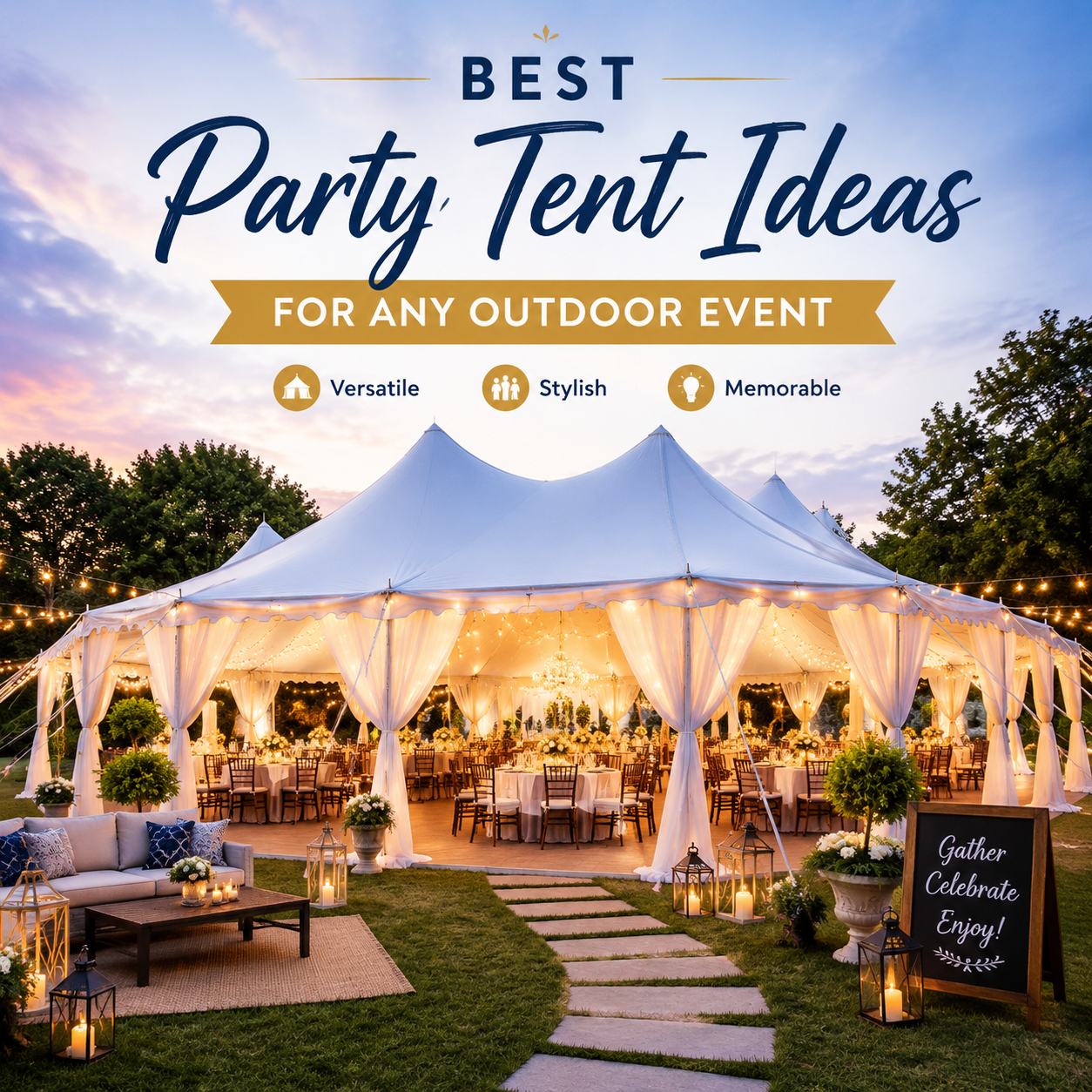
An outdoor event tent is one of the most practical ways to create shade, shelter, and a clear gathering space for celebrations of all kinds. Whether you’re planning a birthday, wedding, graduation party, corporate gathering, family reunion, or seasonal event, the right party tent helps protect guests from sun, rain, or wind while keeping everything organized and comfortable.
This guide explains what an outdoor event tent is, the main types available, how to choose the right size, which features matter most, and the questions people often ask before renting or buying.
Table of Contents
- What Is a Party Tent?
- Why Use a Party Tent?
- Types of Party Tents
- How to Choose the Right Party Tent
- Party Tent Sizes and Seating Capacity
- Party Tent Accessories and Add-Ons
- Renting vs Buying a Party Tent
- How to Set Up a Party Tent Safely
- Do You Need a Permit for a Party Tent?
- How to Make a Party Tent More Comfortable
- Common Questions About Party Tents
- Final Thoughts
What Is a Party Tent?
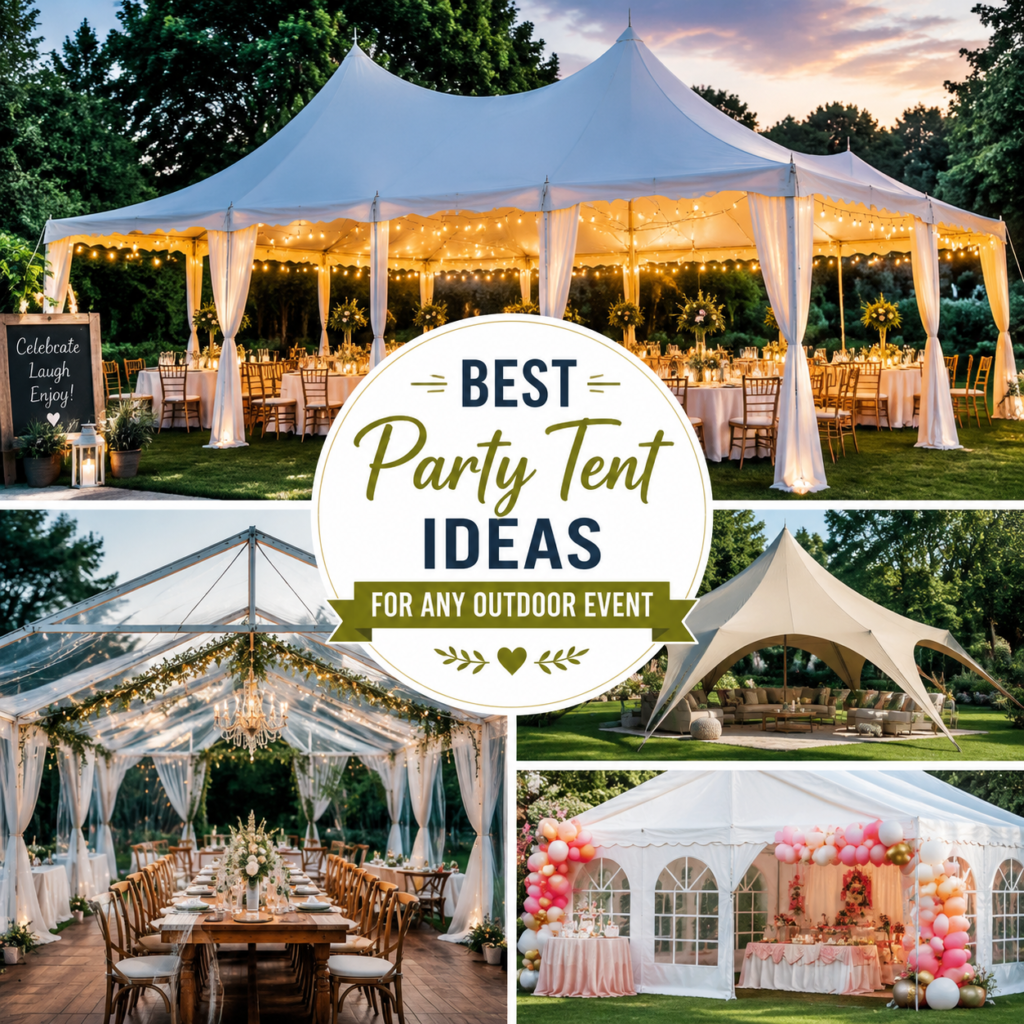
A party tent is a portable event shelter designed for short-term or semi-permanent use. Unlike camping tents, a party tent is built to hold groups of people, tables, chairs, food service areas, and sometimes dance floors or staging. These structures are commonly used in backyards, gardens, parking lots, lawns, and other outdoor spaces.
Party tents come in many styles and sizes, from simple pop-up canopies for small gatherings to large frame tents and pole tents for weddings or corporate events. An outdoor event tent can be as simple as a shaded cover for guests or as elaborate as a fully decorated venue.
Why Use a Party Tent?
People choose an outdoor event tent (often called a party tent) for several practical reasons:
- Weather protection: Keeps guests protected from sun, rain, light wind, and sometimes cooler temperatures.
- More usable space: Creates an organized event area outdoors.
- Flexible setup: Can be installed in many locations where indoor space is limited.
- Event atmosphere: Helps define the celebration area and can be decorated to match the theme.
- Guest comfort: Provides shade and shelter, making the event more enjoyable.
For many outdoor events, a party tent is not just a convenience—it is essential. If you are comparing layouts and styles, the Party Tent Guide: Choose the Best Outdoor Event Shelter can help you narrow down the best option.
Types of Party Tents
The best party tent depends on the event size, location, and weather conditions. Here are the most common types.
1. Pop-Up Canopy Tent
A pop-up canopy tent is one of the easiest options to set up. It has a lightweight frame and a simple roof cover, making it ideal for small gatherings, vendor booths, backyard parties, and short events. For casual shade at a simple outdoor event tent setup, this style is often the most convenient.
Best for:
- Small parties
- Casual gatherings
- Shade at daytime events
- Quick setup and takedown
Pros:
- Easy to transport
- Fast assembly
- Affordable
Cons:
- Not ideal for large groups
- Less stable in strong wind or heavy rain
2. Frame Tent
A frame tent uses a metal frame to support the canopy, so it does not require center poles. This makes the interior space more open and easier to arrange with tables, chairs, and decorations. A frame design is often a smart choice when you want a clean layout for an outdoor event tent.
Best for:
- Weddings
- Corporate events
- Medium to large gatherings
- Events with open floor plans
Pros:
- No center poles blocking space
- Flexible placement
- Good for formal events
Cons:
- More complex setup
- Often more expensive than smaller tents
3. Pole Tent
A pole tent is supported by center poles and tensioned fabric. These tents are often used for larger events because they create elegant peaks and a classic event look. Many planners still prefer this style of party tent for traditional outdoor celebrations.
Best for:
- Weddings
- Large outdoor celebrations
- Traditional event setups
Pros:
- Attractive appearance
- Good for large spaces
- Often cost-effective for big events
Cons:
- Center poles reduce usable space
- Usually requires staking into the ground
4. High Peak Tent
A high peak tent is a type of frame or pole tent with a tall pointed roof. It offers a stylish appearance and works well for upscale events. If presentation matters, this outdoor event tent style can make the whole space feel more polished.
Best for:
- Weddings
- Galas
- Formal outdoor events
Pros:
- Elegant look
- Better visual appeal
- Good for branding and decoration
Cons:
- May cost more than standard tents
5. Clear Top Tent
A clear top tent has a transparent roof, which allows natural light to enter and gives the event a striking look, especially at night. This style is often chosen for a memorable party tent experience with a dramatic visual effect.
Best for:
- Evening weddings
- Special events with scenic surroundings
- Decorative setups
Pros:
- Beautiful visual effect
- Lets guests see the sky
- Enhances event atmosphere
Cons:
- Can heat up in direct sun
- Requires careful cleaning and maintenance
How to Choose the Right Party Tent
Choosing an outdoor event tent starts with understanding your event needs. The main factors are size, style, location, and weather. The same party tent may be ideal for one gathering and completely wrong for another, so it helps to plan carefully.
Event Size
The number of guests is one of the most important considerations. An outdoor event tent should fit not only the guests but also tables, chairs, catering stations, entertainment, and walkways.
A rough guide:
- 10–20 guests: Small pop-up canopy or compact frame tent
- 25–50 guests: Medium frame tent or larger canopy setup
- 50–100 guests: Large frame or pole tent
- 100+ guests: Large event tent with professional setup
If you plan to include a buffet, dance floor, stage, or bar, choose a larger party tent than you think you need. A party tent that feels roomy in the planning stage often feels more comfortable once tables and guests are added.
Event Type
Different events require different tent styles.
- Birthday parties often need simple shade and seating.
- Weddings usually require more elegant tents and extra space for dining and dancing.
- Corporate events may need room for displays, presentations, or networking.
- Family reunions benefit from open layouts and easy access.
- Community events may require multiple tents or large sheltered areas.
If the event includes a catered meal or staged program, an outdoor event tent with a wider footprint and stronger structure is usually the safer choice.
Location
The surface and available space affect tent choice. Grass, asphalt, concrete, and uneven ground all require different setup methods.
Ask these questions:
- Is the ground level?
- Can the tent be staked into the ground?
- Is there enough clearance for poles, guy lines, and entrances?
- Are there nearby trees, fences, or structures?
For best results, measure the full site before you choose a party tent. It is easy to focus on the interior space and forget about edges, stakes, walkways, and access points.
Weather Conditions
Weather is a major factor in an outdoor event tent decision. If your event is during hot summer months, ventilation and shade matter. If rain is likely, you need sidewalls and proper drainage. In windy locations, you need a sturdier tent and proper anchoring.
Look for:
- Water-resistant or waterproof material
- Sidewalls for rain or wind
- Ventilation options
- Strong frame construction
- Secure anchoring systems
For helpful weather planning advice, the Ready.gov severe weather guidance is a useful reference for event safety decisions.
Budget
Party tent pricing varies widely depending on size, material, and whether you rent or buy. Smaller tents are more affordable, while large event tents with professional installation cost more.
When comparing options, consider:
- Rental or purchase cost
- Delivery and setup fees
- Accessories such as lighting, flooring, or sidewalls
- Cleaning and maintenance costs if buying
Budget planning should also include the full event experience. An outdoor event tent may seem like the main expense, but accessories often determine whether the space feels basic or comfortable.
Party Tent Sizes and Seating Capacity
Tent size should match your guest count and event layout. A party tent that is too small will feel crowded, while one that is too large may look empty.
Here is a general reference for seating:
- 10 x 10 ft: Small group, refreshments, or shade only
- 10 x 20 ft: Small party with limited seating
- 20 x 20 ft: Around 32 seated guests
- 20 x 30 ft: Around 48 seated guests
- 20 x 40 ft: Around 64 seated guests
- 30 x 60 ft: Larger events, often with multiple seating zones
These estimates can change depending on table style, aisle space, and whether other items are inside the party tent. An outdoor event tent used for dining needs more room than one used only for standing guests.
For more inspiration on layouts and design, see these Best Party Tent Ideas for Any Outdoor Event to help visualize different setups.
Party Tent Accessories and Add-Ons
An outdoor event tent becomes much more functional with the right accessories. Common add-ons include:
Sidewalls
Sidewalls help block wind, rain, and sun. Some are solid, while others have windows or clear panels.
Flooring
Flooring keeps guests comfortable and helps prevent mud or uneven ground from affecting the event.
Lighting
String lights, chandeliers, and LED lights improve visibility and create atmosphere.
Heating and Cooling
Portable heaters or fans help guests stay comfortable in changing weather.
Tables and Chairs
The party tent layout should account for table spacing and guest movement.
Decorations
Fabric drapes, florals, signage, and themed decor can transform a party tent into a polished event space.
Even a simple outdoor event tent can feel elevated when the accessories are chosen with the event theme in mind. Small details often make the biggest difference in comfort and presentation.
Renting vs Buying a Party Tent
Many people wonder whether it is better to rent or buy a party tent. The answer depends on how often you plan to use it and how quickly your outdoor event tent needs to be ready.
Renting a Party Tent
Renting is best for one-time or occasional events. It is usually easier because the rental company handles delivery, setup, and takedown.
Advantages:
- Lower upfront cost
- Professional installation
- Access to larger, higher-quality tents
Best for:
- Weddings
- Large celebrations
- One-time events
Buying a Party Tent
Buying makes sense if you host outdoor events often or need a tent for long-term use.
Advantages:
- Reusable
- Cost-effective over time
- Available whenever needed
Best for:
- Frequent entertainers
- Event planners
- Businesses and organizations
If you buy, make sure your outdoor event tent is durable, weather-resistant, and easy to maintain. A lower-cost purchase can become expensive if the materials do not last through repeated use.
Party tent planning tips for better results
A well-planned outdoor event tent setup saves time and reduces stress on event day. Before you finalize your layout, confirm where guests will enter, where food will be served, and how people will move between seating, restrooms, and activity areas.
It also helps to think through the details early. A party tent that works for a simple afternoon party may need extra lighting, flooring, or sidewalls for an evening event. If you expect changing weather, leave room in the plan for backup adjustments so you are not making last-minute decisions.
When possible, visit the site before installation and take measurements from multiple points. That way, the outdoor event tent can be placed where it will look balanced and function well. Small layout choices can have a big impact on how comfortable the finished space feels.
How to decorate a party tent for different events
Decorating helps turn a basic shelter into a memorable venue. For weddings, soft fabric, floral arrangements, and warm lighting can make an outdoor event tent feel elegant. For birthdays or family reunions, brighter colors, banners, and table accents can create a lively atmosphere.
Corporate events often work best with clean lines, brand colors, and simple signage. If the party tent is being used for a fundraiser, festival, or community celebration, keep the decor welcoming and easy to navigate. The goal is to match the look to the occasion without overcrowding the space.
Even small decorative choices can make a difference. Table linens, entrance displays, and overhead lighting can help the outdoor event tent feel intentional rather than temporary. If the event is at night, lighting becomes part of the decor as well as a practical need.
Common mistakes to avoid when choosing a party tent
One common mistake is underestimating space needs. Guests rarely fit comfortably when only seating is calculated. You also need room for walking paths, service areas, and extra features like a dance floor or buffet table.
Another mistake is ignoring the weather. An outdoor event tent that looks fine in mild conditions may not be enough if rain or wind is expected. Anchoring, sidewalls, and fabric quality all matter. It is also important not to overlook the ground surface, since a sloped or uneven area can affect stability and comfort.
Finally, some people focus only on the tent itself and forget the experience around it. Lighting, flooring, and layout planning can make an outdoor event tent feel more polished and more enjoyable for guests.
How to Set Up a Party Tent Safely
Safe setup is crucial, especially for larger party tents or events in unpredictable weather.
Important safety tips:
- Read the manufacturer’s instructions carefully
- Use proper anchoring for the surface type
- Avoid placing the outdoor event tent under hazardous tree limbs or power lines
- Check weather forecasts before installation
- Keep open flames and heat sources away from tent fabric
- Ensure exits are clear and accessible
- Follow local permit or fire code requirements
For large tents, professional installation is often the safest choice. A properly secured outdoor event tent is far more reliable than one assembled quickly without checking the site conditions first.
Do You Need a Permit for a Party Tent?
In some locations, yes. Permit requirements depend on the size of the tent, how long it will stay up, and local building or fire codes.
You may need a permit if:
- The party tent is large
- The event is public
- The outdoor event tent includes electrical equipment, cooking, or heating
- The tent will be installed for an extended period
Before planning your event, check with local authorities, property management, or your rental company. This step is especially important when your outdoor event tent will be used for a wedding, fundraiser, or other large gathering.
How to Make a Party Tent More Comfortable
A party tent should do more than provide cover. Comfort makes a big difference in how guests experience the event—and it often comes down to smart planning inside your outdoor event tent.
To improve comfort:
- Choose the right tent size
- Add sidewalls if weather may change
- Use fans or heaters when needed
- Include lighting for evening events
- Provide enough seating and walking space
- Use flooring on muddy or uneven ground
- Keep food and drinks in accessible areas
A well-planned tent layout helps guests move easily and enjoy the outdoor event. If you want to create a comfortable atmosphere, a party tent should be treated as part shelter and part experience.
Common Questions About Party Tents
What is the best party tent for a backyard event?
A pop-up canopy or smaller frame tent is often best for backyard parties because it is easy to install and fits smaller spaces.
How far in advance should I book a party tent?
For popular seasons like spring and summer, it is smart to book several weeks or even months in advance, especially for weddings or large gatherings.
Can a party tent be used in rain?
Yes, most party tents provide rain protection, but you should make sure the outdoor event tent is properly secured and equipped with sidewalls if needed.
How long does it take to set up a party tent?
Small tents may take only a few minutes, while large event tents can take several hours and may require a professional crew.
Are party tents waterproof?
Many are water-resistant or waterproof, but performance depends on the material, seams, and setup quality. Proper installation is important to prevent leaks.
Can a party tent be used on concrete?
Yes, but it usually requires special anchoring methods such as weights instead of stakes.
Final Thoughts
An outdoor event tent is one of the most practical solutions for hosting an outdoor event. It provides shelter, defines the space, and helps create a comfortable setting for guests. Whether you need a small pop-up canopy for a backyard celebration or a large elegant tent for a wedding, the right choice depends on your guest count, event type, location, and weather concerns.
By understanding the different types of party tents, the importance of sizing, and the accessories that improve comfort, you can choose an outdoor event tent setup that makes your event both functional and memorable. A well-chosen party tent can turn an open space into a polished and welcoming venue.
For general planning guidance on outdoor event safety, see OSHA’s workplace safety resources.






Add comment