
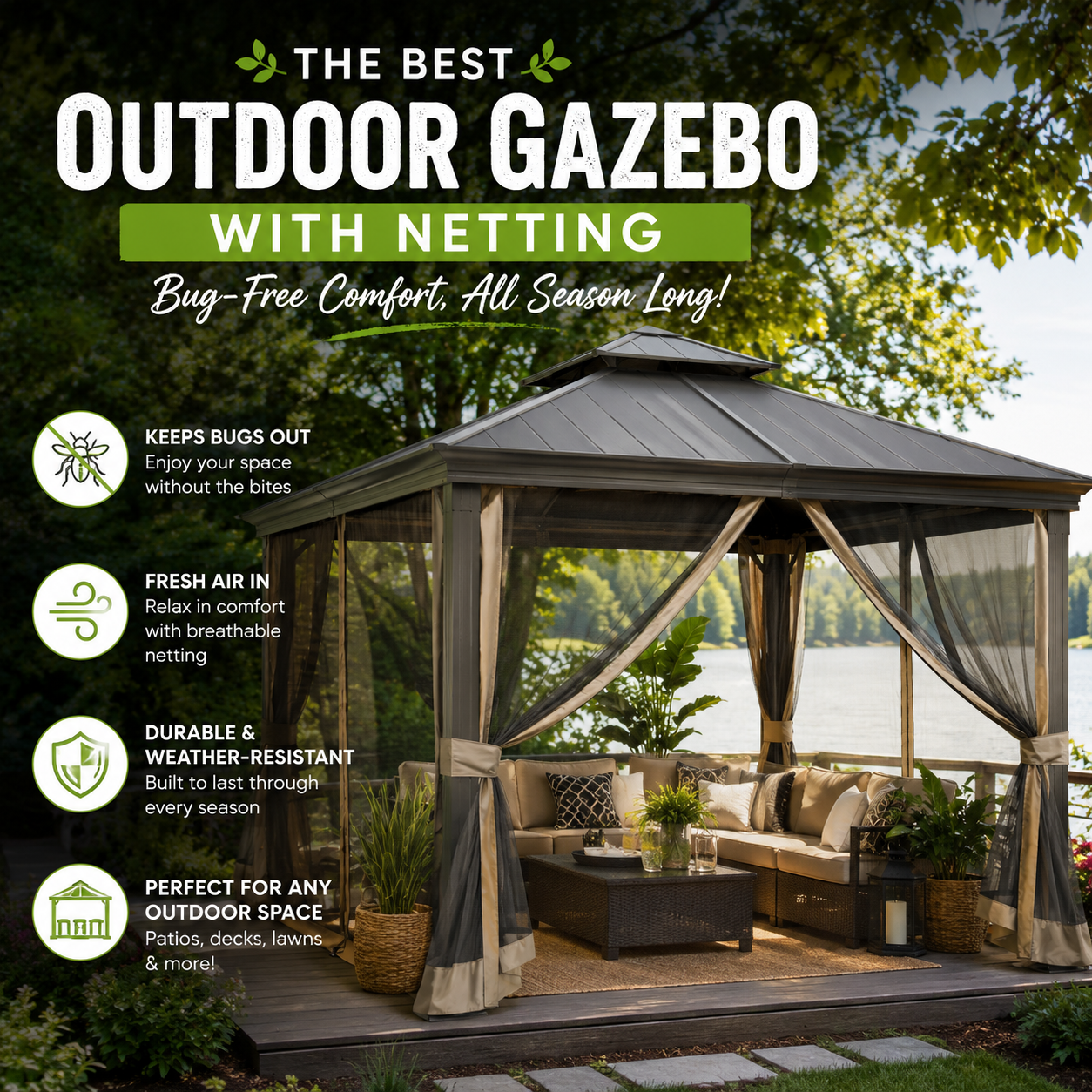
An outdoor gazebo with netting is a practical shade structure that lets you enjoy fresh air without dealing with mosquitoes, flies, and other insects. For many homeowners, it is the easiest way to turn a patio, deck, backyard, or garden into a more comfortable gathering space. If your goal is to relax outside, host meals, or create a protected seating area, an outdoor gazebo with netting offers both shelter and insect control in one solution.
Table of Contents
- What Is an Outdoor Gazebo with Netting?
- Why Choose a Gazebo with Netting?
- Types of Outdoor Gazebos with Netting
- What to Look for When Buying One
- Is Netting Enough to Keep Bugs Out?
- Can You Leave a Gazebo with Netting Outside Year-Round?
- How to Maintain an Outdoor Gazebo with Netting
- Common Questions About Outdoor Gazebos with Netting
- Who Should Buy One?
- Final Thoughts
What Is an Outdoor Gazebo with Netting?
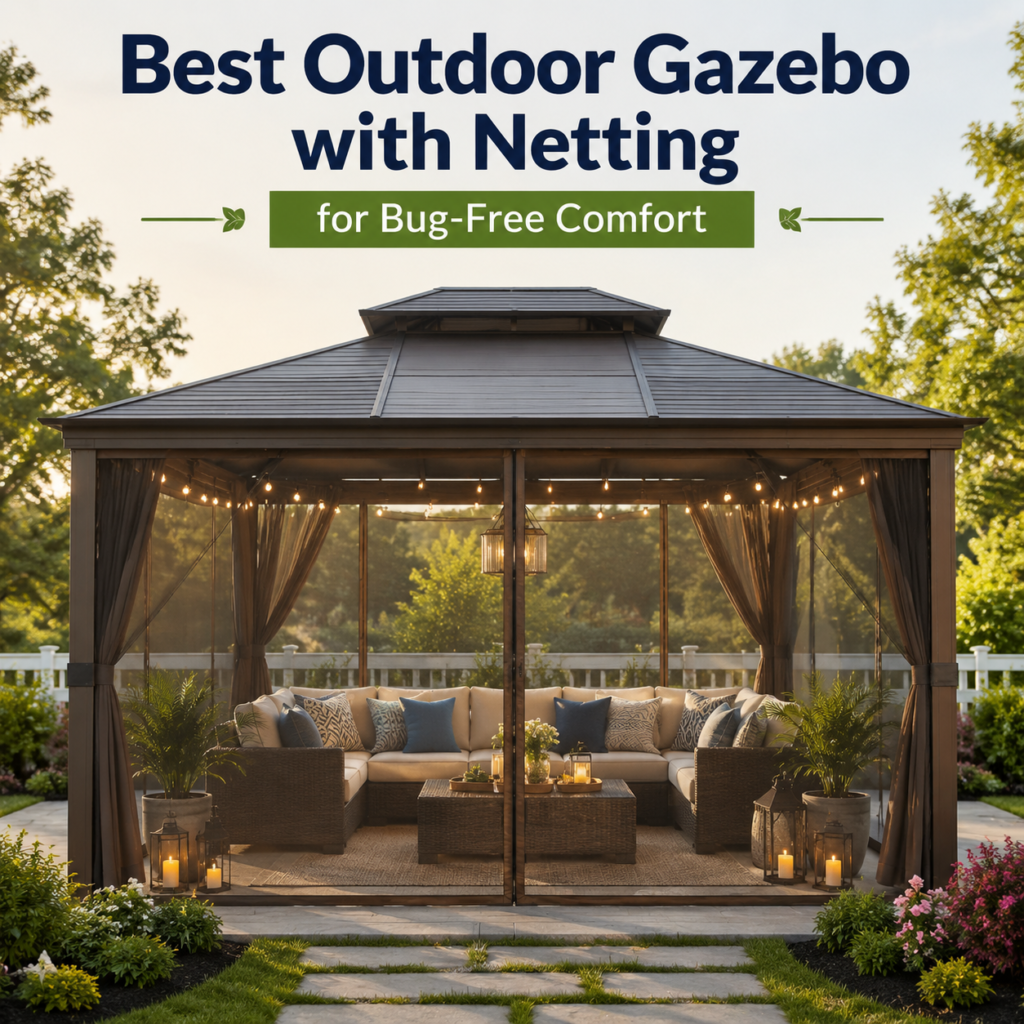
An outdoor gazebo with netting is a freestanding or semi-permanent outdoor structure designed with mesh screens around the sides. The netting acts as a barrier against insects while still allowing airflow and visibility. Most models also include a roof for shade and light rain protection, making them useful during warm weather and outdoor events.
These gazebos are commonly used for:
- Backyard lounging
- Outdoor dining
- Patio gatherings
- Poolside seating
- Garden relaxation
- Small celebrations and barbecues
The main appeal is simple: you get the open-air feeling of being outside without the nuisance of bugs. For more layout inspiration, see outdoor gazebo ideas for stylish backyard designs.
In practice, an outdoor gazebo with netting works as a flexible outdoor room. It creates a defined zone for eating, talking, reading, or relaxing, while still keeping the space visually light and airy. That balance is what makes it appealing for both small yards and larger landscaped spaces.
Many homeowners also like that the structure can blend with different outdoor styles. A modern frame can look clean and minimal, while a softer fabric version may feel more casual and seasonal. No matter the style, the goal is the same: create a comfortable space that feels more usable through the warmest months of the year.
Why Choose a Gazebo with Netting?
A gazebo with netting solves several common outdoor problems at once. It offers shade, improves comfort, and helps make outdoor spaces more usable throughout the day.
Key benefits
- Insect protection: Keeps mosquitoes and other pests away from your seating area
- Better airflow: Mesh screens allow breezes to pass through
- More privacy: Netting creates a subtle visual barrier
- Added comfort: Makes outdoor meals and gatherings more enjoyable
- Versatility: Works for casual use, entertaining, and seasonal events
If you live in an area with heavy mosquito activity, an outdoor gazebo with netting is often more useful than an open pergola or basic shade canopy. It also gives you a defined place to unwind, read, or share a meal without constantly swatting at insects.
Another advantage is that netting can make a space feel calmer without making it feel enclosed. You still get the breeze, the view, and the natural light, but the most common pests stay outside. That is especially valuable when you want to keep a meal on the table or let children play nearby without constant interruptions.
For homeowners who already have a backyard seating area, the addition of screened sides can be a simple upgrade that changes how often the space gets used. A patio that was once too buggy in the evening can become a favorite place for dinner, conversation, and weekend downtime.
Types of Outdoor Gazebos with Netting
There are several styles available, and the right one depends on how you plan to use it.
Pop-up gazebos
These are lightweight and portable. They are a good option for temporary events, camping, or seasonal backyard use. Many include removable netting and can be set up quickly.
Hardtop gazebos
Hardtop models use metal, polycarbonate, or other durable roofing materials. They are more permanent and better suited for year-round outdoor setups. Netting is often included or sold separately.
Soft-top gazebos
These use fabric roofs and are usually more affordable than hardtop versions. They are a popular choice for patios and gardens, though they may require more seasonal maintenance.
Screened gazebos
These are built specifically with integrated netting or mesh walls. They are ideal if your priority is keeping insects out while maintaining a stylish backyard structure. For a similar screened option, take a look at this screen tent guide for outdoor comfort.
If you are comparing styles, think about how much permanence you want. A pop-up unit is easy to move and store, while a hardtop option feels more like a backyard feature. A screened model sits somewhere in between, giving you stronger insect control and a polished look without losing the open feel that many people want from an outdoor gazebo with netting.
It can also help to consider how the gazebo will fit into the rest of your yard. Some buyers want a central entertaining space close to the home, while others prefer a quieter corner near a garden, pool, or tree line. Matching the structure to the setting can make it feel more natural and more useful day to day.
What to Look for When Buying One
Choosing the right outdoor gazebo with netting depends on size, materials, durability, and how much protection you need.
Important features to consider
- Size: Make sure the footprint fits your patio or yard and leaves room for furniture
- Frame material: Steel and aluminum are common for strength and weather resistance
- Roof material: Fabric roofs are lighter; hardtops last longer
- Netting quality: Look for fine mesh that blocks small insects and zips closed securely
- Ventilation: Roof vents help with airflow and reduce heat buildup
- Anchoring: A sturdy anchoring system is important for wind resistance
- Ease of assembly: Some models require more installation time than others
If you want long-term use, focus on durability and weather resistance rather than just appearance. Many buyers also compare an outdoor gazebo with netting to a freestanding gazebo when deciding how permanent they want the setup to be. The right structure should fit your space, match your routine, and hold up well through regular outdoor use.
Pay attention to the fine details as well. Zipper quality matters because it affects how easily the netting closes and how well it stays sealed. Stitching, corner reinforcements, and hardware finish are also worth checking if you want a structure that will last beyond one season.
Think about furniture before you buy, too. If you want to place a dining table, sectional seating, or a pair of lounge chairs inside, measure carefully so the gazebo feels roomy rather than crowded. A well-sized layout can make the difference between a space you use occasionally and one you use all the time.
Style is important, but it should not come before function. A good outdoor gazebo with netting should be easy to enter, simple to clean, and sturdy enough to stay comfortable throughout the months when you use it most.
Is Netting Enough to Keep Bugs Out?
For most situations, yes. A well-fitted mesh screen will stop mosquitoes, flies, gnats, and many other insects from entering the space. The effectiveness depends on the mesh size, zipper closures, and how well the gazebo is sealed around the edges.
To improve protection:
- Keep zippers fully closed
- Check for gaps at corners and seams
- Repair tears quickly
- Use outdoor lighting that is less attractive to insects
- Reduce standing water nearby, which attracts mosquitoes
For areas with very heavy insect activity, pairing the gazebo with other pest-control measures can make it even more effective. The U.S. Environmental Protection Agency offers helpful guidance on mosquito prevention at EPA mosquito control resources. A layered approach is often the best way to keep your seating area pleasant on warm evenings.
When people ask whether an outdoor gazebo with netting really works, the answer usually depends on how carefully it is used. Tuck the mesh properly, avoid leaving doors open for long periods, and keep food covered when possible. Small habits can make a big difference in how well the enclosure performs.
It is also worth remembering that netting is not a replacement for every other form of outdoor comfort. On especially buggy nights, you may still want to combine your setup with citronella candles, fans, or strategic landscaping to reduce insect activity nearby. The enclosure is the primary defense, but a few simple extras can improve the experience even more.
Can You Leave a Gazebo with Netting Outside Year-Round?
Some outdoor gazebos with netting are designed for year-round use, but not all of them are. This depends on the frame, roof, and fabric quality. Hardtop gazebos usually handle the elements better than soft-top models.
If you plan to keep it outside through all seasons, look for:
- Rust-resistant frame materials
- UV-resistant roof and netting
- Snow-load or wind-load ratings
- Strong anchoring hardware
- Removable or replaceable netting panels
In areas with harsh winters, it is often best to remove the netting or store parts during extreme weather to extend the life of the gazebo. Snow, ice, and heavy winds can shorten the lifespan of fabric components and stress the frame over time.
If you are choosing between seasonal and permanent use, think about how often you will really use the structure. A seasonal setup may be enough for summer dining and weekend relaxing, while a more durable model is better if you want a reliable outdoor room in multiple seasons.
Seasonal storage can also protect your investment. Folding or removing the mesh before harsh weather arrives may take a little effort, but it can help prevent mildew, fading, stretched seams, and unnecessary wear. If your climate is mild, though, a sturdy outdoor gazebo with netting can often remain in place with only routine care and inspection.
How to Maintain an Outdoor Gazebo with Netting
Regular maintenance helps keep the gazebo looking good and functioning properly.
Simple care tips
- Clean the frame and roof periodically with mild soap and water
- Brush off leaves, dirt, and debris
- Wash the netting gently to remove pollen and dust
- Check zippers, seams, and fasteners for wear
- Store removable fabric parts during severe weather
- Tighten bolts and inspect anchors as needed
A little maintenance goes a long way, especially if the gazebo gets frequent use during spring and summer. If you add weather-friendly accessories, such as an outdoor pillow guide for patio comfort, your seating area can feel even more inviting. Comfortable cushions, side tables, and simple decor can make the space feel finished without adding clutter.
It also helps to give the frame a quick inspection after storms. Look for loose fittings, worn mesh, or pooling water on fabric roofs. Catching minor problems early can prevent expensive repairs later and help your outdoor gazebo with netting stay in better condition for longer.
Cleaning habits matter, too. Dust, pollen, and mildew can build up faster than many people expect, especially if the gazebo is near trees or a pool. A soft brush, a gentle hose rinse, and a quick wipe-down can keep the structure looking fresh without damaging the materials.
When you are not using the space often, try to keep the interior tidy. Storing cushions, folding blankets, and lightweight accessories inside the home or a dry shed can reduce clutter and protect them from moisture. That makes it easier to reopen the area quickly when guests arrive or the weather turns nice.
How to make the space feel more inviting
Comfort is not only about blocking bugs. The best outdoor setup also feels welcoming when you step inside. Small touches like layered seating, simple lighting, and a neat floor surface can make the gazebo feel like a true destination rather than a temporary cover.
For example, add a rug that can handle outdoor use, arrange chairs so people can talk easily, and keep a small table nearby for drinks or snacks. If you prefer a softer look, use neutral cushions and a few decorative accents. These details do not have to be expensive to make the structure more enjoyable.
Good placement helps as well. An outdoor gazebo with netting placed on level ground, away from standing water, can feel cleaner, drier, and more comfortable. If possible, position it where it gets enough shade in the hottest part of the day, but still allows enough light to keep the space bright and pleasant.
Common Questions About Outdoor Gazebos with Netting
Are they good for dining outdoors?
Yes. They are one of the best options for outdoor dining because the netting helps keep insects away from food and guests.
Do they provide rain protection?
Most gazebos offer some rain protection through the roof, but the level of protection depends on the material and design. Netting itself is not waterproof.
Can furniture stay inside?
Yes, many people leave patio tables, chairs, and lounge furniture inside the gazebo. Just make sure the space is large enough and the setup is stable.
Are they easy to assemble?
That depends on the model. Pop-up versions are usually easiest, while larger hardtop gazebos may take more time and tools to install.
Do they block the view?
Not much. Mesh netting is designed to preserve visibility while keeping insects out, so you can still enjoy your surroundings.
Another common concern is airflow. In most cases, netting does not make the space feel closed in. Instead, it creates a light barrier that helps reduce pests while keeping the setting open and comfortable. That balance is one reason an outdoor gazebo with netting remains such a popular backyard upgrade.
If you are unsure whether a screened structure is the right fit, compare it with other options for outdoor living. Some people prefer a more open, decorative structure, while others need practical bug protection first. Choosing the right setup often comes down to how you use the space and how much time you want to spend outdoors during insect season.
Who Should Buy One?
An outdoor gazebo with netting is a strong choice for anyone who wants a more comfortable and usable outdoor space. It is especially useful for:
- Families who spend time in the backyard
- People who entertain guests outdoors
- Homeowners in mosquito-prone areas
- Anyone looking to create a shaded seating area
- Gardeners who want a quiet place to relax outside
If you want a simple way to improve your patio or yard without building a permanent room, this is one of the most practical options available. An outdoor gazebo with netting can also pair well with other backyard upgrades, including a more decorative gazebo with mosquito netting for added comfort. It works especially well for people who value flexibility, since you can use it for everyday lounging or special occasions.
It is also a smart option if you are trying to get more use out of a space that currently sits empty. A shaded, screened structure can turn a plain corner of the yard into a destination for morning coffee, weekend reading, or evening meals with family.
Homeowners who like to host are often the biggest beneficiaries. When the weather is warm and the bugs are active, a screened setup makes it easier to enjoy guests without constantly moving indoors. That can make summer gatherings feel more relaxed and more memorable.
Final Thoughts
An outdoor gazebo with netting gives you the best of both worlds: open-air comfort and protection from insects. It can make outdoor spaces more inviting, more functional, and more enjoyable throughout the warmer months. Whether you need a temporary setup for events or a durable backyard feature for everyday use, choosing the right outdoor gazebo with netting can transform how you use your outdoor area.
Before you buy, compare materials, size, and weather resistance so the structure matches your climate and lifestyle. With the right choice and regular care, your gazebo can become one of the most useful features in your outdoor living space.
In the end, the best choice is the one that fits how you live. If you want a comfortable, low-fuss place to gather outside, an outdoor gazebo with netting can deliver exactly that. It adds shelter, improves comfort, and helps you enjoy the outdoors more often with less frustration from insects.
For many homeowners, that simple combination of shade, airflow, and bug control is enough to make the purchase worthwhile. And once the space is set up well, it often becomes one of the most used spots in the yard.





Add comment