
Outdoor Furniture Cushions make patios, decks, porches, and backyard seating more comfortable, stylish, and inviting. If you are shopping for new cushions or replacing worn-out ones, the main questions are usually the same: Which materials last longest? What size should you buy? How do you keep cushions from fading, flattening, or getting moldy?
This guide answers those questions clearly so you can choose outdoor furniture cushions that look good, feel comfortable, and hold up to the weather. If you are also looking for broader shopping and care advice for patio seating, you can find more practical tips in this outdoor cushions guide.
Table of Contents
- What Are Outdoor Furniture Cushions?
- Why Outdoor Furniture Cushions Matter
- How to Choose the Right Outdoor Furniture Cushions
- Best Types of Outdoor Furniture Cushions
- Are Outdoor Furniture Cushions Waterproof?
- How to Clean Outdoor Furniture Cushions
- How to Keep Outdoor Furniture Cushions Looking New
- How Long Do Outdoor Furniture Cushions Last?
- Signs It’s Time to Replace Outdoor Cushions
- How to Match Outdoor Furniture Cushions to Your Style
- Frequently Asked Questions About Outdoor Furniture Cushions
- Final Thoughts
What Are Outdoor Furniture Cushions?
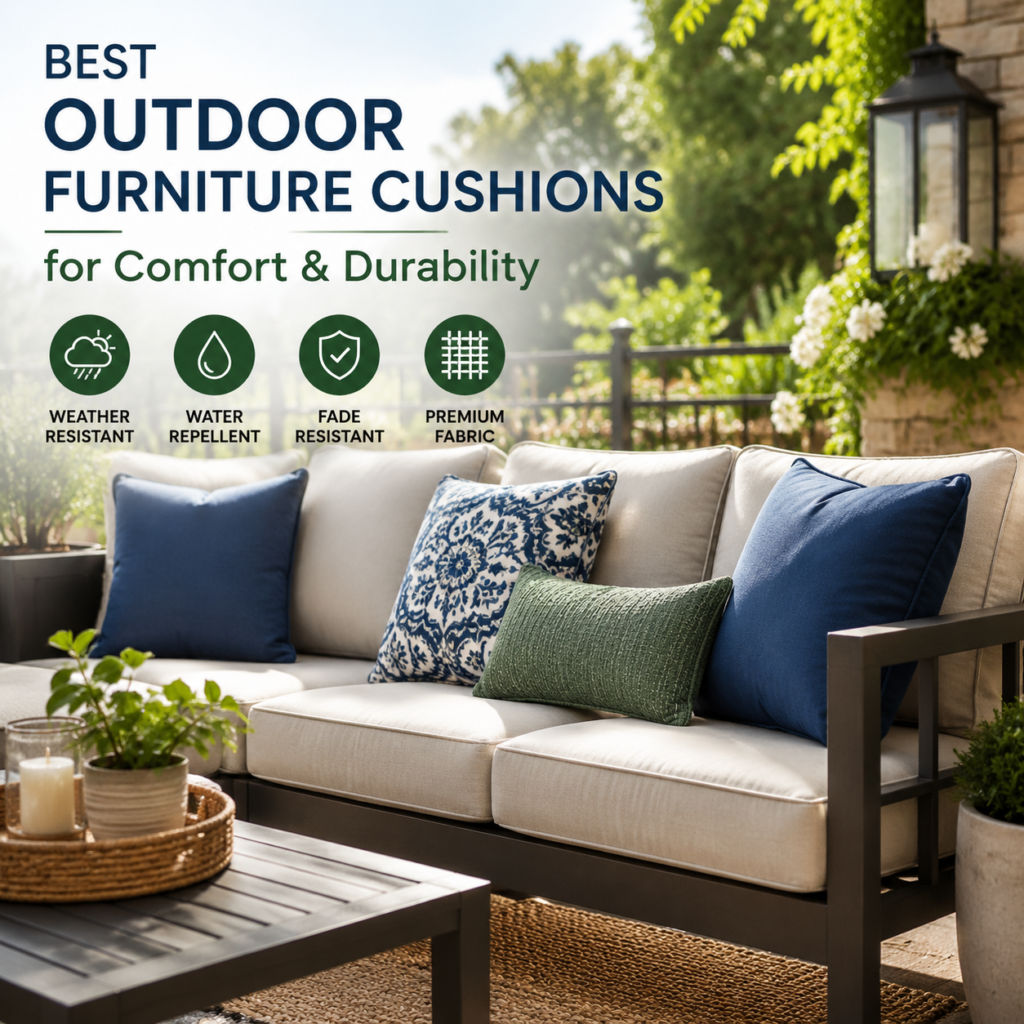
Outdoor Furniture Cushions are padded covers designed for patio chairs, sofas, loveseats, benches, loungers, and other outdoor seating. They are made to withstand sunlight, moisture, dirt, and frequent use better than indoor cushions.
Unlike indoor cushions, outdoor versions typically use:
- Weather-resistant fabric
- Quick-drying foam or fill
- UV protection against fading
- Mold- and mildew-resistant materials
- Covers that are easier to clean
The goal is not just comfort. Good outdoor cushions also help protect your furniture and improve the overall look of your outdoor space.
Many homeowners treat cushions as the finishing touch that makes an outdoor area feel like an extension of the home. A well-chosen set can soften hard seating, coordinate with umbrellas or decor, and help a simple setup feel more intentional. If your patio includes shade accessories, a durable outdoor patio umbrella can also help reduce sun exposure on your cushions and extend their life.
Why Outdoor Furniture Cushions Matter
Outdoor seating without cushions can feel hard, hot, or awkward to use for long periods. Cushions make a big difference because they:
- Improve comfort
- Add color and style
- Help create a finished, cozy outdoor setup
- Reduce wear on furniture surfaces
- Make seating more inviting for guests and family
If you spend time outside often, quality cushions can turn a basic patio set into a usable outdoor living area.
Comfort also affects how much you actually use the space. A bench or chair that looks good but feels stiff usually ends up ignored, while a well-padded seat invites longer conversations, meals, and relaxation. That is why outdoor furniture cushions are often one of the highest-value upgrades for a patio or deck.
From a design perspective, cushions also help tie together mixed materials. Metal frames, wicker seating, wood benches, and aluminum furniture can all look more cohesive when the textile layer adds a consistent color palette and texture.
How to Choose the Right Outdoor Furniture Cushions
Choosing the right cushions starts with your furniture and your climate. The best outdoor furniture cushions fit properly, feel comfortable, and can handle your local weather conditions.
1. Measure Your Furniture First
Before buying cushions, measure each seat, back, or bench carefully. Check:
- Seat width
- Seat depth
- Back height
- Thickness if needed
- Any curved or angled edges
Even a cushion that looks close in size may shift, bunch up, or hang awkwardly if it does not fit well. For replacement cushions, use the existing cushions as a guide, but still measure the furniture itself.
When measuring, pay attention to how the cushion will sit on the frame. A cushion that is slightly too wide may wrinkle and wear unevenly, while one that is too narrow can expose hard edges. If your furniture has unusual proportions, custom-sized cushions may be a better fit than forcing a standard size to work.
2. Choose the Right Fabric
The outer fabric is one of the most important parts of outdoor furniture cushions. It affects durability, comfort, and how often you will need to clean or replace them.
Common outdoor cushion fabrics include:
- Acrylic: Often considered one of the best choices for UV resistance, color retention, and comfort.
- Polyester: Affordable and widely available, though quality can vary.
- Olefin: Durable, moisture-resistant, and good for outdoor use.
- Sunbrella-type performance fabrics: Known for strong fade resistance and easy care.
Look for fabrics that are:
- Fade-resistant
- Water-resistant or quick-drying
- Easy to clean
- Resistant to mildew and stains
If your patio gets full sun most of the day, UV resistance should be a top priority. If your area gets frequent rain or humidity, quick-drying and mildew-resistant materials matter more.
For a reliable reference on how UV exposure affects materials over time, the U.S. Environmental Protection Agency’s UV Index overview explains why prolonged sunlight can be especially harsh on outdoor surfaces.
3. Check the Cushion Fill
The filling affects comfort, shape retention, and drying time. Outdoor furniture cushions may use:
- Foam: Firm and supportive; often wrapped for better comfort
- Polyfiber fill: Softer and less structured
- High-density foam: Better for long-term support and frequent use
- Reticulated foam: Designed to drain and dry quickly after exposure to water
For most seating, high-density or quick-drying foam is a strong option because it holds its shape better and provides more support over time.
If you use your furniture every day, a supportive fill is usually worth the extra cost. Softer fills may feel plush at first, but they often flatten faster and need more frequent replacement. The right fill should match the way you use the space: dining areas benefit from supportive padding, while lounge areas can handle softer, deeper cushioning.
4. Think About Cushion Thickness
Thicker cushions are not always better. The right thickness depends on the furniture and how you want it to feel.
- 2 to 3 inches: Good for simple chairs or benches
- 3 to 5 inches: Common for standard patio seating
- Thicker cushions: Better for lounge-style comfort or deep seating
If the cushion is too thick, it may make the seat feel too high or unstable. If it is too thin, it may flatten quickly or feel uncomfortable.
Consider how cushions affect posture as well. A thick cushion can improve softness, but it can also change the angle of the seat and the height of the armrests relative to your body. That matters most for dining chairs and conversation seating where people sit for longer periods.
5. Look for Ties, Straps, or Non-Slip Features
Outdoor cushions can slide around, especially on metal, wood, or smooth wicker furniture. Ties, straps, and grippy backing help keep them in place.
This is especially useful for:
- Dining chairs
- Bench cushions
- Adirondack chair cushions
- Loveseat and sofa cushions
Secure cushions stay neater and are easier to use every day.
These small details can make a big difference in real-world use. If you live in a windy area or have kids and pets moving through the space, cushions with secure attachment points are usually less frustrating than loose pads that constantly need adjusting.
6. Match the Cushion to the Way You Use the Space
Not every patio needs the same style of cushioning. A dining setup may need firmer, thinner seating that makes it easy to get in and out, while a lounge area may call for deeper, softer cushions that encourage relaxing for hours. Before you buy, think about whether your furniture is used for meals, reading, entertaining, naps, or quick coffee breaks. That simple question helps narrow down the best shape and firmness for your space.
If the area is used by guests often, stain resistance and easy-clean fabric become more important. If the furniture sits in a private retreat, comfort may matter more than having the most decorative pattern. The best choice balances both.
Best Types of Outdoor Furniture Cushions
Different types of outdoor seating need different cushions. The main styles include:
Seat Cushions
Seat cushions are usually used for dining chairs, side chairs, and benches. They add a layer of padding for everyday seating comfort.
Back Cushions
Back cushions provide support and are commonly used with deep seating patio furniture. They can be separate or attached.
Deep Seating Cushions
Deep seating cushions include both seat and back pieces designed for sofas, loveseats, and lounge chairs. These are usually thicker and more comfortable for long relaxation periods.
Bench Cushions
Bench cushions are long and narrow, designed for built-in benches, garden seating, and porch swings. They can be simple or customized to fit specific lengths.
Chaise Lounge Cushions
These cushions are made for reclining outdoor loungers. They are shaped differently from standard seat cushions and usually include a backrest section.
Adirondack Chair Cushions
These are shaped to fit the angled seat and back of Adirondack chairs, which often need specially designed cushions for proper comfort.
There are also specialized replacement cushions for modular seating, sectional pieces, and oversized chairs. If your furniture has an unusual shape, look closely at seams, corner cuts, and thickness before ordering. A cushion that is technically the right length may still feel wrong if the contour does not match the frame.
Are Outdoor Furniture Cushions Waterproof?
Most outdoor furniture cushions are not fully waterproof. Instead, they are usually water-resistant or quick-drying. This means they can handle light rain, spills, and moisture better than indoor cushions, but they should still be protected during heavy rain or long periods of bad weather.
If you want maximum weather protection, look for cushions with:
- Water-resistant fabric
- Quick-dry foam
- Removable covers
- Hidden zippers with protective flaps
- Mold-resistant construction
Even with weather-resistant materials, storing cushions when not in use helps them last longer.
It is also worth noting that waterproof and comfortable are not always the same thing. Fully waterproof covers may be less breathable, which can make the cushion feel warmer and may slow drying if moisture gets trapped inside. For many shoppers, the best balance is a quick-drying cushion with removable covers and good storage habits.
How to Clean Outdoor Furniture Cushions
Cleaning outdoor furniture cushions regularly keeps them looking better and helps prevent stains, odors, and mildew.
Basic Cleaning Steps
- Remove loose dirt with a brush or handheld vacuum.
- Check the care label for cleaning instructions.
- Mix mild soap with warm water.
- Use a soft cloth or sponge to clean the fabric.
- Rinse with clean water if recommended.
- Let the cushions air dry completely before use or storage.
For Tougher Stains
For stubborn spots like bird droppings, sunscreen, or food stains:
- Clean as soon as possible
- Blot, do not scrub aggressively
- Use a fabric-safe cleaner made for outdoor materials
- Test any cleaner on a small hidden area first
Avoid Common Mistakes
Do not:
- Use bleach unless the care instructions allow it
- Put outdoor cushions in the dryer unless specified
- Store cushions while still damp
- Use harsh brushes that damage fabric fibers
Regular cleaning does more than improve appearance. It also helps preserve the water-repellent finish and reduces the chance that grime will settle into the fabric. If cushions are removable, washing the covers separately according to the label can make maintenance easier over the long term.
For stains that are difficult to remove, check the manufacturer’s guidance before using any specialty cleaner. Many performance fabrics can tolerate mild soap and water very well, but a cleaner that is too aggressive may strip the finish or alter the fabric color.
How to Keep Outdoor Furniture Cushions Looking New
A few simple habits can greatly extend the life of your cushions.
Store Them When Not in Use
If possible, store cushions indoors or in a weatherproof storage box during:
- Heavy rain
- Winter
- Long periods of direct sun
- Extended times when the furniture is unused
Use Covers
Furniture covers protect cushions from:
- Rain
- Dust
- Bird droppings
- Tree sap
- UV exposure
This is especially helpful in areas with changing weather.
Rotate Cushions
If one part of your seating gets more use or sunlight, rotate cushions occasionally to help them wear more evenly.
Air Them Out
After rain or cleaning, let cushions dry completely in open air. This helps reduce mildew and odors.
Refluff or Reshape as Needed
Some cushions flatten with use. Fluffing the fill, rotating inserts, or replacing worn foam can help restore comfort.
A little routine care goes a long way. If you live in a humid climate, consider making drying and storage part of your regular weekend routine during the outdoor season. That habit can keep cushions looking newer for much longer and reduce the chance of musty smells building up over time.
Seasonal Care Tips
In spring, inspect seams, zippers, and attachment ties before regular use begins. During summer, shake off dust and debris often, especially after windy days or outdoor meals. In fall, clean cushions before storing them so stains do not set during the off-season. In winter, keep them in a dry, ventilated location rather than a damp garage floor or uncovered deck corner.
How Long Do Outdoor Furniture Cushions Last?
The lifespan of outdoor furniture cushions depends on material quality, weather exposure, and care. On average, well-made cushions can last several seasons, but high-quality options may last much longer with proper maintenance.
Factors that affect lifespan include:
- Sun exposure
- Rain and humidity
- Frequency of use
- Fabric quality
- Storage habits
- Cleaning routine
If your cushions are fading, flattening, or showing mildew and cracking, it may be time to replace them.
In sunny climates, UV exposure is usually the biggest factor that shortens fabric life. In humid regions, moisture and mildew tend to do more damage. In high-use spaces, compression and seam wear may show up first. That is why the same cushion can last far longer in one home than another, even if the product itself is the same.
Signs It’s Time to Replace Outdoor Cushions
You may need new outdoor furniture cushions if you notice:
- Flattened or lumpy fill
- Visible fading
- Torn seams
- Mildew stains that will not come out
- Persistent odors
- Fabric that feels brittle or worn
- Cushions that no longer fit properly
Replacing cushions can instantly refresh your outdoor space without replacing all your furniture.
Sometimes replacement is about comfort, but often it is about safety and cleanliness as well. When foam breaks down or fabric starts to crack, the cushion may no longer dry properly or support your body the way it should. New cushions can make older furniture feel new again while also improving hygiene and usability.
How to Match Outdoor Furniture Cushions to Your Style
Function matters most, but style also plays a big role in making your outdoor area feel complete.
Consider Color
Neutral colors like beige, gray, navy, and taupe are easy to coordinate. Bright colors and patterns can make a space feel more cheerful and lively.
Think About the Setting
- Modern spaces often look best with clean lines and solid colors
- Coastal spaces work well with light blues, whites, and soft neutrals
- Rustic spaces pair nicely with earth tones and textured fabrics
- Garden spaces can handle floral prints or rich greens
Balance Practicality and Design
Lighter colors may show dirt more easily, while darker colors may absorb more heat. Choose a look that fits your style and also works for your climate and level of use.
If you want the space to feel more polished, coordinate cushion colors with planters, rugs, umbrellas, or pillows instead of choosing every piece separately. A coordinated setup does not have to match perfectly; it just needs a consistent tone or pattern family to feel intentional.
For comfort around other soft furnishings, it can also help to pair seating with accessories like an outdoor chair cushion guide when you need a deeper look at chair-specific comfort choices.
Frequently Asked Questions About Outdoor Furniture Cushions
What is the best fabric for outdoor furniture cushions?
Acrylic and other performance fabrics are often among the best choices because they resist fading, dry well, and are comfortable to use. The best option depends on your climate, budget, and how much sun or moisture your cushions will face.
Can outdoor cushions stay outside all the time?
Some can handle light exposure, but most outdoor cushions last longer if brought in during bad weather or stored when not in use. Even weather-resistant cushions benefit from protection.
How do I stop outdoor cushions from blowing away?
Look for cushions with ties, straps, or weighted designs. You can also store them when they are not being used, especially in windy areas.
Why do outdoor cushions get moldy?
Mold usually forms when cushions stay damp for too long. This often happens after rain, poor drainage, or storage before the cushions are fully dry. Quick-dry materials and proper care help prevent this.
Are expensive outdoor cushions worth it?
In many cases, yes. Better-quality outdoor furniture cushions often last longer, resist fading better, and stay more comfortable over time. While the upfront cost is higher, they can save money by reducing how often you need replacements.
What should I look for in a long-term purchase?
Durable stitching, strong fabric, a supportive fill, and easy maintenance are the main features that matter. If your outdoor area gets intense sun or frequent moisture, those two conditions should guide your decision more than style alone.
Final Thoughts
Outdoor Furniture Cushions are one of the easiest ways to improve comfort, style, and usability in any outdoor living space. The best cushions fit your furniture properly, use durable weather-resistant materials, and are easy to clean and store.
When choosing outdoor furniture cushions, focus on:
- Correct measurements
- Durable fabric
- Comfortable fill
- Weather resistance
- Easy maintenance
With the right cushions and a little care, your patio or deck can stay comfortable and attractive season after season.
If you are comparing cushion styles for a larger seating setup, it can also help to review related outdoor comfort options such as an outdoor pillow guide or a shade solution like an outdoor parasol to make the whole space more enjoyable.





Add comment