
A patio umbrella for shade is one of the easiest and most effective ways to make a patio more comfortable, functional, and attractive. If you are looking for shade, UV protection, or a simple way to improve your outdoor seating area, an umbrella for an outdoor patio is often the best place to start. It can help turn a hot, sun-exposed space into a cool spot for dining, relaxing, or entertaining.
Whether you are shopping for a new patio umbrella for shade or trying to choose the right style for your space, understanding the basics will help you make a better decision. The best umbrella outdoor patio setup depends on your patio size, table shape, wind exposure, and how much shade you need.
Table of Contents
- What Is an Outdoor Patio Umbrella for Shade?
- Why Use an Umbrella for an Outdoor Patio?
- Types of Outdoor Patio Umbrellas
- How to Choose the Right Patio Umbrella
- How to Use an Outdoor Patio Umbrella Effectively
- Common Questions About Outdoor Patio Umbrellas
- Tips for Buying the Best Outdoor Patio Umbrella
- How to Maintain an Outdoor Patio Umbrella
- Best Uses for an Outdoor Patio Umbrella
What Is an Outdoor Patio Umbrella for Shade?
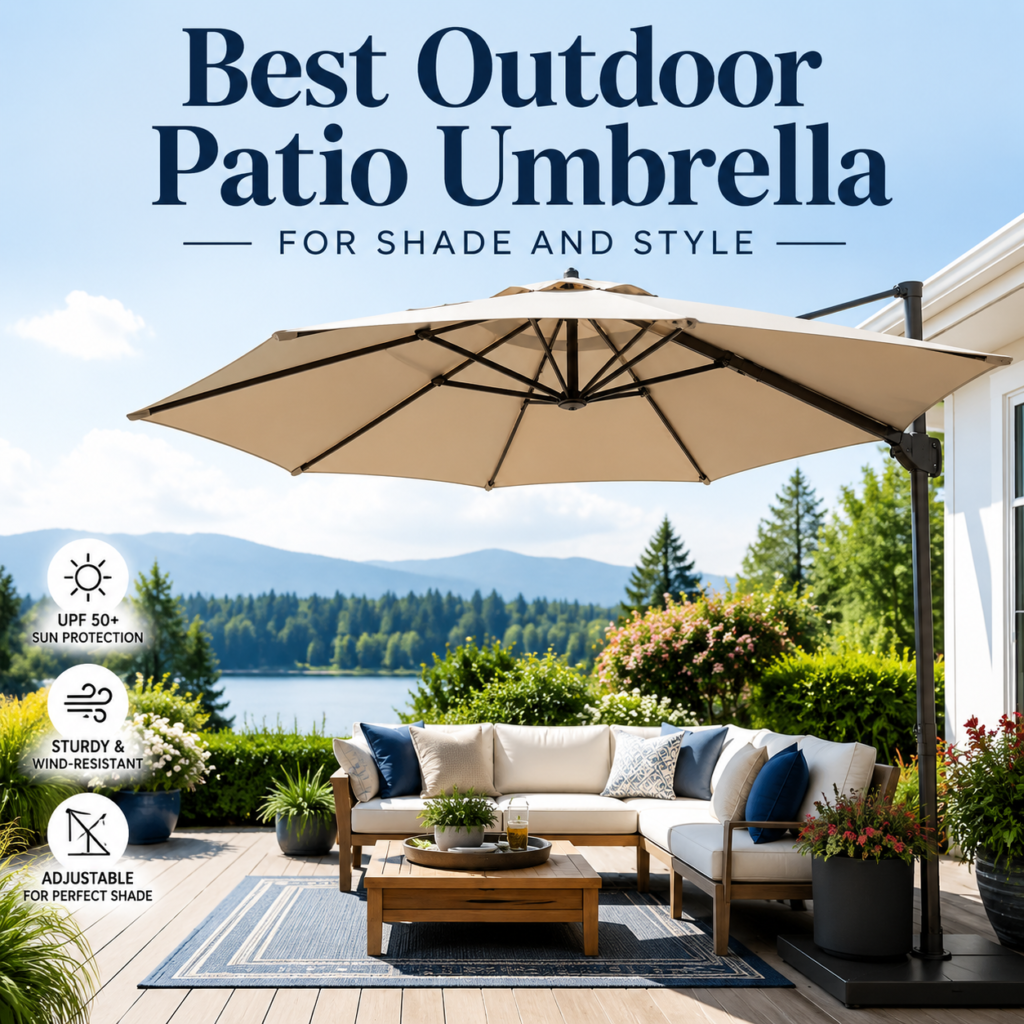
An outdoor patio umbrella for shade is a large umbrella designed to provide shade over patios, decks, dining tables, lounge chairs, and other outdoor spaces. Unlike a regular umbrella, it is built for outdoor use with stronger materials, weather-resistant fabric, and a stable base or mounting system.
Most patio umbrellas use a pole and canopy design. The canopy blocks direct sunlight, while the pole is anchored in a weighted base, table stand, or permanent mount. Some models are simple and centered, while others are offset or cantilevered to shade an area without placing the pole in the middle.
For homeowners who want a simple upgrade, a patio umbrella for shade can be a practical way to improve comfort without changing the whole patio layout. It is also a flexible solution because you can move or store it as your needs change.
Why Use an Umbrella for an Outdoor Patio?
A patio umbrella for shade offers several practical benefits:
- Shade from the sun: Keeps your seating or dining area cooler and more comfortable.
- UV protection: Helps reduce exposure to harmful ultraviolet rays.
- Better outdoor comfort: Makes it easier to enjoy your patio during hot afternoons.
- Style and curb appeal: Adds color, texture, and visual interest to your outdoor space.
- Flexible coverage: Can be opened or closed as needed depending on weather and time of day.
For many homeowners, an outdoor patio umbrella is a simple upgrade that makes the patio usable for more hours of the day. It can also help protect outdoor furniture from direct sunlight, which may slow fading over time.
When you compare shade options, a patio umbrella for shade is often easier to install than a permanent structure. If you are also considering other outdoor comfort upgrades, you may want to explore this Outdoor Patio Umbrella: Best Shade, Comfort & Style for Your Space guide for additional buying ideas.
According to the U.S. Environmental Protection Agency’s UV Index guidance, planning for sun exposure is an important part of staying comfortable outdoors.
Types of Outdoor Patio Umbrellas
Choosing the right style is important because different umbrellas work better in different spaces.
Center-pole patio umbrellas
This is the most common type. The pole sits in the center of a patio table or base. It works well for dining tables and small to medium patios.
Offset or cantilever umbrellas
An offset umbrella has the pole to the side instead of in the middle. This design is ideal for lounge areas, poolside seating, or spaces where you want shade without a pole blocking the center.
Market umbrellas
Market umbrellas are classic, straight-pole umbrellas often used in cafes and home patios. They are a popular choice because they are simple, versatile, and easy to match with patio furniture.
Tilt umbrellas
Tilt umbrellas allow the canopy to angle as the sun changes position. This is useful if your patio gets sun from different directions throughout the day.
Solar or LED patio umbrellas
Some outdoor patio umbrellas include built-in solar lights or LED lighting. These can extend your outdoor enjoyment into the evening and make the space feel more inviting after sunset.
How to Choose the Right Patio Umbrella
If you are wondering what size, material, or style to buy, focus on these key factors.
1. Size of the umbrella
The umbrella should be large enough to cover the area you want shaded, but not so large that it overwhelms the space.
A general guide:
- Small patios or bistro tables: 6 to 8 feet
- Standard dining tables: 7.5 to 9 feet
- Larger seating areas: 9 to 11 feet or more
- Large open spaces: offset umbrellas or oversized canopies
Measure your patio and furniture before buying. The canopy should extend beyond the table or seating area to provide effective shade. A patio umbrella for shade works best when the coverage feels balanced rather than tight.
2. Shape of the canopy
Patio umbrellas usually come in round, square, or rectangular shapes.
- Round canopies work well for traditional table setups.
- Square canopies look modern and often match square tables or contemporary outdoor furniture.
- Rectangular canopies are useful for long tables or narrow patios.
The right shape depends on the layout of your space and the furniture beneath it.
3. Fabric quality
The canopy material affects durability, shade quality, and appearance. Look for fabrics that are:
- UV resistant
- Fade resistant
- Water resistant
- Easy to clean
Common materials include polyester, olefin, and acrylic. Acrylic fabrics often offer strong color retention and weather resistance, making them a good long-term choice.
4. Frame material
The frame should be sturdy enough to support the canopy in outdoor conditions. Common frame materials include:
- Aluminum: Lightweight, rust-resistant, and easy to move
- Steel: Strong and stable, but may be heavier
- Wood: Attractive and classic, but usually needs more maintenance
If your patio is exposed to moisture or coastal air, rust-resistant materials are especially important.
5. Base and stability
A patio umbrella is only as stable as its base. A lightweight umbrella can become unsafe in windy conditions if the base is too small or not properly weighted.
Choose a base that fits the size of the umbrella and follow the manufacturer’s weight recommendations. For offset umbrellas, a heavier base is usually needed.
6. Wind resistance
If your patio is in a windy area, look for features that improve stability, such as:
- Vented canopies
- Strong ribs
- Secure locking mechanisms
- Heavy-duty poles
A vented canopy helps air pass through, which can reduce strain on the umbrella during breezy conditions.
7. Shade direction throughout the day
Think about how the sun moves across your patio from morning to evening. A fixed canopy may be enough for a dining area that only gets heavy sun at one time of day, while a tilt model can help you adjust when the light changes.
For spaces that get strong late-day sun, a patio umbrella for shade with flexible positioning can make outdoor seating far more comfortable.
8. Color and heat absorption
Darker canopies often provide a stronger visual contrast, while lighter colors can create a bright and airy feel. In general, both can work well, but darker fabrics may feel warmer under direct sun. Choose a color that suits your decor and your comfort preferences.
9. Opening system
Crank lifts, push-button tilt systems, and pulley mechanisms each offer different levels of convenience. If you plan to open and close the umbrella often, a smooth lifting system can make daily use much easier.
10. Storage and seasonal use
If your patio space changes with the seasons, choose a model that is easy to fold, cover, and store. This is especially helpful in areas with strong storms, freezing temperatures, or long wet seasons.
How to Use an Outdoor Patio Umbrella Effectively
To get the most from your umbrella, placement matters.
Position it for best shade
Place the umbrella where it will block the strongest sun during the time of day you use the patio most. Morning sun and afternoon sun move differently, so a tilt feature or offset design can help.
In many patios, a patio umbrella for shade works best when it is slightly larger than the table below it. That extra coverage can make outdoor meals more comfortable, especially in the middle of summer.
Keep it stable
Always use the correct base and make sure the umbrella is fully secured. In strong wind, close the umbrella to prevent damage.
Match it to your furniture
The umbrella should complement your table or seating area. A well-matched umbrella can make the patio feel more intentional and polished.
Store it properly
When not in use for long periods, close the umbrella and use a protective cover if possible. This helps extend the life of the fabric and frame.
If you want a coordinated outdoor setup, matching the umbrella with cushions, furniture finishes, and other accessories can create a more polished design. For related product ideas, see this Outdoor Pillow: Best All-Weather Comfort for Patios and Porches resource.
Use accessories to improve performance
An umbrella cover, sandbags, or wheel-equipped bases can make daily use easier and more secure. These small add-ons are especially helpful if you move the umbrella often or store it between uses.
A patio umbrella for shade can also be paired with lights, rugs, or side tables to create a more usable outdoor room. When the setup feels complete, people tend to spend more time outside.
Common Questions About Outdoor Patio Umbrellas
What size patio umbrella do I need?
The best size depends on your table or seating area. A small bistro set may only need a 6- to 7.5-foot umbrella, while a large dining table or lounge area may need 9 to 11 feet or more. The goal is to provide enough shade without overpowering the space.
What is the best material for an outdoor patio umbrella?
For most homeowners, a strong frame with a UV-resistant, fade-resistant canopy is the best combination. Aluminum frames with acrylic or high-quality polyester canopies are popular because they balance durability, appearance, and ease of use.
Can a patio umbrella stay outside all the time?
Many patio umbrellas are designed for outdoor use, but constant exposure to sun, rain, and wind can shorten their lifespan. It is best to close it when not in use and store it during severe weather or the off-season.
Are offset umbrellas better than center-pole umbrellas?
Neither is universally better. Offset umbrellas are better for lounge areas and spaces where a pole in the middle would get in the way. Center-pole umbrellas are usually better for dining tables and smaller patios.
How do I keep my patio umbrella from blowing away?
Use a properly weighted base, make sure the pole is secured tightly, and close the umbrella when wind picks up. If your area is especially windy, choose a model with wind vents and a sturdy frame.
Do patio umbrellas block UV rays?
Many do, especially if they are made from UV-resistant fabrics. For best protection, check the canopy’s UV rating or product description before buying.
Tips for Buying the Best Outdoor Patio Umbrella
Before making a purchase, consider these quick tips:
- Measure your patio and furniture first
- Choose a canopy size that provides full shade coverage
- Pick a frame material suited to your climate
- Look for fade-resistant and weather-resistant fabric
- Make sure the base is heavy enough for the umbrella size
- Consider tilt or crank features for easier use
- Choose a color and style that matches your outdoor décor
If you want low maintenance, prioritize durable materials and a simple opening system. If you want more flexibility, a tilt or cantilever umbrella may be worth the extra cost.
Shoppers who need a broader commercial or business-ready shade option may also want to review this Commercial Patio Umbrella Guide: Best Durable Shade Options for Businesses before making a final decision.
Buying for a business or high-traffic space
If the umbrella will be used in a cafe, resort, or shared seating area, focus on durability first. Commercial-grade frames, reinforced ribs, and heavy bases can improve safety and reduce wear from daily use.
For owners comparing product categories, a patio umbrella for shade is often the most practical starting point because it offers strong coverage without a major construction project. That balance makes it useful for homes and light commercial spaces alike.
How to Maintain an Outdoor Patio Umbrella
Proper care helps your umbrella last longer and look better.
Clean the canopy regularly
Use mild soap, water, and a soft cloth or sponge to remove dirt, pollen, and stains. Avoid harsh cleaners that can damage the fabric.
Let it dry before closing
If the canopy is wet, let it dry fully to reduce mildew and odor.
Check the frame and hardware
Inspect moving parts, ribs, and joints periodically to make sure everything is secure.
Use a protective cover
A cover can help protect against dust, sun exposure, and rain when the umbrella is not in use.
Store during harsh weather
If possible, store the umbrella indoors during storms, winter weather, or long periods of nonuse.
Routine care matters even more if your patio receives strong sunlight or seasonal weather swings. A well-maintained patio umbrella for shade can stay attractive and useful for many seasons, especially when it is cleaned and covered regularly.
If the fabric starts to fade, the opening mechanism becomes stiff, or the frame shows rust, address the issue early. Small repairs and careful maintenance can prevent a full replacement and help the umbrella continue performing well.
Best Uses for an Outdoor Patio Umbrella
A patio umbrella works well in many outdoor settings, including:
- Dining tables
- Poolside chairs
- Outdoor living rooms
- Balconies and small terraces
- Garden seating areas
- Commercial spaces like cafes and restaurants
It is one of the most versatile shade solutions because it can adapt to different spaces without permanent installation.
If your main goal is a comfortable backyard retreat, a patio umbrella for shade can be the finishing touch that makes the whole area easier to use. It is also a smart option if you want to improve comfort without committing to a large built-in structure. In many cases, a patio umbrella for shade provides the best balance of convenience, style, and everyday function.
You can also use it to define zones in a larger outdoor area. For example, one umbrella can cover a dining section while another shades a lounge chair cluster. That flexibility makes an outdoor patio umbrella especially useful when the same space has multiple purposes.
Conclusion
An umbrella outdoor patio setup is a practical, stylish, and affordable way to improve outdoor comfort. It provides shade, helps protect against UV rays, and makes patios more usable throughout the day. The right choice depends on your space, furniture, and weather conditions, but in most cases, a well-sized, durable, and stable patio umbrella can make a noticeable difference.
By focusing on size, material, stability, and placement, you can choose an outdoor patio umbrella that looks great and performs well for years. If you want a simple way to make your space more enjoyable, a patio umbrella for shade is one of the most reliable upgrades you can make.
With the right setup, you can create a cooler, more inviting outdoor area that works for meals, relaxing, and entertaining. A thoughtful patio umbrella for shade choice can improve comfort immediately while adding long-term value to your patio.


Add comment