
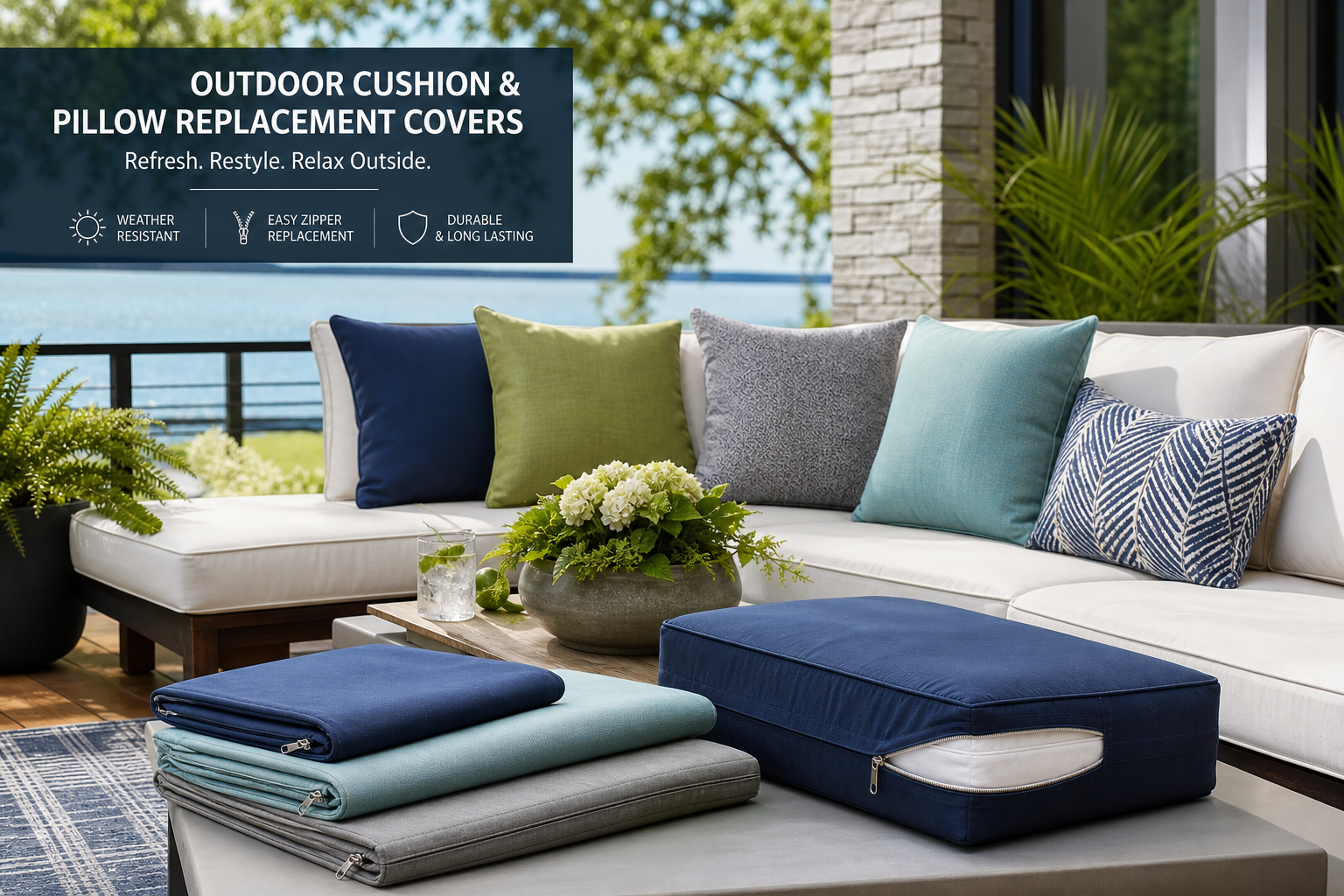
Outdoor Patio Cushions Pillow Replacement Covers are one of the easiest ways to refresh patio seating without replacing still-comfortable cushion inserts. The right replacement cover protects foam from sun, moisture, and dirt while restoring color, style, and everyday usability.
This guide covers how to measure correctly, choose outdoor-ready fabrics, understand water resistance, and keep replacement covers clean and mildew-free—so your cushions look great and last longer.
- What Are Outdoor Patio Cushion Replacement Covers?
- Why Replace Covers Instead of Entire Cushions?
- How to Measure Outdoor Cushions for Replacement Covers
- How Should a Replacement Cover Fit?
- Choose Fabric Designed for Outdoor Use
- Water-Resistant vs. Waterproof Covers
- UV and Fade Resistance
- Important Cover Features
- Standard, Universal, and Custom Covers
- Can Indoor Pillow Covers Be Used Outdoors?
- How to Install Replacement Cushion Covers
- How to Clean Outdoor Replacement Covers
- Preventing Mold and Mildew
- Common Buying Mistakes to Avoid
- Frequently Asked Questions
- Final Buying Checklist
What Are Outdoor Patio Cushion Replacement Covers?
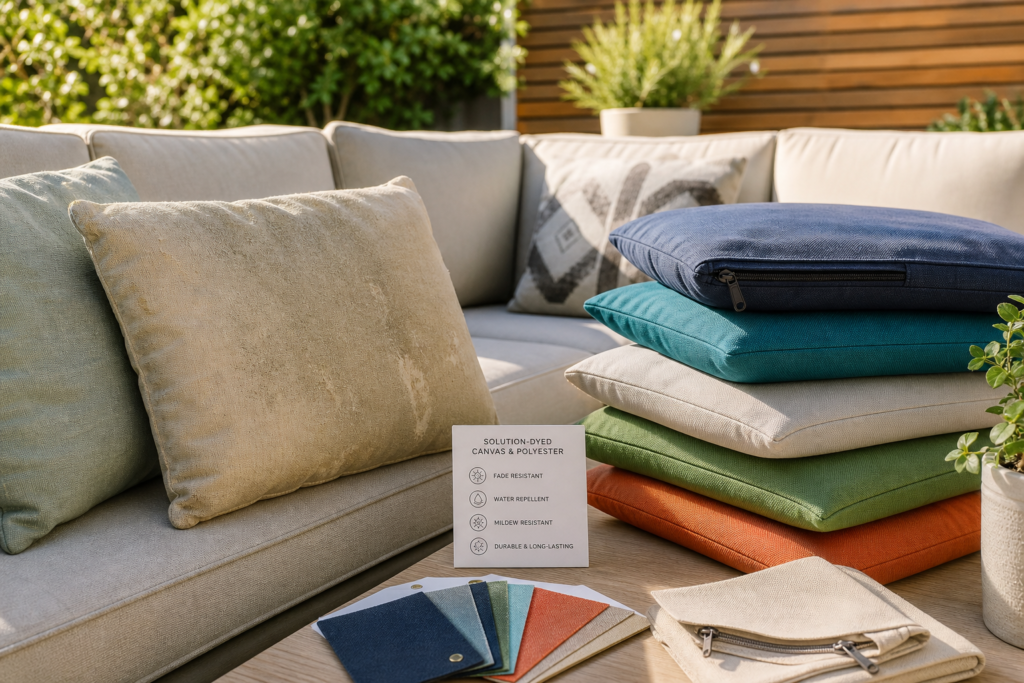
Outdoor Patio Cushions Pillow Replacement Covers (and other cushion replacement covers) are removable fabric shells designed to fit over existing foam inserts or pillow forms. They’re commonly used on patio chairs, dining chairs, outdoor sofas, sectionals, loveseats, benches, chaise lounges, deep-seat furniture, decorative outdoor pillows, and ottomans.
Some products include only the cover, while others include new foam or filling. Check the product description before ordering. A listing labeled “cover only” generally does not include the cushion insert.
Outdoor Patio Cushions Pillow Replacement Covers are a good option when your existing foam is still supportive but the fabric has faded, stained, torn, or no longer matches your outdoor setup. If the insert is flattened or fails to dry properly, replacement covers alone won’t solve the problem.
Why Replace Covers Instead of Entire Cushions?
Buying outdoor patio cushions pillow replacement covers can be more economical than purchasing complete cushions. It can also reduce waste by letting you keep foam inserts that are still in good condition and working properly.
Replacement covers can help you:
- Update patio colors and patterns
- Coordinate mismatched furniture
- Replace weathered, stained, or torn fabric
- Make cleaning easier with removable patio cushion covers
- Add seasonal style without buying new furniture
- Extend the useful life of existing cushion inserts
However, covers cannot restore worn-out foam. If the insert is flattened, crumbling, moldy, heavily stained, or no longer dries properly, replace the entire cushion instead of relying on replacement covers.
How to Measure Outdoor Cushions for Replacement Covers
Accurate measurements are the most important part of selecting outdoor patio cushions pillow replacement covers. Similar-looking patio cushions can vary significantly in width, depth, thickness, and shape.
Remove the old cover when possible and measure the foam insert directly. Use a firm tape measure and record dimensions in inches. For the best results, measure more than once and write down each number clearly for the cover’s ordering information.
Seat Cushions
Measure:
- Width: left edge to right edge at the widest point
- Depth: front edge to back edge
- Thickness: bottom surface to top surface
Avoid pressing down on the foam while measuring. Compression can produce an undersized measurement and cause replacement covers to feel too tight.
Back Cushions
Measure maximum width, height, and thickness. Back cushions may have curved tops, tapered sides, or uneven filling. Note the overall shape along with the dimensions so the replacement covers fit naturally.
Outdoor Throw Pillows
Measure across the pillow from seam to seam rather than following the stuffed curve. For loose pillow inserts, measure width and height while it lies flat without compressing it.
A pillow cover is often sized to the insert for a standard fit. Some buyers prefer a slightly smaller cover for a fuller, more supportive feel, but that depends on the insert’s density and the manufacturer’s sizing guidance.
Curved and T-Shaped Cushions
Standard rectangular replacement covers may not fit cushions with rounded backs, curved fronts, notched corners, T-shaped profiles, trapezoidal designs, or angled sectional edges.
Trace an unusual cushion shape onto paper or cardboard and compare the template with the seller’s specifications. Custom-made covers may be needed for proprietary cushion shapes.
How Should a Replacement Cover Fit?
A replacement cover should fit snugly enough to prevent wrinkles and shifting, but it should not strain the seams or zipper. Minor compression can be normal, especially with soft foam. Excessive force can damage covers and shorten their lifespan.
A cover may be too small if:
- The zipper cannot close easily
- Seams bend away from cushion edges
- The fabric looks overstretched
- The cushion curls or bulges unevenly
A cover may be too large if:
- Fabric gathers heavily at corners
- The cushion slides inside the cover
- Seat surface wrinkles during use
- The finished cushion loses its intended shape
Do not rely only on furniture model names. Some brands change cushion dimensions between product years, even when the collection name stays the same. Re-check measurements before finalizing outdoor patio cushions pillow replacement covers.
Choose Fabric Designed for Outdoor Use
Outdoor fabrics are built to handle conditions that indoor textiles often cannot. When choosing outdoor patio cushions pillow replacement covers, look for clear information about UV resistance, water resistance, abrasion performance, and cleanability.
Solution-Dyed Acrylic
Solution-dyed acrylic is a popular premium option for outdoor upholstery. Color is incorporated into the fiber during production, which helps the fabric resist fading. It’s generally soft and breathable, and it can be more resistant to mildew when maintained correctly.
It’s especially useful for sunny patios, pool areas, and outdoor seating used frequently.
Solution-Dyed Polyester
Solution-dyed polyester often delivers strong color retention and durability at a variety of price points. Performance varies by construction and coating, so review the manufacturer’s UV and water-resistance guidance.
Olefin
Olefin is lightweight, quick-drying, and resistant to moisture, mildew, and many stains. It’s commonly used for outdoor seating and can work well in humid or rainy climates where replacement covers must dry quickly.
Coated Polyester
Polyester treated with a water-resistant coating is widely available and usually affordable. It can perform well in covered areas, but lower-quality options may fade or lose their coating sooner under prolonged sun and weather exposure.
Vinyl and Other Waterproof Materials
Vinyl is easy to wipe clean and highly water-resistant, but it can become hot in direct sunlight and may feel less breathable than woven fabric. It can work in certain poolside, marine, or commercial settings.
Water-Resistant vs. Waterproof Covers
These terms are not the same.
Water-resistant fabric repels light rain and spills for a limited period. Water may eventually penetrate during heavy or prolonged exposure.
Waterproof fabric is intended to block water more completely, often using a coating, membrane, or sealed construction. Even then, water can still enter through seams, zippers, or openings unless those areas are also protected.
For many residential patios, breathable water-resistant covers paired with quick-drying inserts provide a useful balance. Fully waterproof covers may trap condensation or moisture inside if ventilation is limited.
During severe weather or extended rain, move cushions to a dry, sheltered location. If you want to compare cover types for all-weather use, see Outdoor Waterproof Cushion: Best All-Weather Comfort Guide.
UV and Fade Resistance
Direct sunlight weakens fibers and causes colors to fade over time. UV-resistant fabric slows the process, but it doesn’t make outdoor patio cushions pillow replacement covers completely fade-proof.
For furniture exposed to strong sun, consider:
- Solution-dyed fabric options
- High UV-resistance ratings
- Medium-tone or patterned designs that disguise gradual fading
- Patio umbrellas or shade structures
- Furniture covers when the patio isn’t in use
Rotate loose cushions periodically so covers receive more even sun exposure, helping reduce uneven wear.
Important Cover Features
Fabric quality matters, but construction details determine durability, fit, and convenience for replacement covers.
Zipper Closures
A zipper makes replacement covers easier to remove for cleaning or replacement. Choose a zipper long enough to insert the foam without excessive bending. Concealed or covered zippers can reduce direct exposure to rain and sun.
Reinforced Seams
Double-stitched or reinforced seams help with frequent use. Inspect piping, corners, and zipper ends, since those areas take the most stress.
Ties and Fasteners
Chair cushion ties, hook-and-loop straps, and anti-slip backing help keep cushions positioned. Confirm that ties align with the frame of the furniture before buying outdoor patio cushions pillow replacement covers.
Piping or Welted Edges
Piping gives a structured, finished look and can help define cushion shape. Ensure piping follows the insert dimensions, because poorly positioned edges can make the cushion look uneven.
Drainage and Ventilation
Mesh panels, vents, or breathable sections can help moisture escape. This matters most for thick cushions in humid climates.
Reversible Designs
Reversible covers can distribute wear and expand styling options. Confirm both sides use outdoor-rated fabric and that zippers or tags don’t interfere with flipping.
Selecting Colors and Patterns
Outdoor Patio Cushions Pillow Replacement Covers should match both the furniture frame and the outdoor environment. Before choosing a design, consider flooring, exterior paint, umbrellas, rugs, and nearby landscaping.
Neutral cushion colors are easier to coordinate with patterned pillows. Dark colors can hide some stains but may absorb more heat in direct sun. Very light fabrics may look cooler but often need more frequent cleaning.
Patterns can help disguise pollen, dust, and small marks. Stripes and geometric designs require careful seam alignment—especially when ordering multiple matching replacement covers.
When available, order fabric swatches. Screen colors can vary, and texture or undertones may look different in natural light.
Standard, Universal, and Custom Covers
Outdoor Patio Cushions Pillow Replacement Covers are generally sold in three formats.
Standard-Size Covers
These fit common rectangular cushion dimensions. They’re often affordable and easy to find, but the measurements must match the inserts closely.
Universal Covers
Universal covers are designed to accommodate a range of dimensions. Stretch fabric, adjustable straps, or flexible shapes can improve compatibility, though fit may be less tailored than standard or custom covers.
Custom Replacement Covers
Custom covers are made to specific dimensions and shapes. They’re often the best solution for sectional furniture, curved cushions, unusually thick foam, or discontinued patio collections.
When ordering custom covers, provide exact measurements, corner details, zipper placement, piping preferences, and orientation for patterned fabric. Also verify whether listed sizes refer to finished cover size or cushion/inserts size.
Can Indoor Pillow Covers Be Used Outdoors?
Indoor covers are generally not suitable for permanent outdoor use. Standard cotton, linen, velvet, and untreated polyester can absorb moisture, fade quickly, and develop mildew.
Indoor covers may work temporarily in a fully covered space if you bring them inside after use. For regular outdoor exposure, outdoor patio cushions pillow replacement covers should be labeled for exterior use.
Are Stretch Covers Suitable for Patio Cushions?
Stretch covers are convenient for irregular or slightly varied cushion sizes. They’re often easy to install and may cost less than tailored options for outdoor patio cushions pillow replacement covers.
Limitations include:
- Less-defined edges
- Potential shifting during use
- Visible contours from worn foam
- Lower weather resistance in some products
- A more casual appearance
Check that the material is UV-resistant and approved for outdoor use. Stretch fit alone doesn’t provide weather protection.
How to Install Replacement Cushion Covers
Foam can be difficult to insert into a fitted cover, especially if the replacement covers include piping.
- Make sure both the insert and cover are completely dry.
- Open the zipper fully.
- Fold or gently compress the foam without creating sharp creases.
- Guide the far corners into place first.
- Work gradually toward the zipper opening.
- Smooth the fabric and align seams with cushion edges.
- Hold zipper sides together and close slowly without forcing.
- Massage the cushion to distribute the filling evenly.
For large cushions, wrapping the foam temporarily in thin plastic can reduce friction. Remove plastic before closing so the cushion can breathe normally.
How to Clean Outdoor Replacement Covers
Outdoor Patio Cushions Pillow Replacement Covers should be cleaned according to the care label, since instructions vary by material, coating, and construction.
For routine maintenance:
- Brush away loose dirt and pollen
- Blot spills promptly
- Use mild soap and lukewarm water
- Rinse thoroughly only if the label permits it
- Air-dry covers completely
- Avoid placing covers back on damp inserts
Machine washing is appropriate only when the label specifically allows it. Hot water, bleach, aggressive stain removers, and high dryer heat can damage coatings, weaken fibers, or cause shrinkage in outdoor patio cushions pillow replacement covers.
Clean foam separately if needed. Never install fresh covers over damp or mildew-contaminated filling.
If you’re unsure about safe mold prevention practices, the CDC provides general guidance on mold cleanup and exposure: CDC mold guidance.
Preventing Mold and Mildew
Mold and mildew grow when organic debris and moisture stay on or inside cushions. Even mildew-resistant materials require regular cleaning and drying.
To reduce the risk:
- Keep cushions free from leaves, pollen, and food residue
- Stand wet cushions on edge to improve airflow
- Store them before prolonged rain
- Use a breathable storage container
- Avoid sealing damp cushions in plastic
- Clean both sides of each replacement cover
- Check foam inserts for trapped moisture
If mildew keeps returning, the insert may be contaminated and need replacement—not just new outdoor patio cushions pillow replacement covers.
Storing Covers and Cushions
At the end of the season, wash or spot-clean replacement covers and allow them to dry thoroughly. Store in a clean, dry, ventilated area away from direct sunlight and pests.
Avoid sharp folding if the covers include stiff piping or waterproof coatings. Loosely stack or roll them when possible. Label sets by furniture piece so reinstallation is easier.
A deck box can provide convenient short-term storage, but it must stay dry and allow ventilation. Check stored cushions periodically for condensation.
Common Buying Mistakes to Avoid
Several preventable errors lead to poor fit or premature wear of outdoor patio cushions pillow replacement covers:
- Measuring the furniture frame instead of the insert
- Assuming all cushions in a set are identical
- Confusing cover dimensions with insert dimensions
- Ignoring cushion thickness
- Buying indoor fabric for exposed furniture
- Treating “water-resistant” as fully waterproof
- Ordering by color without obtaining a swatch
- Forgetting to check zipper placement
- Using new covers over damaged or moldy foam
- Washing the fabric without reviewing its care instructions
Review the return policy before ordering, especially for patterned, personalized, or custom-made outdoor patio cushions pillow replacement covers.
Frequently Asked Questions
Will replacement covers fit if my cushion measurements are close but not exact?
Minor differences may still work, but close measurements are not always enough. Even small changes in thickness or zipper length can affect the fit of replacement covers. If you’re between sizes, check whether the product offers stretch panels, adjustable straps, or “universal” compatibility.
Are “water-resistant” covers enough for rainy climates?
For many homeowners, water-resistant outdoor patio cushions pillow replacement covers are a practical choice with quick-drying inserts and routine drying after storms. In areas with frequent heavy rain, waterproof-style covers or quick-dry storage practices may perform better.
How often should I clean replacement covers?
Clean when you see dirt buildup, stains, or odors. For outdoor patios, routine brushing and prompt spill cleanup help keep replacement covers looking fresh. During heavy pollen seasons, more frequent spot cleaning is often necessary.
Final Buying Checklist
Before you order outdoor patio cushions pillow replacement covers, confirm:
- You measured the foam insert (not only the furniture frame)
- Width, depth, and thickness match the seller’s sizing
- The cover type matches your cushion shape (standard, universal, or custom)
- The fabric is rated for outdoor use and appropriate UV exposure
- You understand whether the cover is water-resistant or waterproof
- Zippers and closures are positioned correctly for installation
- Care instructions fit your maintenance routine
- Your insert is dry, clean, and mildew-free before installing replacement covers
If you need a quick reference for all-weather materials, compare options across our guides like Waterproof Outdoor Cushions: Best All-Weather Comfort Guide.




Add comment