
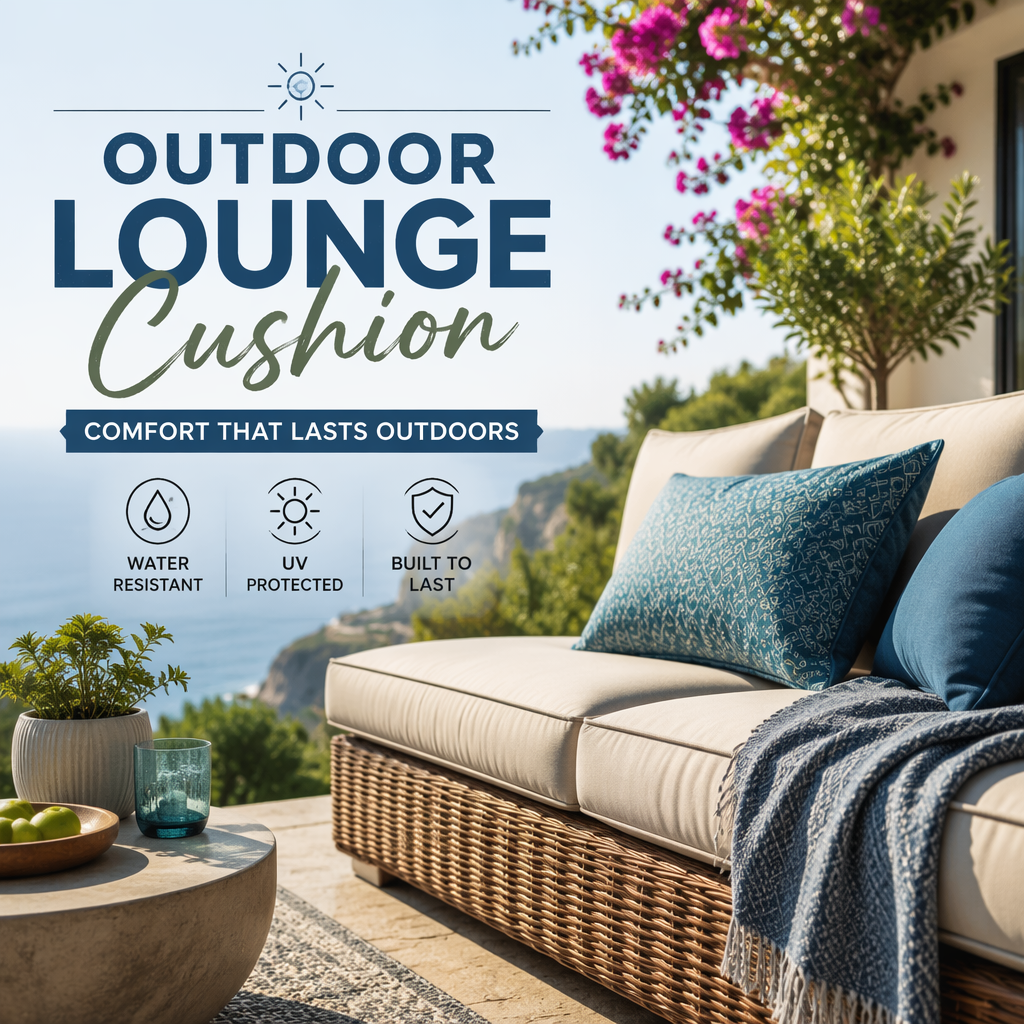
An outdoor lounge cushion can transform a patio chair, chaise lounge, or poolside recliner into a more comfortable place to relax. The right cushion also refreshes the look of outdoor furniture without requiring you to replace the entire set. With the right fit and materials, seating stays inviting season after season—even as sun, humidity, and occasional splashes take their toll.
Choosing one involves more than picking a color. Size, foam quality, fabric, weather resistance, attachment style, and maintenance all affect how well lounge seating stays comfortable. This guide explains what to look for, how to measure your furniture, and how to keep cushions comfortable and presentable for longer.
- What Is an Outdoor Lounge Cushion?
- How to Choose the Right Outdoor Lounge Cushion
- Best Outdoor Lounge Cushion Features for Different Needs
- One-Piece vs. Two-Piece Lounge Cushions
- How to Measure for a Replacement Outdoor Lounge Cushion
- How to Clean an Outdoor Lounge Cushion
- How to Store Outdoor Lounge Cushions
- When Should You Replace an Outdoor Lounge Cushion?
- Frequently Asked Questions
- Outdoor Lounge Cushion Buying Checklist
What Is an Outdoor Lounge Cushion?
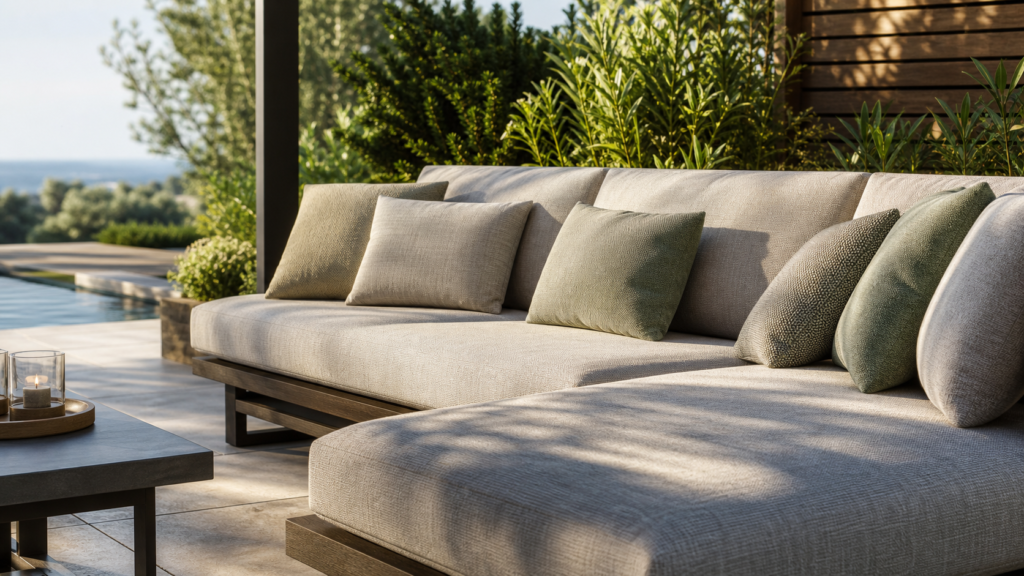
An outdoor lounge cushion is a padded cushion designed for reclining patio furniture. It commonly fits chaise lounges, adjustable loungers, poolside chairs, and other long outdoor seats.
Most lounge cushions have two connected sections:
- A shorter upper section that supports the back and head
- A longer lower section that supports the seat and legs
A hinge or flexible seam between the sections allows the cushion to move when the lounge chair is adjusted. Ties, straps, or non-slip backing may help hold it in place.
Unlike indoor upholstery, outdoor cushions use materials intended to tolerate sun exposure, moisture, temperature changes, and regular outdoor use. However, “outdoor” does not always mean completely waterproof or maintenance-free. Expect some care requirements—especially if lounge cushions sit uncovered.
How to Choose the Right Outdoor Lounge Cushion
The best cushion should fit the chair properly, provide enough support, and suit the conditions where it will be used. Consider the following factors before buying.
1. Measure the Lounge Chair
Accurate measurements are essential. A cushion that is too narrow may slide or leave uncomfortable gaps, while one that is too wide can bunch up and wear unevenly.
Measure:
- The width of the seat from side to side
- The length of the back section
- The length of the seat and leg section
- The total length when the lounge is fully extended
- The position of the chair’s adjustable hinge
- The desired cushion thickness
Measure the furniture itself rather than an old cushion, especially if the old one has flattened or stretched. Take measurements along the surfaces where the cushion will rest instead of measuring straight through the air from one endpoint to another.
Also check the product listing carefully. Some manufacturers state dimensions in the order of length, width, and thickness, while others use width, depth, and height. If possible, compare your measurements against a diagram rather than relying on guesswork.
2. Select a Comfortable Thickness
Outdoor lounge cushions are available in several thicknesses. Thin cushions create a streamlined appearance and may dry quickly, but they offer less support on hard metal or wooden frames. Thicker options generally feel more comfortable during long periods of reclining.
A thickness of around 2 to 4 inches works for many lounge chairs. The best choice depends on the furniture:
- Sling or contoured chairs: A thinner cushion may be sufficient.
- Wood, metal, or rigid resin loungers: A thicker cushion usually provides better pressure relief.
- Deep or oversized loungers: Thicker, denser padding can improve proportion and support.
Thickness alone does not determine comfort. A thin, high-density insert may provide better support than a thick cushion filled with loose, low-quality material. If you’re unsure, compare cushion weight and the stated foam density (when provided).
3. Compare Cushion Fill Materials
The insert affects comfort, drying time, shape retention, and durability—so this is where most performance differences show up over time.
Polyurethane Foam
Polyurethane foam provides structured support and is widely available. Its performance depends on density and construction. Standard indoor-style foam may absorb and retain moisture, so it should be protected by a suitable outdoor cover and kept out of prolonged rain.
Quick-Dry or Reticulated Foam
Quick-dry foam has an open-cell structure that allows water and air to pass through more easily. It is a strong option for poolside areas, uncovered patios, and humid climates. It usually costs more but reduces the risk of trapped moisture inside an outdoor lounge cushion.
Polyester Fiberfill
Polyester fiberfill feels soft and lightweight. It is often used in budget-friendly or plush cushions, but it may compress faster than dense foam. Tufting or channel stitching can help keep the filling distributed more evenly.
Layered Fill
Some outdoor lounge cushions combine a supportive foam core with a softer fiber wrap. This construction can balance structure and softness while producing a fuller appearance.
For frequent use, prioritize resilient foam or a layered insert that returns to its original shape after pressure is removed. If you notice permanent indentations after minimal use, that’s a sign the fill may not be holding up well.
4. Choose Outdoor-Grade Fabric
The cover is the cushion’s first line of defense against sunlight, spills, dirt, and moisture. Look for fabric specifically rated for outdoor use.
Useful features include:
- UV or fade resistance
- Water resistance
- Stain resistance
- Resistance to mildew growth
- Strong seams
- Colorfastness
- A removable, washable cover
Solution-dyed acrylic is a popular premium material because color is incorporated into the fiber during manufacturing. It generally offers strong fade resistance and a comfortable fabric-like texture.
Outdoor polyester is another common choice. It is available in many colors and patterns and can provide good value, although performance varies by coating, fabric weight, and UV rating.
Olefin is lightweight, resistant to moisture, and often suitable for outdoor environments. Vinyl-coated fabrics are easy to wipe clean but may feel warmer and less breathable in direct sunlight.
If you want a quick reference for how outdoor fabrics handle weather exposure, review general outdoor fabric care guidance from a reputable organization such as the CDC’s mold prevention resources, which can help you understand why moisture control matters for preventing mildew-related problems on home surfaces.
5. Understand Water-Resistant vs. Waterproof
These terms are not interchangeable.
A water-resistant outdoor lounge cushion can repel light rain or splashes for a limited period. Water may eventually pass through seams, zippers, or the fabric itself.
A waterproof cushion is designed to prevent water penetration more completely. Even then, construction details matter. Needle holes, vents, and closures can create entry points.
Fully waterproof covers may also trap condensation if they lack ventilation. For many households, a breathable water-resistant cover paired with quick-drying fill and proper storage is more practical than a sealed waterproof design for an outdoor lounge cushion.
6. Check How the Cushion Attaches
Lounge cushions can shift as users sit down, stand up, or adjust the backrest. Secure attachment features improve comfort and keep the cushion aligned.
Common options include:
- Fabric ties
- Adjustable straps
- Elastic bands
- Hook-and-loop closures
- Non-slip backing
- Pockets that fit over the chair back
Inspect where the chair frame allows attachments. Ties should line up with stable rails rather than hinges or moving hardware. Reinforced attachment points are preferable because thin ties can tear after repeated tension and sun exposure.
Also consider how easy it is to remove the cushion for cleaning. Removable covers are especially helpful if you use the lounge area frequently or if you have pets and children.
7. Match the Cushion to the Intended Location
The environment should influence the materials you choose.
For an uncovered patio, prioritize UV-resistant fabric, drainage, quick-dry foam, and secure ties. Under a covered porch, conventional outdoor foam may be suitable because the cushion receives less direct rain and sunlight.
Poolside cushions need materials that handle frequent splashes and dry efficiently. In windy locations, strong straps are particularly important. For coastal settings, choose covers and fasteners that tolerate salt exposure and can be cleaned easily.
Best Outdoor Lounge Cushion Features for Different Needs
Different spaces call for different priorities.
Best for Frequent Use
Choose dense, resilient foam with a durable, removable cover. Reinforced seams and secure straps help an outdoor lounge cushion withstand repeated use. If your chair is used daily, also consider whether the cover can be washed or spot-cleaned quickly after meals and drinks.
Best for Rainy or Humid Climates
Look for open-cell quick-dry foam, breathable fabric, drainage features, and mildew-resistant construction. Even with these benefits, cushions should still be stored or covered during prolonged rain. A little airflow after wet weather can make a big difference in how fresh lounge cushions feel.
Best for Sunny Patios
Prioritize a high UV-resistance rating and fade-resistant fabric. Dark, saturated colors may show fading more visibly than mid-tone patterns, although fabric quality matters more than color alone. Keep in mind that even UV-resistant fabrics can fade gradually when exposed for long periods.
Best for Easy Cleaning
Select an outdoor lounge cushion with a zippered, removable cover and stain-resistant fabric. Check the care label before machine washing because some outdoor covers require hand cleaning. For spot cleaning, act quickly—fresh spills typically remove more easily than dried stains.
Best for Budget-Conscious Buyers
A polyester-covered cushion with supportive fill can offer good value for a covered patio or seasonal use. Compare construction quality and warranty coverage rather than choosing solely by price. If you’ll store cushions off-season, you may be able to choose slightly simpler materials while still getting solid performance.
One-Piece vs. Two-Piece Lounge Cushions
A one-piece cushion usually consists of connected back and seat sections. It is convenient to move and tends to stay visually aligned. This style works well when the hinge matches the chair’s adjustment point.
A two-piece set uses separate back and seat cushions. It can provide more flexibility for unusual chair dimensions and makes individual pieces easier to replace. However, separate cushions may shift more unless each section has its own ties or non-slip base.
For an adjustable chaise lounge, confirm that the cushion can bend freely without pulling at the seams. If the chair doesn’t move smoothly, you may need a cushion that’s specifically designed for adjustable hinges.
How to Measure for a Replacement Outdoor Lounge Cushion
Follow this process to reduce the chance of ordering the wrong size:
- Place the lounge chair on a level surface.
- Adjust the chair to a flat or nearly flat position.
- Measure the width at the narrowest usable point.
- Measure the back section from the top edge to the hinge.
- Measure the lower section from the hinge to the foot edge.
- Add both section lengths to confirm the total length.
- Measure the available space for cushion thickness around arms and hardware.
- Note the locations where ties or straps can attach.
- Compare each measurement with the manufacturer’s size diagram.
A difference of an inch may be acceptable for some soft cushions, but rigid foam inserts require a more precise fit. Avoid oversizing around movable joints because excess fabric can become pinched when the backrest changes position.
If you’re replacing an existing set, review compatible dimensions before you buy new replacements. For more guidance, see Outdoor Patio Cushions Pillow Replacement Covers: How to Choose the Right Fit.
How to Clean an Outdoor Lounge Cushion
Regular cleaning helps an outdoor lounge cushion stay fresh, reduces stubborn stains, and helps prevent mildew. Always follow the care instructions on the product label, but these general steps work for many outdoor cushions.
Step 1: Brush off loose debris
Start by removing dust, sand, and crumbs with a soft brush or a dry cloth. This prevents grit from grinding into fabric during washing.
Step 2: Spot clean spills
Use mild soap and lukewarm water for most outdoor lounge cushion fabrics. Blot rather than rub, especially on textured covers. If a stain persists, repeat the process instead of using harsher cleaners right away.
Step 3: Rinse and dry thoroughly
After spot cleaning, rinse gently to remove soap residue. Then let the cushion dry completely before reinstalling it. Moisture left trapped in seams or around zippers can lead to odor or mildew growth.
Step 4: Wash removable covers when needed
If your cover is removable, wash it according to the care label. Many outdoor covers can be machine washed on a gentle cycle. Air-dry is often the safest approach for outdoor fabric longevity.
For upholstered cushions with foam inserts, avoid soaking the entire cushion unless the manufacturer recommends it. When in doubt, clean the cover and keep the foam protected from heavy soaking.
How to Store Outdoor Lounge Cushions
Proper storage can greatly extend the life of an outdoor lounge cushion, even if your cushions are water-resistant. Before storing, clean and fully dry lounge cushions so you don’t trap moisture in the off-season.
Best storage practices
- Dry first: Allow cushions to air-dry completely after rain or cleaning.
- Use breathable storage: Store in a dry area with airflow when possible.
- Avoid compression: Don’t stack heavy items on top of cushions for long periods.
- Protect from dust: Use a cover or bag that lets moisture escape.
- Keep away from pests: Make sure storage areas are clean and sealed appropriately.
If you leave cushions outdoors under furniture covers, check them periodically. Covers can trap humidity, especially during heavy dew or light rain.
When Should You Replace an Outdoor Lounge Cushion?
Even well-cared-for outdoor lounge cushions eventually wear out. Replace when comfort, support, or cleanliness becomes difficult.
- Persistent odor or mildew: If odors return quickly after cleaning, the fill may be absorbing moisture.
- Flattened or uneven support: Indentations that don’t bounce back affect posture and comfort.
- Torn seams or failing attachments: Stretched ties or ripped fabric make the cushion less safe and harder to position.
- Fading beyond your tolerance: UV damage can make colors look patchy, even with resistant fabrics.
- Water absorption issues: If the cushion stays wet for too long, consider an insert and cover refresh.
Sometimes the best option is not to replace the entire cushion. In many cases, swapping the cover can be more cost-effective. If you want to update the look or refresh protection, matching replacement covers can extend the life of your lounge cushion setup.
Frequently Asked Questions
Are outdoor lounge cushions waterproof?
Some cushions are more water-resistant than others, but “water-resistant” and “waterproof” are different. Many cushions handle light splashes well, while true waterproof performance depends on seams, zippers, and venting. Proper storage still matters.
How do I prevent my lounge cushions from slipping?
Look for non-slip backing, secure ties, or straps that match your chair’s frame. Make sure attachment points align with stable rails, and confirm that the cushion thickness allows the chair to adjust without pulling at seams.
Can I leave cushions outside during the winter?
In most climates, leaving lounge cushions outside year-round is not ideal. For best results, clean and fully dry cushions, then store them in a dry, breathable space. If you must leave them outside, use a well-fitted cover and check periodically for moisture buildup.
What’s the best fabric for sunny patios?
Solution-dyed acrylic and other UV-rated outdoor fabrics typically perform well in direct sun. Still, color can fade gradually over time, especially in high-UV regions.
Outdoor Lounge Cushion Buying Checklist
Use this checklist to confirm you’re choosing the right cushion before checkout.
- Measurements match: Width, back length, seat/leg length, total length, and hinge position are correct.
- Thickness fits your chair: Enough comfort without bunching or pinching at the hinge.
- Fill matches your conditions: Quick-dry for humid or poolside use; resilient foam for everyday comfort.
- Fabric is outdoor-rated: UV resistance, stain resistance, and mildew resistance where needed.
- Water performance is realistic: Water-resistant vs waterproof understood based on your climate.
- Attachment holds securely: Ties/straps/non-slip backing aligned with chair frame.
- Cover maintenance works for you: Removable and easy to clean when spills happen.
If you’re planning upgrades to your outdoor area, consider pairing comfortable seating with shade solutions. A well-chosen patio umbrella can reduce sun exposure and help cushions look better longer.
For shade-focused guidance, see Patio Umbrella for Shade: Best Outdoor Patio Umbrella Guide.
Summary: An outdoor lounge cushion should fit correctly, provide resilient support, and use outdoor-grade materials that suit your weather. Measure carefully, choose the right foam and fabric for your conditions, and keep up with cleaning and storage to protect both comfort and appearance over time.





Add comment