
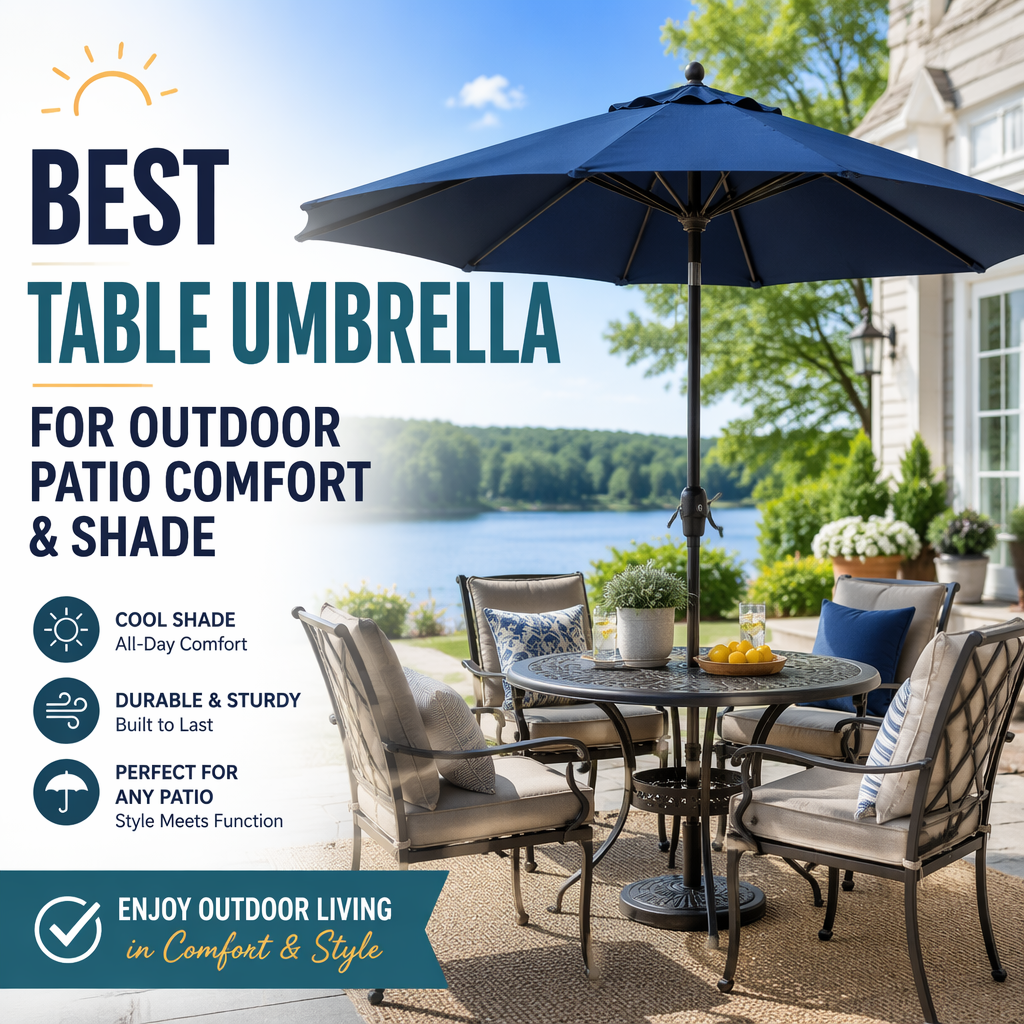
Table Umbrella Outdoor Patio shade is one of the easiest ways to make outdoor dining feel like an extension of your home. With the right canopy size, compatible table hole, and properly weighted base, you can block harsh sun right where you eat, talk, and relax—without taking up extra floor space or crowding your furniture layout.
Table of Contents
- What Is a Table Umbrella for an Outdoor Patio?
- How to Choose the Right Patio Table Umbrella Size
- What Diameter Umbrella Hole Does a Patio Table Need?
- Choosing the Best Umbrella Material
- Which Umbrella Shape Works Best?
- Center Pole or Cantilever Patio Umbrella?
- What Type of Base Does a Table Umbrella Need?
- How to Keep an Outdoor Patio Table Umbrella Stable
- Crank, Pulley, or Push-Lift Opening System?
- Is a Tilt Feature Worth It?
- What Colors Are Best for a Patio Umbrella?
- How High Should a Patio Table Umbrella Be?
- How to Install a Table Umbrella Outdoor Patio Setup
- How to Care for an Outdoor Patio Table Umbrella
- Can a Patio Umbrella Stay Outside in the Rain?
- Can a Patio Umbrella Stay Open in the Wind?
- Common Buying Mistakes to Avoid
- Is a Table Umbrella Worth It for an Outdoor Patio?
- Final Buying Checklist
What Is a Table Umbrella for an Outdoor Patio?
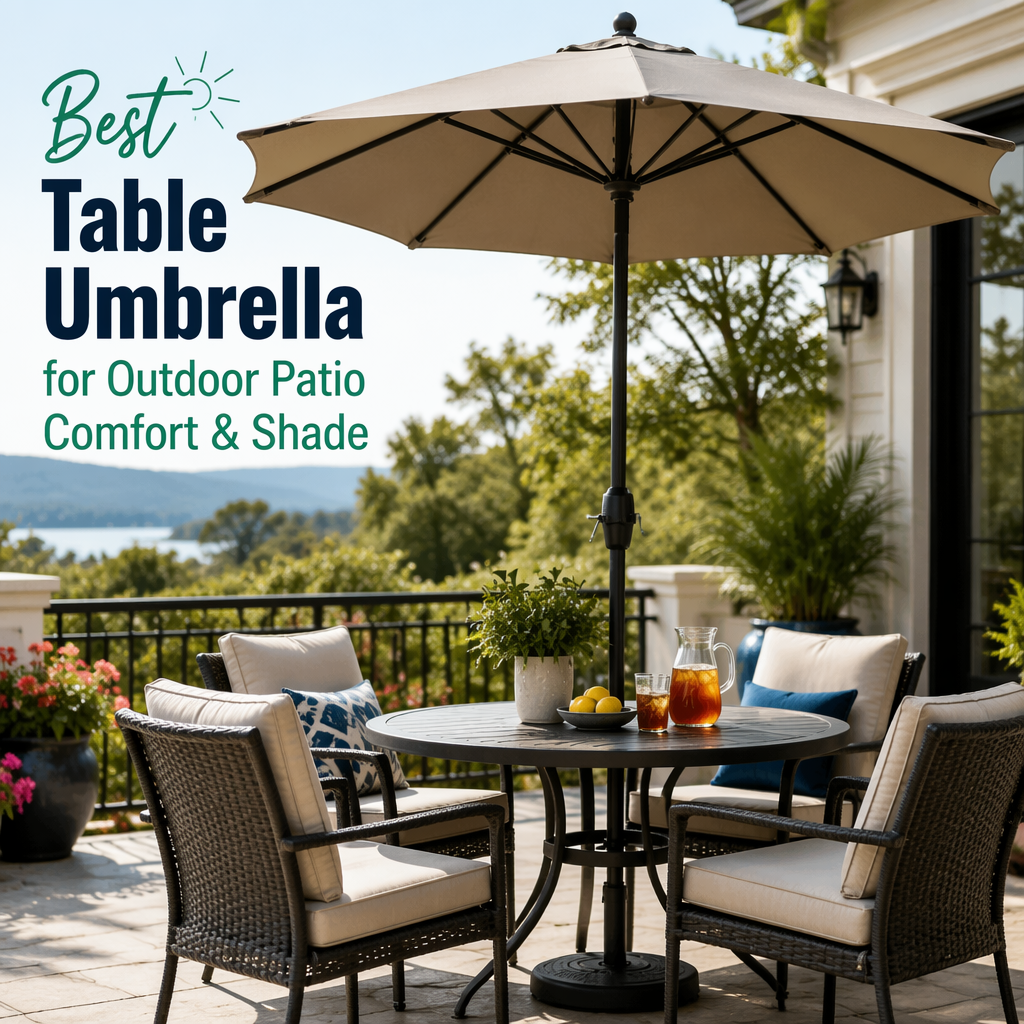
A table umbrella is an outdoor shade canopy designed to fit through the center hole of a patio dining table. The umbrella pole rests inside the table opening and is usually secured by a weighted base beneath the table.
Unlike a freestanding cantilever or offset umbrella, a table umbrella is supported by both the patio table and its base. That’s why a table umbrella outdoor patio setup is a practical choice for dining areas, compact patios, balconies, and decks.
The best table umbrella outdoor patio setup should:
- Fit securely through the table’s umbrella hole
- Provide enough shade for the seating area
- Remain stable in normal outdoor conditions
- Use weather-resistant fabric and hardware
- Open, close, and tilt easily
- Match the size and style of the patio furniture
How to Choose the Right Patio Table Umbrella Size
Umbrella size is one of the most important factors. A canopy that is too small will leave guests exposed to the sun, while an oversized umbrella may overwhelm the table umbrella outdoor patio arrangement or become difficult to stabilize.
A general sizing guide is:
| Patio Table Size | Recommended Umbrella Diameter |
|---|---|
| 30–36 inches | 5–6 feet |
| 38–42 inches | 6–7 feet |
| 44–48 inches | 7–8 feet |
| 50–54 inches | 8–9 feet |
| 60 inches or larger | 9–11 feet |
For a small two- to four-person table, a 6- to 7-foot umbrella is often sufficient. A six-person dining table usually works well with an 8- to 9-foot canopy. Larger tables may need a 10- or 11-foot umbrella—assuming the table and base can support it safely.
Measure the table before buying. With the right table umbrella outdoor patio sizing, the canopy should shade the seating area without extending so far that it creates a stability problem.
What Diameter Umbrella Hole Does a Patio Table Need?
Most patio tables designed for umbrellas have a center hole between 1.5 and 2 inches in diameter. Many umbrella poles measure approximately 1.5 inches, but sizes vary by manufacturer.
Before purchasing, check:
- The diameter of the table hole
- The diameter of the umbrella pole
- Whether the table includes a removable hole ring
- Whether the base opening fits the pole
- Whether the pole reaches securely into the base
A loose fit can allow a table umbrella outdoor patio umbrella to wobble. A hole that is too small may prevent installation altogether. Some tables include a plastic or metal collar that helps center the pole and reduce movement.
Choosing the Best Umbrella Material
The fabric affects shade quality, color retention, water resistance, and overall lifespan. Common patio umbrella materials include polyester, acrylic, and olefin.
Polyester
Polyester is widely used because it is affordable, lightweight, and available in many colors. Quality varies, so look for tightly woven fabric with UV-resistant treatment for a better table umbrella outdoor patio setup.
Acrylic
Acrylic fabric is often considered a premium option. It generally offers excellent resistance to fading, mildew, and moisture. Acrylic umbrellas tend to cost more but may perform better in sunny climates.
Olefin
Olefin is durable, colorfast, and often more affordable than premium acrylic. It’s a practical choice for patios exposed to frequent sunlight.
A waterproof or water-resistant canopy can provide light rain protection, but most patio umbrellas are not intended to replace a permanent shelter. For your table umbrella outdoor patio, always close the canopy during heavy rain, storms, or strong winds.
Which Umbrella Shape Works Best?
Round umbrellas are the most common choice for circular, square, and small rectangular tables. They’re easy to center and create a balanced look for everyday outdoor meals.
Square umbrellas provide broad, symmetrical coverage and work well with square or rectangular dining tables. Their straight edges can also create a clean, modern appearance.
Rectangular umbrellas are useful when the table is long or when shade needs to cover a narrow seating area. They may offer better coverage for larger dining arrangements, but they require careful positioning in a table umbrella outdoor patio setup.
The shape should generally complement the table. A round canopy can work with many table styles, while a rectangular canopy is often more efficient for long outdoor dining tables.
Center Pole or Cantilever Patio Umbrella?
A center-pole table umbrella is designed to pass through the middle of the patio table. It’s usually more affordable, compact, and stable when used correctly.
A cantilever or offset umbrella has a side pole and extends over the table without occupying the center. This design provides more flexible positioning and leaves the table surface unobstructed. However, offset umbrellas usually require a larger, heavier base and can be more expensive.
Choose a center-pole table umbrella when:
- Your table has an umbrella hole
- You want a simple and affordable shade solution
- The table will remain in a fixed position
- You need a compact option
Choose a cantilever umbrella when:
- The table does not have an umbrella hole
- You want adjustable shade placement
- You need an unobstructed tabletop
- You are willing to use a heavy-duty base
What Type of Base Does a Table Umbrella Need?
A stable base is essential, especially for larger umbrellas. The table helps support the pole, but it should not be expected to carry the entire load.
Small umbrellas may work with a base weighing approximately 20 to 30 pounds. Larger canopies often need a 40- to 70-pound base, depending on the umbrella design and local weather conditions. For a proper table umbrella outdoor patio setup, the base should sit beneath the table, fit within the table’s leg structure, and remain flat on the patio surface.
Common base materials include:
- Concrete for maximum weight
- Steel for strength and a streamlined appearance
- Resin for lightweight handling and weather resistance
- Granite for durability and an attractive finish
- Water-filled bases for easier transport when empty
The manufacturer’s recommendation should take priority over general weight guidelines. Wind exposure, umbrella height, canopy size, and patio location all affect stability.
How to Keep an Outdoor Patio Table Umbrella Stable
Even a high-quality umbrella can become dangerous if it is not secured properly. Use these stability practices to protect your table umbrella outdoor patio:
- Use a base designed for the umbrella’s pole diameter
- Tighten the pole collar or locking knob
- Confirm that the table sits level
- Place the base on a firm, flat surface
- Close the canopy whenever you leave the patio
- Use a protective tie or strap when the umbrella is closed
- Remove and store the umbrella during severe weather
- Avoid placing the umbrella in a highly exposed, windy location
Do not leave an open patio umbrella unattended. Sudden gusts can lift the canopy, damage patio furniture, or injure people.
Crank, Pulley, or Push-Lift Opening System?
Patio umbrellas commonly use one of three opening mechanisms.
A crank system opens the canopy by turning a handle. It’s convenient for frequent use and generally requires less physical effort.
A pulley system uses a rope and locking pin. It’s simple and reliable, but it may require more manual handling for a table umbrella outdoor patio setup.
A push-lift system opens when the canopy is pushed upward and locked into place. It’s often found on smaller or lower-cost umbrellas.
For a large table umbrella outdoor patio setup, a crank lift is usually the most convenient choice. For occasional use or smaller umbrellas, a pulley or push-lift design may be sufficient.
Is a Tilt Feature Worth It?
A tilt mechanism allows you to angle the canopy as the sun moves. This can improve shade coverage during morning and afternoon use without moving the entire umbrella—especially helpful in a table umbrella outdoor patio arrangement where glare changes throughout the day.
Common tilt systems include:
- Push-button tilt
- Collar tilt
- Crank tilt
- Auto-tilt mechanisms
A tilt feature is useful when the patio receives direct sunlight from different directions. It matters less if your umbrella is used mainly around midday or if the seating area is already consistently shaded.
Crank-tilt systems are convenient, but they may include additional moving parts that require care. Choose a mechanism that feels sturdy and operates smoothly.
What Colors Are Best for a Patio Umbrella?
Umbrella color affects appearance, heat absorption, and how visible fading will be over time.
Light colors such as beige, white, and light gray create an airy look and may reflect more sunlight. Dark colors such as navy, charcoal, and green can provide a bold style and may conceal minor stains, but they can absorb more heat.
That said, the canopy’s fabric density and UV protection generally matter more than color alone. Look for fade-resistant fabric for a long-lasting table umbrella outdoor patio setup.
Consider coordinating the umbrella with:
- Outdoor Throw Pillows
- Outdoor rugs
- Dining chairs
- Home exterior colors
- Planters and garden features
Neutral colors are versatile, while saturated colors can create a stronger focal point.
How High Should a Patio Table Umbrella Be?
A typical table umbrella should provide enough clearance for people to sit comfortably and stand without hitting the canopy. Most umbrellas extend approximately 7 to 8 feet above the ground when fully open.
The canopy should sit high enough to avoid obstructing conversation but low enough to provide useful shade. If it’s too high, sunlight may pass underneath. If it’s too low, it can interfere with movement and visibility.
Adjust the height according to the table, chairs, and patio slope. Make sure the umbrella doesn’t contact nearby walls, tree branches, lights, or rooflines.
How to Install a Table Umbrella Outdoor Patio Setup
Installation is usually straightforward:
- Place the umbrella base on a level patio surface.
- Position the patio table over the base.
- Insert the umbrella pole through the table’s center hole.
- Secure the lower pole in the base.
- Tighten the base collar or locking mechanism.
- Open the canopy slowly.
- Check that the umbrella is centered and stable.
- Secure the canopy with the tie when closing it.
For large umbrellas, have another person help lift and position the pole. Never force the pole into the table opening or base. If the umbrella feels loose, verify the hole diameter, base compatibility, and locking hardware for your table umbrella outdoor patio setup.
How to Care for an Outdoor Patio Table Umbrella
Proper maintenance can extend the life of the canopy and frame, especially for a table umbrella outdoor patio used throughout the warm season.
Clean the canopy regularly with a soft brush to remove leaves, dust, and debris. For stains, use mild soap mixed with lukewarm water and a soft cloth or sponge. Rinse thoroughly and allow the fabric to dry completely before closing the umbrella.
Avoid harsh chemicals, abrasive brushes, and pressure washing unless the manufacturer specifically permits it. These methods can damage the water-resistant coating and weaken the fabric.
Inspect the umbrella at the beginning and end of each season. Check for:
- Frayed seams
- Loose ribs
- Bent or cracked components
- Rust on metal hardware
- Worn crank or pulley parts
- Mold or mildew
- Faded or thinning fabric
Close and cover the umbrella when it’s not in use. In winter or during severe weather, remove the canopy or store the entire umbrella in a dry location.
Can a Patio Umbrella Stay Outside in the Rain?
Most outdoor patio umbrellas can handle light rain, but they shouldn’t remain open during prolonged rainfall or storms. Moisture can contribute to mildew, rust, and fabric deterioration—particularly if your table umbrella outdoor patio umbrella is closed while wet.
If the umbrella becomes wet, leave it fully open until it dries. Don’t store it damp inside a cover or storage area.
A water-resistant canopy may help during brief showers, but it’s not a substitute for a waterproof roof. For regular outdoor use in wet climates, choose quick-drying, mildew-resistant fabric and corrosion-resistant hardware.
For general guidance on outdoor fabric care and moisture-related issues, see EPA information on mold and moisture.
Can a Patio Umbrella Stay Open in the Wind?
No patio umbrella should be left open in strong or unpredictable wind. Wind can lift the canopy off the base, bend the ribs, damage the frame, or cause the umbrella to strike nearby objects.
Close the umbrella when:
- Wind begins to increase
- The patio is unattended
- A storm is approaching
- The base starts to shift
- The canopy begins to shake or twist
In very windy locations, consider a permanently anchored shade structure, a heavy-duty commercial base, or a retractable awning instead of a standard table umbrella outdoor patio setup.
Common Buying Mistakes to Avoid
Several mistakes can reduce comfort and shorten the life of an outdoor umbrella.
Buying an Umbrella That Is Too Small
A small canopy may shade only the center of the table while leaving chairs and guests exposed. Measure the seating area rather than choosing based only on table size.
Ignoring the Base
A low-cost umbrella with an inadequate base can be unstable and unsafe. Include the base in your purchase plan for the table umbrella outdoor patio setup.
Failing to Check Pole Compatibility
A pole that doesn’t match the table hole or base can wobble or fail to lock securely. Confirm measurements before ordering.
Leaving the Umbrella Open Unattended
Even calm weather can change quickly. Closing the canopy when it’s not in use is one of the simplest ways to prevent damage to your table umbrella outdoor patio umbrella.
Choosing Appearance Over Fabric Quality
Color and design matter, but UV resistance, stitching, frame strength, and ventilation are more important for long-term performance.
Is a Table Umbrella Worth It for an Outdoor Patio?
A table umbrella is worth considering if you need affordable, flexible shade for an outdoor dining area. It’s typically easier to install than a permanent roof and can be replaced or relocated when patio furniture changes. For many homeowners, a table umbrella outdoor patio solution delivers a strong balance of coverage and convenience.
The best value comes from selecting a correctly sized canopy, using a suitable base, and storing the umbrella during bad weather. A quality umbrella may cost more initially, but durable fabric, strong ribs, and reliable lifting hardware can reduce the need for frequent replacement.
For a small or medium patio dining area, a table umbrella often provides an effective balance of comfort, style, and cost as part of a table umbrella outdoor patio setup.
Final Buying Checklist
Before purchasing a table umbrella outdoor patio solution, confirm the following:
- The canopy size matches the table and seating area
- The pole fits the table hole and base
- The base is heavy enough for the umbrella
- The fabric is UV-resistant and weather-resistant
- The frame resists rust and corrosion
- The opening mechanism operates smoothly
- The tilt function meets your shade needs
- The umbrella can be secured and stored safely
- The color and shape complement the patio furniture
- The product includes clear care and warranty information
With the right size, durable materials, and a stable base, a table umbrella outdoor patio can provide comfortable shade, help protect guests, and make it easier to enjoy your patio throughout the warm season.
If you’re also planning evening gatherings, pair your setup with lighting and consider shade that’s easy to close when you’re done. Many homeowners also like LED lighting options designed for outdoor umbrellas for added ambiance.
Custom Patio Umbrella: Custom Umbrellas Made to Transform Your Outdoor Space can be a great way to match fabric, size, and style to your patio layout.



Add comment