
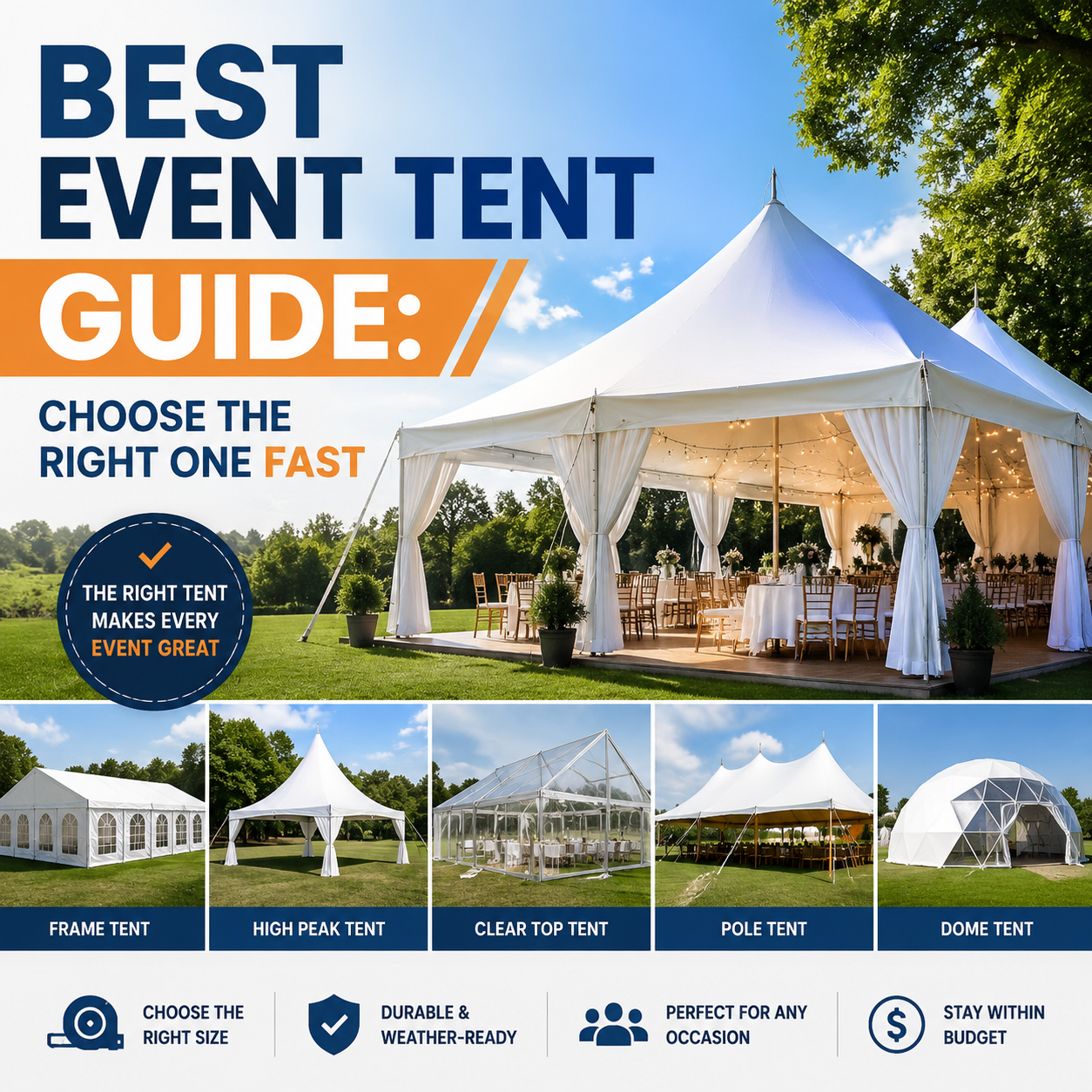
If you’re planning an outdoor event, choosing the right shelter is one of the biggest decisions you’ll make. This event tent guide breaks down the main tent types, key sizing rules, must-have accessories, and safety planning so you can select a setup that feels comfortable for guests and runs smoothly for your team.
Table of Contents
- Types of Event Tents
- How to Choose the Right Event Tent
- Event Tent Sizes and Capacity
- Accessories That Improve an Event Tent
- Event Tent Safety Considerations
- Installation Planning Checklist
- Weather-Proofing Strategies
- Event Tent Rental vs Purchase
- Tips for Planning an Event With a Tent
- Choosing the Best Event Tent for Your Needs
- Common Questions About Event Tents
Types of Event Tents
Different events require different tent styles. Understanding the main options helps you choose the right one for your needs and budget—one of the core goals of any event tent guide.
1. Pole Tents
Pole tents use center poles and tension from the fabric to create their shape. They are popular for weddings and elegant outdoor events because of their classic peaked appearance.
Best for:
- Grass installation
- Large celebrations
- Formal events
Considerations:
- Require staking into the ground
- Need open space for setup
- Center poles may affect interior layout
For many planners, pole tents feel “traditional” and work well when you want a refined look without a highly technical installation.
2. Frame Tents
Frame tents use an aluminum or steel frame instead of center poles, giving you a wide open interior space. This makes them very versatile for almost any type of event and is a frequent recommendation across event tent guide checklists.
Best for:
- Corporate events
- Backyard parties
- Venues with limited staking options
- Events requiring flexible layouts
Considerations:
- Often more expensive than pole tents
- May require additional weights or anchoring
If you expect a mix of seating formats—like a stage one day and a banquet layout the next—frame tents are a common go-to option in an event tent guide.
3. Clear Span Tents
Clear span tents are large, durable structures with no interior poles. They are ideal for high-capacity events and professional installations, especially when your event tent layout must stay unobstructed.
Best for:
- Large weddings
- Festivals
- Trade shows
- Exhibitions
- Long-term or premium events
Considerations:
- Higher cost
- Usually require professional installation
- Best for larger budgets and complex needs
For planners who want an unobstructed interior and predictable layout planning, clear span tents are often worth the investment in a complete event tent guide.
4. Canopy Tents
Canopy tents are smaller, lightweight, and easy to set up. They are often used for casual gatherings, vendor booths, and quick coverage needs.
Best for:
- Small parties
- Pop-up events
- Registration areas
- Food stations
- Vendor displays
Considerations:
- Less protection than larger event tents
- Limited capacity
In an event tent guide, canopy tents are frequently recommended as “support” shelters—used alongside a main structure rather than replacing it.
How to Choose the Right Event Tent
Selecting the right event tent depends on the size of your guest list, location, budget, and event type. In this event tent guide, these are the most important factors to consider.
Guest Count
Start with the number of people attending. Your event tent must provide enough room not only for guests but also for tables, chairs, stages, buffet lines, dance floors, and walkways.
A tent that is too small can feel crowded, while one that is too large may look empty and increase costs unnecessarily.
When you plan, think in terms of “usable space” and not only the tent’s overall dimensions.
Event Type
The purpose of the event affects the tent style and setup. A wedding may require a different arrangement than a product demo or outdoor fundraiser.
For example:
- Weddings often need elegant interiors and space for dining and dancing
- Corporate events may need presentation space and branded areas
- Festivals often need multiple tents for vendors, shade, and operations
For ideas that work across different occasions, see best event tent ideas for memorable outdoor events.
Venue Surface
The surface where the tent will be installed matters. It impacts anchoring and whether you need flooring or ground protection—details that repeatedly come up in an event tent guide.
- Grass: Good for staking most tent styles
- Pavement or concrete: May require weighted anchoring
- Uneven ground: May need site preparation or a different tent model
Always inspect the site before installation to avoid problems during setup.
If your event involves a large footprint, ask about mats, ground protection, and whether the surface can handle foot traffic around the tent.
Weather Conditions
Think about the season and expected weather. This event tent guide recommends choosing an event tent that provides enough protection for your local conditions.
Important weather factors include:
- Heat and sun exposure
- Rain
- Wind
- Cold temperatures
You may also want sidewalls, fans, heaters, or air conditioning depending on the climate.
As part of a complete event tent guide, build contingency options into your plan—especially if you’re hosting an outdoor ceremony with fixed timing.
Budget
Event tent costs vary depending on size, style, rental duration, accessories, and installation requirements. A simple canopy shelter will cost far less than a large clear span tent with flooring and climate control.
When budgeting, consider:
- Tent rental or purchase price
- Delivery and installation
- Flooring
- Lighting
- Sidewalls
- Heating or cooling
- Permits and insurance
If you need broader planning help, the Ready.gov event planning guidance is a useful reference for safety and preparation.
Event Tent Sizes and Capacity
Tent size is one of the most common concerns for event planners. In an event tent guide, size is not just a number—it’s the basis for comfort, flow, and how your layout functions.
A few examples:
- Standing-room events need less space per person
- Seated dinners need more room
- Events with stages, bars, or buffet tables require additional space
- Dancing areas increase the required footprint
An event tent can feel very different depending on the layout inside it. Two tents with the same capacity can “feel” smaller or larger based on table spacing, aisle widths, and the location of service areas.
A professional tent provider can help calculate the right dimensions based on your seating style and event layout. It is always better to plan for extra space than to underestimate your needs in your event tent plan.
When in doubt, compare your plan with a similar outdoor event tent setup so you can estimate room for tables, movement, and service areas more accurately.
Also consider guest comfort. Extra space around entrances, bathrooms, and staging areas helps reduce congestion and improves overall flow—an often overlooked part of selecting the right event tent.
Accessories That Improve an Event Tent
Your event tent can be customized in many ways to improve comfort and appearance. Accessories often make the difference between “covered” and truly guest-friendly.
Flooring
Flooring creates a stable, clean surface and can help level uneven ground. It also improves comfort for guests wearing formal shoes.
For events with heavy foot traffic, flooring can reduce wear on the site and make cleanup faster after the event tent is removed.
Lighting
Lighting is essential for evening events and helps set the mood. Options include string lights, chandeliers, uplighting, and functional work lighting.
Plan for more than the “main glow.” You also want lighting near entrances, restrooms, and any food service so pathways remain easy to navigate in any event tent setup.
Sidewalls
Sidewalls provide wind protection, shade, and privacy. They can also help manage temperature and create a more enclosed atmosphere.
Transparent or partially transparent sidewalls can help preserve views while still improving shelter from the elements for your guests.
Heating and Cooling
Climate control is important for guest comfort. Depending on the season, you may need fans, portable air conditioners, or heaters to keep the event tent environment comfortable.
As you plan your event tent, consider safe placement of equipment and whether power access is available near the tent.
Tables and Chairs
Most events need coordinated furniture to match the tent layout. The right arrangement improves traffic flow and guest comfort inside the event tent.
If you’re renting seating, confirm delivery timing and how furniture will be moved in and out without blocking staging or emergency exits.
Décor and Branding
Tent interiors can be decorated with draping, florals, signage, branded banners, and custom flooring to match the event theme.
For corporate or brand-focused events, consider branded areas that are easy to photograph—like a backdrop zone near the stage or a registration line.
Event Tent Safety Considerations
Safety should always be a top priority when using an event tent. In this event tent guide, proper setup and planning reduce the risk of accidents and disruptions.
Important safety factors include:
- Professional installation
- Secure anchoring
- Compliance with local fire codes
- Safe electrical setup
- Emergency exits and clear pathways
- Weather monitoring during the event
For larger events, permits or inspections may be required. Always check local regulations before installation.
Choosing a reliable event tent also means paying attention to material quality, anchoring methods, and emergency planning. Those details matter as much as appearance when guests are on site.
When reviewing your event tent guide checklist, don’t forget about the human side of safety—like keeping aisles clear, managing crowds around entrances, and ensuring staff know where to direct guests if evacuation is needed.
Installation Planning Checklist
An event tent is only as good as the plan behind it. Before setup day, confirm the details that affect timing, safety, and the final guest experience—exactly the kind of prep that strengthens an event tent guide.
- Measure the site: Confirm tent placement, entrance direction, and nearby obstacles (trees, lighting, utility lines).
- Review access: Verify delivery routes for trucks and equipment, and confirm where materials will be staged.
- Confirm anchoring method: Ask whether the event tent will be staked, weighted, or both based on your surface.
- Plan flooring locations: Decide whether flooring covers the full tent footprint or only high-traffic areas.
- Coordinate power needs: Identify where generators or power sources will sit and how cables will be routed.
- Schedule setup timing: Allow enough time for leveling, anchoring, and weatherproofing before guests arrive.
- Define staff areas: Plan back-of-house space for vendors, storage, and equipment staging.
Taking time for these steps keeps your event tent smooth from installation through teardown.
Weather-Proofing Strategies
Outdoor conditions can change quickly, so a strong weather plan is a key part of any event tent guide. Weather-proofing isn’t just about rain—it’s also about wind stability, heat management, and comfort across the day.
Rain and Humidity
Use a tent setup designed for weather protection and consider features like sidewalls, proper drainage solutions (depending on the provider), and flooring for mud control.
If your event includes food service, plan for a “dry work zone” so staff can operate safely even during light rain.
Wind
Wind is one of the biggest reasons an event tent needs correct anchoring and bracing. Work with the tent provider on anchoring, and ensure sidewalls are configured properly based on forecast conditions.
On windy days, reduce unnecessary openings and keep décor and equipment secured.
Heat
For warm climates, plan for ventilation with fans and consider shaded placement when possible. Sidewalls can help manage airflow depending on configuration, so choose options that keep guests comfortable inside the event tent.
Don’t overlook seating comfort—especially for long events. Weather-appropriate cushions can improve guest satisfaction during hot or unpredictable conditions.
If you’re outfitting seating, you may also want to review an outdoor comfort option like an outdoor waterproof cushion so furniture stays usable if conditions shift.
Cold
In cooler seasons, combine insulation-style planning with safe heaters. Use heaters that are appropriate for the event tent environment and keep pathways clear around equipment.
Even simple strategies—like sidewalls and sealed entrances—can make a noticeable difference in comfort for guests.
Event Tent Rental vs Purchase
Many people wonder whether it is better to rent or buy an event tent. The right choice depends on how often you host events and what level of customization you need.
Renting an Event Tent
Renting is usually the best choice for one-time or occasional events.
Advantages:
- Lower upfront cost
- Professional setup and takedown
- Access to different event tent sizes and styles
- No storage concerns
Rentals also make it easier to match tent styles to specific event types, which is especially helpful when your event tent needs are seasonal.
Buying an Event Tent
Buying may be better if you use tents frequently.
Advantages:
- Long-term value
- Full ownership
- Better for repeat events or business use
Challenges:
- Storage space required
- Maintenance responsibility
- Higher initial investment
If you are hosting seasonal gatherings, a flexible event tent may be a smart fit for recurring use. Some planners also compare event structures with broader outdoor shelter options such as a party tent when they need a simpler setup.
Tips for Planning an Event With a Tent
To make your event run smoothly, start planning early and consider the following—useful steps that strengthen any event tent guide:
- Reserve the tent well in advance
- Confirm the venue surface and measurements
- Plan the layout before setup day
- Account for weather conditions
- Add extra space for equipment and movement
- Work with an experienced tent provider
- Test lighting and electrical needs ahead of time
Good planning helps prevent last-minute problems and ensures the event feels organized and comfortable inside the event tent.
If you need a simple reference while comparing options, this event tent guide can also help you narrow down the right structure before you contact a vendor.
Another helpful step is to map out traffic flow. When guests understand where to go—entrances, bars, restrooms, and exits—your event tent setup feels more intuitive and less stressful for staff.
Choosing the Best Event Tent for Your Needs
The best event tent is the one that matches your guest count, venue, budget, and event style. For smaller gatherings, a canopy or frame tent may be enough. For weddings and formal celebrations, a pole tent or clear span tent may provide the look and space you want. For large-scale commercial events, a sturdy, professional-grade structure is usually the best choice.
When comparing options, focus on more than just price. Think about safety, guest comfort, interior layout, and weather protection. A well-chosen event tent can transform an outdoor space into a memorable, functional venue.
To support a stronger event tent guide, review space needs, installation conditions, and accessory options before you book. That simple process can save money and improve the final result for your event tent plan.
As you finalize decisions, it can also help to browse event-specific inspiration—like outdoor event tent ideas for any event or plans designed for larger gatherings such as best event tent ideas for memorable outdoor events.
Common Questions About Event Tents
What size event tent do I need?
The right size depends on your guest count and layout. A seated event needs more space than a standing event, and features like stages, dance floors, and buffet tables add to the total footprint. For most event tent plans, the safest approach is to plan aisles and circulation as carefully as the seating.
When in doubt, build in extra aisle space so your event tent arrangement feels comfortable, not cramped.
Can an event tent be used in bad weather?
Yes, but the event tent must be properly anchored and equipped for the conditions. Sidewalls, flooring, heating, or cooling may be needed depending on the weather.
Always monitor conditions during the event and follow your provider’s guidance.
Do event tents require permits?
Sometimes, yes. Permit requirements vary by location, event tent size, and event type. It is important to check local rules before installation.
For event planning, it’s also smart to confirm whether insurance is required for your specific venue.
Can event tents be set up on pavement?
Yes, many frame tents and similar structures can be set up on hard surfaces using weighted anchoring instead of stakes.
Ask about ground protection and whether flooring is needed for comfort and cleanliness.
How long does installation take?
Setup time depends on tent size and complexity. Small shelters may be installed quickly, while larger event tents can take much longer and may require a professional crew.
Plan the schedule so lighting, flooring, and final layout steps are completed before guests arrive.
Final Thoughts
An event tent is a practical and versatile solution for outdoor gatherings of all kinds. It offers shelter, structure, and flexibility while helping you create the right atmosphere for your event. By understanding the different tent types, sizing needs, accessories, and safety requirements, you can choose an event tent that supports both the look and success of your occasion.
With the right event tent guide, you can plan confidently, avoid common mistakes, and create a space that works well for guests, vendors, and the overall event flow.
For additional safety and preparedness concepts, refer to OSHA’s general workplace safety information as a starting point for risk-aware event planning.





Add comment