
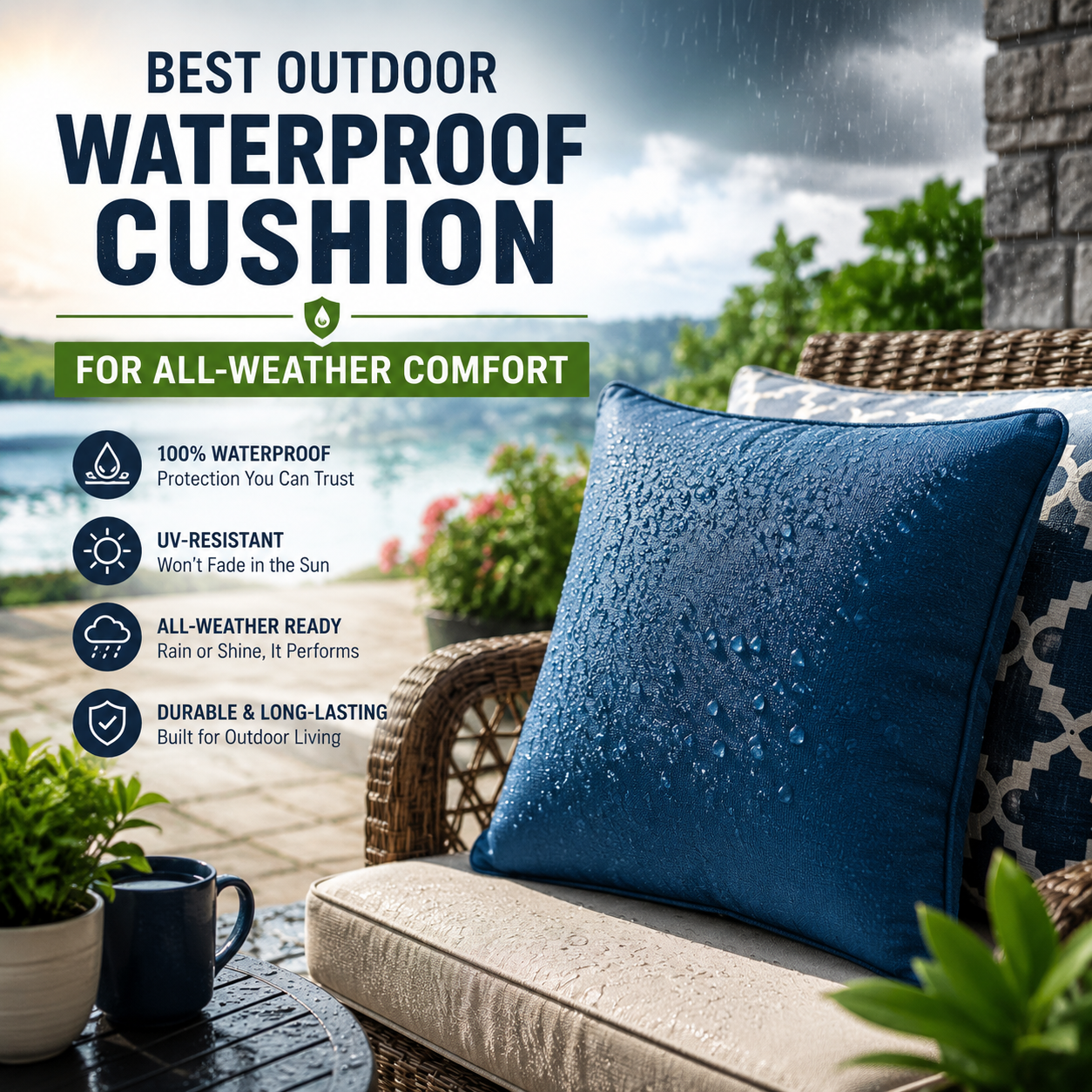
An outdoor waterproof cushion helps you enjoy patio and deck seating in real-world weather—rain showers, morning dew, spills, and humid days—without the constant hassle of swapping cushions in and out. With the right materials and construction, this type of cushion can stay more comfortable, dry faster, and resist mildew better than standard indoor-style cushions.
For readers planning a broader seating refresh, you may also like patio cushions for outdoor comfort & style to compare shapes, thicknesses, and fabric options across common outdoor furniture types.
- What Is an Outdoor Waterproof Cushion?
- Why Choose a Waterproof Cushion for Outdoors?
- Waterproof vs. Water-Resistant
- Materials Used in Outdoor Waterproof Cushions
- How to Choose the Right Outdoor Waterproof Cushion
- Are Outdoor Waterproof Cushions Comfortable?
- How to Clean an Outdoor Waterproof Cushion
- Can Outdoor Waterproof Cushions Stay Outside All the Time?
- Best Uses
- Are They Worth the Investment?
- Common Questions
- Conclusion
What Is an Outdoor Waterproof Cushion?
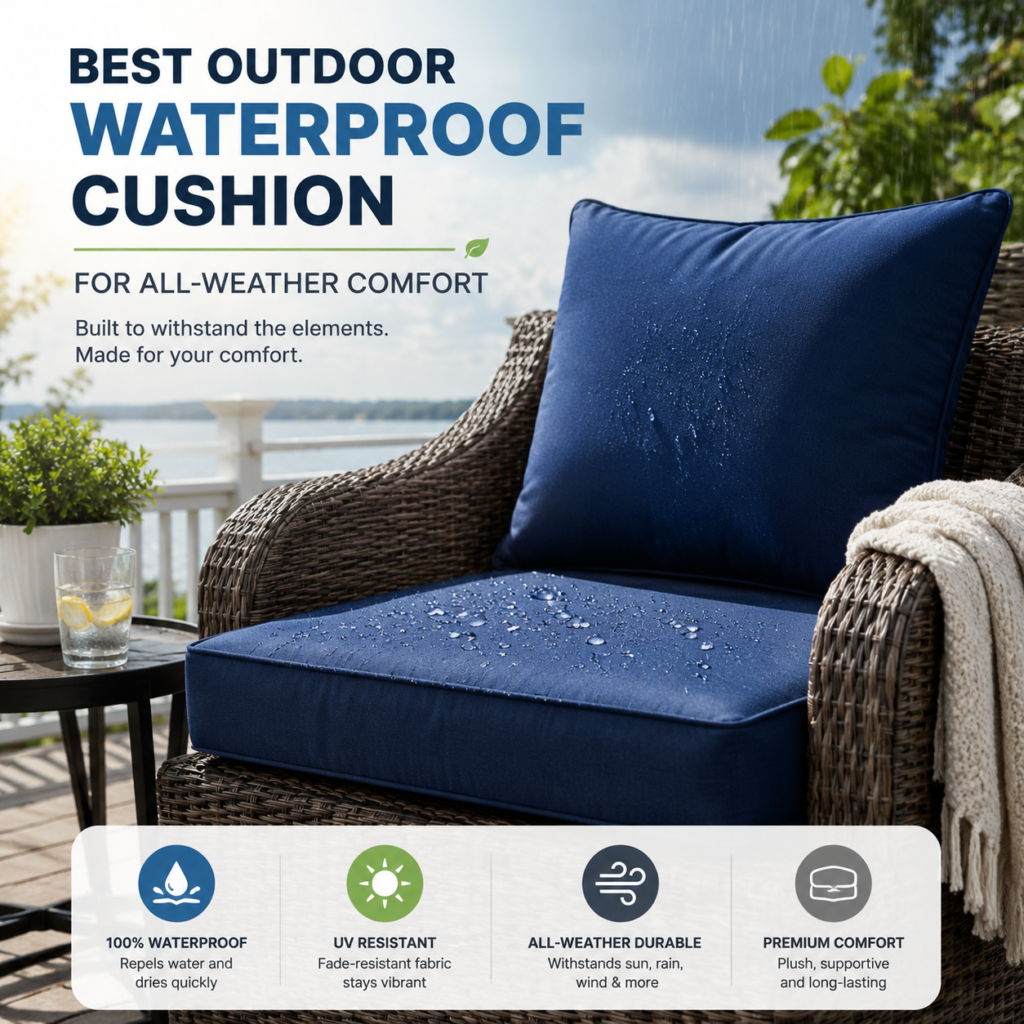
An outdoor waterproof cushion is built to resist water penetration and protect the inner filling from damp conditions. Instead of absorbing moisture like many indoor cushions, it typically uses an outer cover (often treated or engineered for weather resistance) and a filling system designed to dry more quickly after exposure.
These cushions are commonly used for outdoor furniture such as benches, dining chairs, swing seats, and loungers. Compared with indoor cushions, an outdoor waterproof cushion is engineered to handle wet conditions without soaking through as easily, which helps reduce unpleasant odors and premature wear.
People search specifically for an outdoor waterproof cushion because they want comfortable seating that remains usable after rain. Rather than constantly bringing cushions inside, this solution helps outdoor spaces stay inviting and functional with less day-to-day maintenance.
If you want a deeper look at stronger protection options and design differences, waterproof outdoor cushions can help you understand the full range of what “waterproof” can mean in practice.
Why Choose a Waterproof Cushion for Outdoors?
The biggest advantage is reliable protection from moisture. Outdoor seating faces rain, morning dew, accidental spills, and humidity. A waterproof cushion helps reduce water absorption and supports faster drying—both of which lower the chance of mildew and help maintain a cleaner, fresher look.
Other benefits of choosing an outdoor waterproof cushion include:
- Better durability in changing weather as fabric and filling resist damp exposure
- Easier care because most messes can be wiped and cleaned without soaking damage
- More comfort for outdoor seating since the cushion maintains its feel instead of becoming waterlogged
- Improved appearance because water stains and musty odors are less likely to develop
- Longer lifespan compared with standard cushions that absorb water and wear faster
If your outdoor area gets frequent use, the time savings can add up quickly. An outdoor waterproof cushion can help you keep guest seating ready and reduce the routine of drying and rotating cushions after every damp day.
Waterproof vs. Water-Resistant: What’s the Difference?
This is one of the most important buying questions, because “waterproof” and “water-resistant” are not always used consistently. In general, water-resistant cushions can handle minor exposure, while waterproof designs are built to resist water penetration more effectively.
A water-resistant cushion usually manages short exposure—like light mist or a brief sprinkle—but may still soak through if it’s exposed long enough for water to reach the inner layers. An outdoor waterproof cushion is designed for a higher level of protection, with construction that reduces how easily water reaches the filling.
When deciding what level you need, consider how the cushion will be used:
- Covered patios: Often benefit from water-resistant options if exposure is occasional.
- Uncovered outdoor areas: More reliably handled by an outdoor waterproof cushion, especially in unpredictable weather.
- Poolside seating: Look for materials that manage splashes and humidity without staying wet.
- Frequent entertaining: Waterproof construction can reduce the stress of last-minute rain.
For many homes, an outdoor waterproof cushion is the safer choice when cushions can’t be moved quickly or when rain happens without warning.
To understand the broader category, compare how different materials are described in outdoor cushions waterproof guides and product details.
Materials Used in Outdoor Waterproof Cushions
The material system is what makes an outdoor waterproof cushion perform. A typical setup combines:
- A protective outer cover that resists moisture
- A filling chosen for comfort and quicker drying
- Construction details that limit trapped moisture
While exact specs vary by brand, the most common outer materials include:
- Polyester fabrics with a waterproof coating
- Olefin (a popular outdoor synthetic) known for weather tolerance
- Acrylic blends engineered for outdoor use
- PVC-backed fabrics that add a strong moisture barrier
Common filling and insert options include:
- Quick-dry foam
- Polyester fiberfill
- Mold-resistant inserts designed to reduce odor-causing moisture retention
The best outdoor waterproof cushion designs aim to balance protection and breathability. A fully sealed cushion may block water well, but if moisture becomes trapped inside, it can take longer to dry. That’s why many outdoor waterproof cushions use quick-dry construction to help reduce “wet inside” conditions.
For official guidance that helps with moisture control and mildew prevention, the U.S. Environmental Protection Agency provides helpful information on mold and dampness. It’s a good reference point for understanding why drying matters, even with weather-resistant materials.
How to Choose the Right Outdoor Waterproof Cushion
Before purchasing, plan based on how your seating is actually used. An outdoor waterproof cushion should match your furniture size, your climate, and your comfort preferences—because the best-performing cushion is the one that fits properly and dries well after exposure.
Start with these features:
- Proper fit for your chair, bench, or lounger (measure length, width, and thickness)
- Waterproof or highly water-resistant fabric for the level of exposure you get
- UV resistance to help prevent fading and material breakdown
- Ties, straps, or non-slip backing so cushions stay in place even on windy days
- Removable covers when possible, for easier cleaning
- Quick-dry filling if your climate is humid or rainy
Even a great outdoor waterproof cushion can feel uncomfortable if it’s too thin, too thick for the chair design, or poorly aligned with your seating surface. Spend a moment checking how the cushion will sit: a well-fitted outdoor cushion keeps pressure distribution even and helps maintain comfort.
Consider sun exposure too. If your furniture sits in full sun, waterproofing alone may not be enough. Look for UV resistance so your outdoor waterproof cushion maintains color and structural integrity over time.
If you’re building or customizing seating, you might also benefit from outdoor pallet cushion ideas for comfort & style, especially when you need weather-ready options for frames that don’t use standard cushion sizing.
Size, thickness, and shape
Outdoor cushions come in many dimensions, and the feel can change noticeably with thickness. For dining chairs, people often prefer a slimmer cushion for balanced support. For benches and loungers, thicker padding can make long sits more comfortable.
Shape matters as well. A properly contoured seat cushion can reduce shifting, which helps the cushion feel more stable and makes it easier to keep in place during everyday use.
Color and fabric pattern
Color affects heat absorption. Darker fabrics can absorb more warmth in direct sun. If your outdoor area is very hot, choosing a lighter or UV-optimized fabric may improve comfort during the warmest hours.
Patterns can also help hide minor surface marks from daily use. This is a practical advantage for an outdoor waterproof cushion on high-traffic seating.
Fast drying after rain
One reason people choose an outdoor waterproof cushion is faster recovery after wet weather. To support drying, look for:
- Quick-dry foam or moisture-managing fill
- Ventilation-friendly construction (where applicable)
- Easy-to-access cleaning points (like removable covers)
After rain, simply giving cushions time to air out can help keep the cover fresh and the filling performing as intended.
Are Outdoor Waterproof Cushions Comfortable?
Yes—an outdoor waterproof cushion can be comfortable when it’s designed for outdoor lounging and everyday seating. Some shoppers assume waterproof materials feel stiff, but modern outdoor fabrics and fillings are often soft, supportive, and pleasant to sit on.
Comfort depends on more than waterproofing. A good outdoor waterproof cushion should provide:
- Enough thickness for support without bottoming out
- Even padding so you don’t feel lumpy areas
- A stable surface that stays put on the furniture
- A shape that matches the seating (dining, lounge, bench, or swing)
For dining chairs, a moderately thin outdoor waterproof cushion can deliver support without making seats feel bulky. For loungers or benches, thicker cushions typically make a bigger difference in comfort during extended sitting.
Many homeowners also build layered seating. They may pair waterproof outdoor pillows with an outdoor waterproof cushion to create a coordinated look on porches, reading corners, and sectional seating areas. Together, the cushion and pillows can improve both comfort and visual appeal.
How to Clean an Outdoor Waterproof Cushion
Cleaning is one of the biggest reasons shoppers like an outdoor waterproof cushion. Maintenance is often simple, and many stains can be managed with regular wipe-down care.
Start with basic care:
- Wipe off debris with a damp cloth or soft brush.
- Spot clean with mild soap for stains.
- Rinse gently only if the care instructions allow it.
- Dry fully before storing or covering for long periods.
- Air out after wet weather to help prevent any lingering moisture from building up.
Avoid harsh chemicals unless the care label explicitly says they’re safe. Even waterproof materials can be affected by abrasive scrubbing, strong detergents, or repeated high-pressure rinsing.
In day-to-day life, outdoor cushions pick up dust, pollen, and small surface dirt. A few minutes of routine cleaning after storms or seasonal changes can keep an outdoor waterproof cushion looking better for longer and reduce the chance of buildup.
Tip: If you’re unsure about a cleaning product, test it on a hidden area of the cushion cover first.
Can Outdoor Waterproof Cushions Stay Outside All the Time?
Many outdoor waterproof cushions can handle outdoor conditions, but “weather-resistant” does not always mean “set-and-forget forever.” Even high-quality waterproof designs are intended to resist rain and moisture, not necessarily to endure every element 24/7 without any care.
For best long-term results:
- Store cushions during heavy storms when feasible.
- Bring them in during winter if your climate gets freezing or snow.
- Use furniture covers when outdoor storage is unavoidable.
- Let cushions dry fully after any rain exposure.
Seasonal storage matters because repeated wetting and drying, plus long sun exposure and temperature swings, can still wear down materials over time. An outdoor waterproof cushion may last longer with proper care, but basic seasonal habits will improve performance.
If you live in a region with frequent rain or snow, you’ll typically get the most value by using covered storage for long periods. That way, your outdoor waterproof cushion stays protected from water accumulation and reduces exposure to fading UV rays.
Best Uses
An outdoor waterproof cushion is a versatile comfort upgrade for many outdoor seating setups. It works well anywhere moisture exposure and daily use overlap.
Common best uses include:
- Patio dining sets
- Garden benches
- Poolside loungers
- Porch swings
- Balcony seating
- Outdoor sectionals
These cushions are especially helpful if you entertain often or if outdoor furniture stays out year-round. They’re also a practical choice for cafes, hotels, and rental properties where durability and easy upkeep matter.
For a more uniform look, matching cushion styles across an entire outdoor space can create a polished feel. An outdoor waterproof cushion can help keep that coordinated appearance even as weather changes.
If your seating includes larger pieces, you may want to compare options like outdoor furniture cushions: best comfort & durability to match cushion styles to the type of furniture you have.
Are They Worth the Investment?
For most buyers, yes. An outdoor waterproof cushion is worth it when you want a more durable, low-maintenance seating solution that stands up better to moisture exposure than basic outdoor cushions.
The added protection can help preserve:
- Comfort, by reducing waterlogged feel
- Appearance, by limiting water staining and musty odors
- Longevity, by reducing moisture-related wear
It’s particularly valuable if:
- Your outdoor area is exposed to frequent rain
- You want less maintenance between cleanings
- You care about mildew prevention and moisture control
- You prefer cushions that hold up over multiple seasons
Even though an outdoor waterproof cushion may have a higher upfront cost, the reduction in replacement frequency and the convenience of easier care can make it a smart choice over time.
Common Questions About Outdoor Waterproof Cushions
Do waterproof cushions get moldy?
They’re less likely to, but mold is still possible if moisture is trapped and cushions are stored while damp. Proper drying and smart storage habits help keep conditions unfavorable for mold growth.
Are all outdoor cushions waterproof?
No. Some are water-resistant, which is a different protection level. Always check the product description and fabric details to confirm the moisture protection you’re buying.
Do outdoor waterproof cushions fade in the sun?
They can, especially without UV protection. Outdoor fabrics with UV-resistant features tend to fade more slowly and maintain color longer than untreated options.
How long do outdoor waterproof cushions last?
Lifespan depends on material quality, exposure level, and care. With routine cleaning and seasonal protection, many outdoor waterproof cushions can provide reliable comfort for several seasons.
Can I machine wash them?
Some removable covers are machine washable, but many are not. Always follow the care instructions on the label to avoid damage.
What should I do after a heavy rain?
After a storm, it’s smart to let your outdoor waterproof cushion air out. Even waterproof designs benefit from drying time, and it helps reduce any residual dampness that might develop near seams.
Conclusion
An outdoor waterproof cushion is a practical upgrade for comfortable, weather-ready seating with less upkeep. It helps protect against moisture, supports outdoor durability, and makes patios and garden areas easier to enjoy in everyday conditions. By focusing on fit, materials, UV resistance, and drying performance, you can choose an outdoor waterproof cushion that looks great and stays comfortable through rain and changing weather.
Whether you’re refreshing a bench, updating a patio dining set, or improving comfort on a porch, the right outdoor waterproof cushion can make your outdoor space more usable and more enjoyable—season after season.



Add comment