
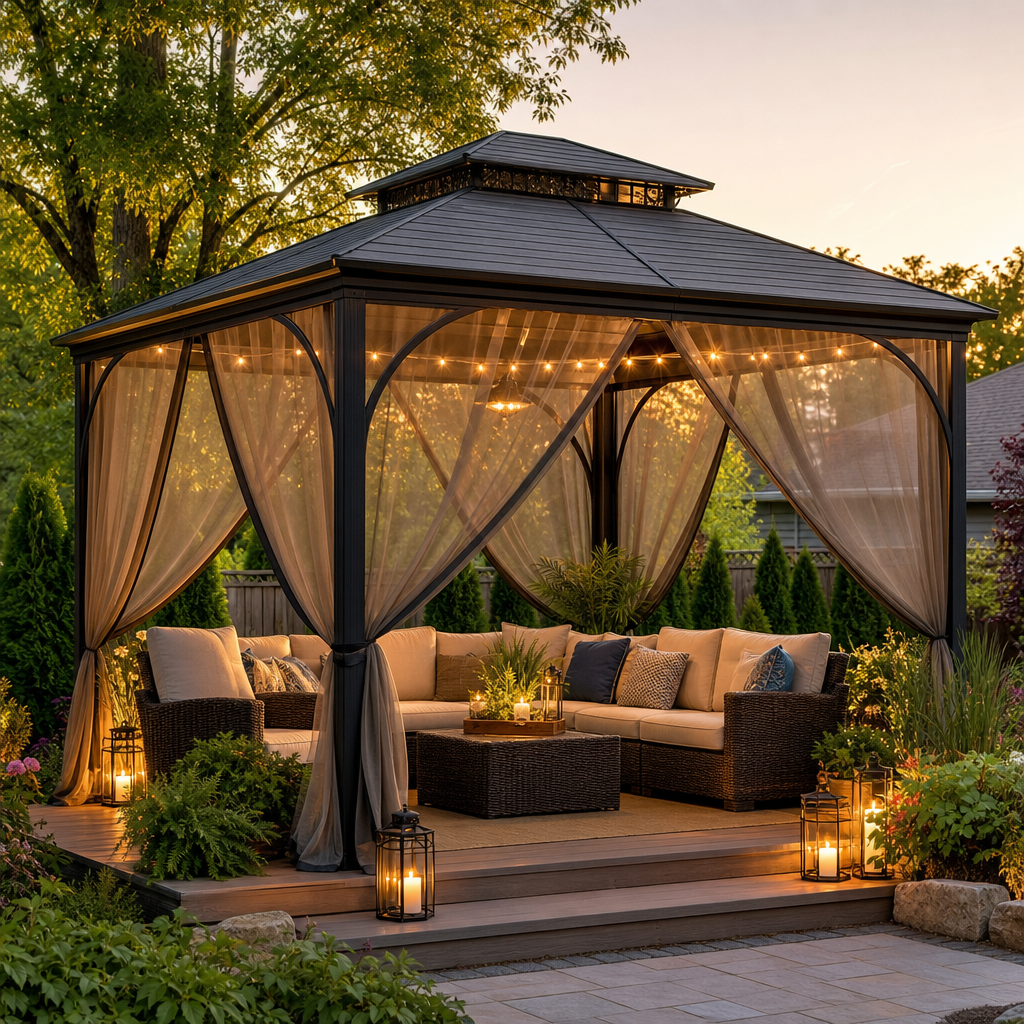
A gazebo with mosquito netting can transform a backyard, patio, or garden into a relaxing space you can actually enjoy from spring through fall. Instead of swatting bugs, constantly lighting candles, or retreating indoors at dusk, you get a sheltered outdoor room that feels open, breezy, and protected at the same time.
For many homeowners, the appeal is simple: a gazebo offers shade and structure, while mosquito netting adds a layer of comfort that makes outdoor gatherings more pleasant. Whether you want a quiet reading nook, a dining area for summer dinners, or a place to entertain friends without battling insects, this setup can be one of the most practical additions to your outdoor space.
This guide covers everything you need to know about choosing, using, and maintaining a gazebo with mosquito netting, including styles, materials, benefits, installation tips, and design ideas.
Table of Contents
- Why Choose a Gazebo With Mosquito Netting?
- Types of Gazebos That Work With Mosquito Netting
- Mosquito Netting Styles and Materials
- What to Look for When Buying a Gazebo With Mosquito Netting
- Best Places to Use a Gazebo With Mosquito Netting
- How to Set Up a Gazebo With Mosquito Netting
- Styling Ideas for a More Inviting Space
- Maintenance Tips for Long-Term Use
- Common Mistakes to Avoid
- Is a Gazebo With Mosquito Netting Worth It?
- Conclusion
Why Choose a Gazebo With Mosquito Netting?
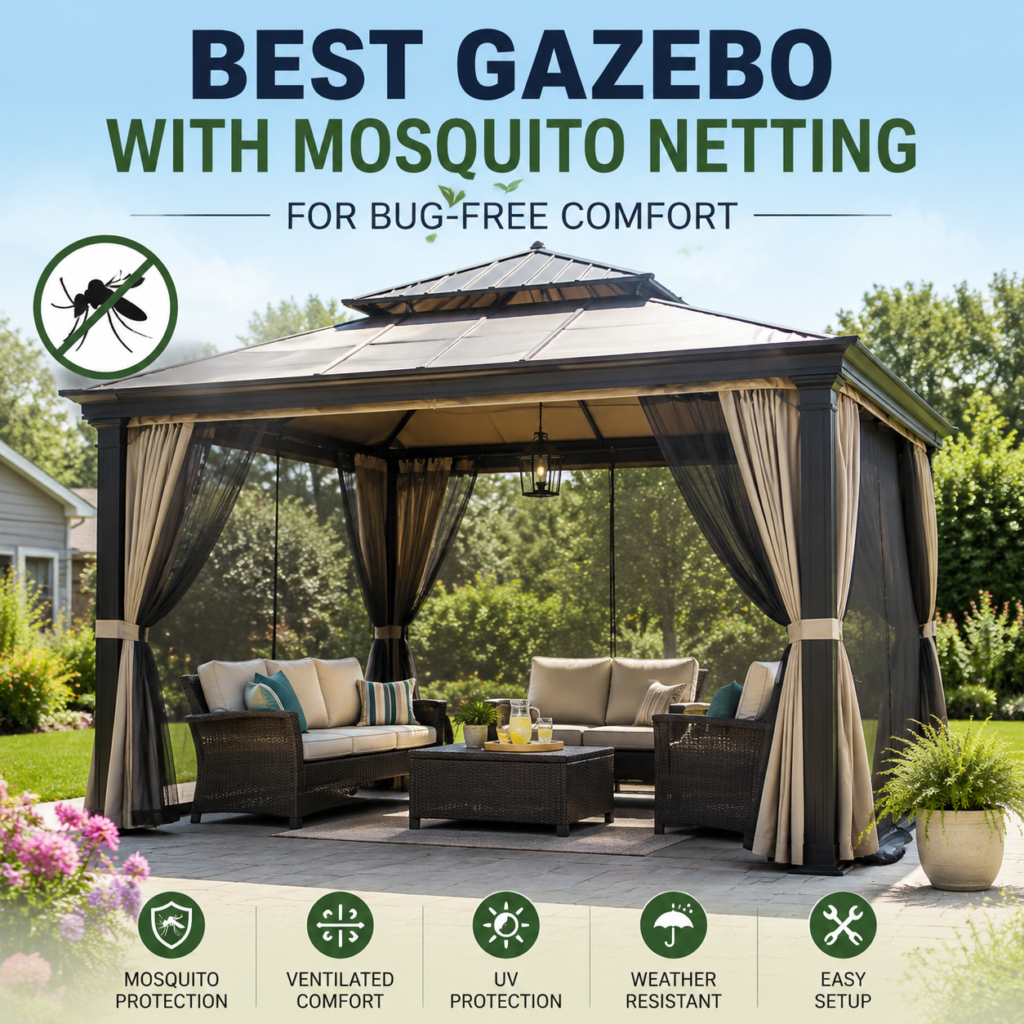
A standard gazebo already adds value to an outdoor area, but mosquito netting makes it far more usable. In warm climates or during humid months, insects can quickly ruin otherwise perfect evenings. Netting creates a physical barrier while keeping airflow intact, which is something solid walls cannot do.
Key benefits
- Bug protection: Keeps mosquitoes, flies, gnats, and other insects out.
- Better comfort: Lets you relax outdoors without itching or swatting.
- Improved entertaining: Makes dining and socializing outside much easier.
- Flexible use: Works for lounging, meals, work, and events.
- Visual appeal: Many netted gazebos look elegant and polished.
- Outdoor shelter: Adds shade and some protection from light rain or sun.
A gazebo with mosquito netting is especially helpful if your yard is near water, wooded areas, gardens, or places where insects are naturally more active. For broader shade planning, you may also like this outdoor canopy buying guide.
When you compare outdoor structures, a gazebo with mosquito netting often wins because it balances comfort and openness. You still enjoy fresh air, but you avoid the constant interruptions that bugs bring on summer nights.
In fact, many homeowners choose a gazebo with mosquito netting after realizing that a regular covered space still leaves them exposed to bugs. With the right setup, your backyard feels more like an outdoor room and less like a temporary seating area.
Types of Gazebos That Work With Mosquito Netting
Not every gazebo is the same, and the structure you choose affects how the netting fits and functions. Some gazebos come with built-in netting, while others are designed to allow add-on screens or curtains.
Before you buy a gazebo with mosquito netting, think about whether you want a permanent feature or a flexible setup. That choice affects cost, durability, and how much upkeep you will need later.
Hardtop gazebos
Hardtop gazebos use a metal or polycarbonate roof, which makes them durable and often suitable for year-round use. They usually pair well with netting because the frame is sturdy enough to support hanging panels.
Best for:
- Permanent backyard installations
- Windier locations
- Long-term durability
Soft-top gazebos
Soft-top gazebos have a fabric canopy roof, often made of polyester or similar materials. They are lighter and more affordable, but they may need more careful maintenance.
Best for:
- Seasonal use
- Budget-friendly setups
- Temporary or portable spaces
Pop-up gazebos
Pop-up models are convenient and easy to move, making them useful for parties or occasional use. Many include attachable netting and can be set up in minutes.
Best for:
- Temporary events
- Camping
- Portable shade and insect protection
Wall-mounted or attached gazebos
These extend from a house or deck and can create a semi-outdoor room. Mosquito netting can be added around the open sides to form a more enclosed sitting area.
Best for:
- Patios and decks
- Outdoor dining spaces
- Transitional indoor-outdoor living
A well-planned gazebo with mosquito netting can also complement nearby seating, pavers, and landscaping. If you want more design ideas, see Outdoor Gazebo Ideas: Stylish Designs for Your Backyard.
Mosquito Netting Styles and Materials
The netting itself matters almost as much as the gazebo frame. Some materials are designed for durability, while others focus on visibility or convenience. The right choice depends on how often you use the space and how heavy insect pressure is in your area.
For a gazebo with mosquito netting, the best mesh is the one that matches your climate and daily use. A lightweight panel may work for casual evenings, while finer mesh makes more sense in buggy areas.
Polyester mesh
Polyester is one of the most common materials for mosquito netting. It is lightweight, reasonably durable, and often treated to resist UV damage.
Pros:
- Affordable
- Easy to clean
- Lightweight
- Widely available
Cons:
- May wear out faster than premium materials
- Can snag if handled roughly
Fine mesh netting
Fine mesh keeps out even tiny insects, making it ideal for buggy areas. However, very fine mesh may slightly reduce airflow compared with looser weaves.
Pros:
- Better insect protection
- Good for high-bug environments
Cons:
- May trap more heat
- Can feel less open visually
No-see-um mesh
This ultra-fine mesh is designed to stop tiny biting insects such as no-see-ums and sand flies.
Pros:
- Excellent insect defense
- Great for coastal or marshy areas
Cons:
- Can be more expensive
- May reduce visibility slightly
Retractable netting
Retractable systems are built for convenience. You can pull the netting closed when needed and open it when you want an unobstructed view.
Pros:
- Flexible use
- Clean appearance
- Easy access
Cons:
- More expensive
- Requires proper installation
Zippered net panels
These panels often attach around the perimeter of the gazebo and zip closed at entry points. They are popular because they balance protection with usability.
Pros:
- Easy to enter and exit
- Good for social spaces
- Simple design
Cons:
- Zippers can wear over time
- Panels may need occasional adjustment
What to Look for When Buying a Gazebo With Mosquito Netting
If you are shopping for a gazebo, it helps to think beyond the attractive photos. The best choice depends on your climate, available space, and intended use. A little planning now can help you avoid sizing or durability problems later.
Look closely at the full package, not just the frame. A gazebo with mosquito netting should feel sturdy, fit your yard, and match how you want to use the space over time.
Size and layout
Start by measuring the area where the gazebo will go. Consider not only the footprint of the structure but also clearance for walking, furniture, and entry.
Common sizes include:
- 8’ x 8’ for compact spaces
- 10’ x 10’ for small gatherings
- 10’ x 12’ or 12’ x 12’ for dining and lounging
- Larger custom sizes for outdoor entertaining
Think about how many people will use it at once. A gazebo that feels spacious for two people may feel cramped with a table and six chairs.
Frame material
Gazebo frames are usually made from:
- Aluminum: Lightweight, rust-resistant, and low-maintenance
- Steel: Strong and durable, but may need rust protection
- Wood: Attractive and natural-looking, but requires more upkeep
If you want long-term durability with less maintenance, aluminum or powder-coated steel is often the best choice.
Roof design
The roof affects both style and function.
- Hardtop roofs offer better durability and weather resistance
- Canopy roofs are lighter and easier to set up
- Double roofs can improve ventilation by allowing hot air to escape
Ventilation is especially important if you plan to use the gazebo in warm weather. Better airflow means the space feels more comfortable under the netting.
Netting attachment method
Look for netting that:
- Attaches securely to the frame
- Has weighted bottoms or tie-downs
- Includes zippers or magnets for entry
- Is easy to remove for cleaning or storage
Loose or poorly attached netting can flap in the wind, leave gaps, or wear out faster. A gazebo with mosquito netting should feel secure even when the breeze picks up.
Weather resistance
If your gazebo will stay outside for long periods, check for:
- UV-resistant fabric
- Water-resistant roof materials
- Rust-resistant frame coatings
- Strong anchoring options
A mosquito net helps with insects, but the overall structure still needs to withstand sun, wind, and occasional rain.
For reference on insect-borne risks and prevention, the CDC mosquito prevention resource is a reliable place to start.
Best Places to Use a Gazebo With Mosquito Netting
One of the biggest advantages of this setup is its versatility. You can adapt it to many outdoor areas and purposes.
A gazebo with mosquito netting works especially well anywhere people gather for long periods. The longer you stay outside, the more valuable the bug protection becomes.
Backyard dining area
A gazebo with netting makes a great outdoor dining room. Add a table and chairs, string lights, and maybe a rug to create a space that feels cozy and functional.
This is especially useful for:
- Family dinners
- Weekend brunch
- Barbecues
- Evening entertaining
Poolside retreat
If you have a pool, a netted gazebo can provide shade and a bug-free lounge area for towels, drinks, and relaxation. It is also a practical place to escape the sun between swims.
Garden sitting area
A gazebo can become a focal point in the garden, offering a place to sit and enjoy the view without dealing with insects. This is a beautiful option for reading, tea, or quiet conversation.
Patio extension
For homes with patios, a gazebo adds architectural interest and creates a more defined outdoor living space. Mosquito netting helps make the area usable later into the evening.
Event space
Many people use netted gazebos for:
- Small weddings
- Birthday parties
- Baby showers
- Family reunions
- Holiday gatherings
The enclosure helps keep guests comfortable without making the space feel fully closed off.
For homeowners who want a more flexible setup, a gazebo with mosquito netting can also work alongside other shade structures in the same yard. That makes it easier to create separate zones for dining, lounging, and entertaining.
How to Set Up a Gazebo With Mosquito Netting
Installation varies depending on the model, but the process generally follows the same principles.
Take your time during setup. A gazebo with mosquito netting performs best when the frame is square, stable, and properly anchored from the start.
Choose level ground
A stable, level surface is important for safety and appearance. Install the gazebo on:
- Concrete
- Pavers
- A deck
- Properly leveled gravel or compacted ground
If the ground slopes, the frame may not align correctly and the netting may hang unevenly.
Secure the frame
Make sure the structure is anchored according to the manufacturer’s instructions. This may involve:
- Ground stakes
- Bolts for decks or concrete
- Weight bags for temporary models
A gazebo that isn’t properly secured can shift or tip in strong wind.
Attach the roof first
Most structures are easier to assemble when the roof is installed before the netting. Follow the instructions carefully and tighten all fasteners before moving on.
Install the netting evenly
When attaching mosquito netting, aim for balanced tension on all sides. Uneven hanging can create gaps or stress the seams.
Tips:
- Start from one corner
- Work around the perimeter gradually
- Check zipper alignment
- Confirm that the bottom edge touches or nearly touches the ground or floor
Test access points
Before using the gazebo, open and close all zippers or entry flaps several times. Make sure guests can enter easily and that the netting doesn’t catch on furniture or frame edges.
Styling Ideas for a More Inviting Space
A gazebo with mosquito netting is practical, but it can also be beautiful. A few simple design choices can make it feel like an outdoor room rather than just a structure.
Small upgrades can make the whole setup feel more polished. Once the basics are in place, styling turns a functional shelter into a favorite gathering spot.
Add comfortable seating
Choose furniture based on how you plan to use the space:
- Lounge chairs for relaxing
- A dining set for meals
- A sectional or outdoor sofa for conversation
- A bench and side tables for smaller areas
Use weather-resistant cushions and fabrics so the area stays attractive and easy to maintain.
Use lighting for ambiance
Soft lighting makes a big difference in the evening. Consider:
- String lights
- Lanterns
- Solar lamps
- LED candles
- Hanging pendant lights if your structure supports them
Lighting helps the space feel warm and welcoming while extending its use into the night.
Include rugs and textiles
Outdoor rugs can define the space and add color. Throw pillows, blankets, and curtains can make the gazebo feel more finished and comfortable.
Bring in plants
Potted plants, hanging baskets, or small planters can soften the structure and blend it into the surrounding landscape. Herbs, flowers, and greenery all work well.
Match the style to your home
A gazebo should complement the overall look of your property. A sleek black metal frame suits modern spaces, while a wooden structure may feel better in a traditional or rustic setting.
Maintenance Tips for Long-Term Use
Like any outdoor structure, a gazebo with mosquito netting needs some care to stay in good condition.
Routine maintenance is simple, but it makes a big difference. A few minutes of attention can help the netting last longer and keep the whole structure looking fresh.
Clean the netting regularly
Dust, pollen, and debris can collect on the mesh. Gently remove dirt with:
- A soft brush
- Mild soap and water
- A hose on low pressure
Always let the netting dry fully before storing or closing it.
Inspect for tears
Small holes can grow quickly, especially if the mesh snags on furniture or tree branches. Repair minor damage early with patch kits or fabric repair tape if appropriate.
Check fasteners and ties
Wind, rain, and regular use can loosen clips, straps, and zippers. Inspect them periodically and replace worn parts as needed.
Store seasonal netting properly
If you remove the netting for winter, fold it carefully and keep it in a dry, sealed container. This helps prevent mildew, fading, and insect damage.
Protect the structure in harsh weather
Even if the gazebo is weather-resistant, extreme conditions can shorten its life. In heavy storms, strong winds, or snow, you may need to remove fabric components or take extra precautions.
With basic care, a gazebo with mosquito netting can remain attractive and useful for years. That long-term value is one reason so many people see it as a smart backyard upgrade.
Common Mistakes to Avoid
A few small mistakes can reduce the comfort and lifespan of your gazebo setup.
When people rush the process, they often miss the details that matter most. Avoiding these common problems helps a gazebo with mosquito netting stay useful for years.
Choosing the wrong size
A gazebo that is too small can feel cramped, while one that is too large may dominate the yard. Measure carefully and think about furniture placement.
Ignoring wind conditions
Mosquito netting is lightweight and can act like a sail. If your area gets strong wind, choose a sturdy frame and proper anchors.
Letting gaps remain in the netting
Even tiny openings can let insects in. Make sure netting overlaps correctly, zippers close fully, and the bottom edge stays secure.
Using indoor furniture outside
Unless it is specifically made for outdoor use, indoor furniture can fade, warp, or mold when exposed to weather and humidity.
Skipping maintenance
A gazebo with mosquito netting can last a long time, but only if you keep an eye on wear and tear. Regular cleaning and inspection go a long way.
Is a Gazebo With Mosquito Netting Worth It?
For many homeowners, the answer is yes. If you enjoy spending time outdoors but dislike insects, the improvement in comfort is immediate and noticeable. A netted gazebo creates a usable, semi-protected space that works for meals, relaxation, and gatherings.
It is especially worthwhile if:
- Mosquitoes are common in your area
- You entertain outdoors often
- You want a dedicated backyard retreat
- You need shade and bug protection in one structure
The value isn’t just practical. A well-designed gazebo also adds visual appeal and can make your yard feel more intentional and complete.
If you already enjoy covered outdoor spaces, a gazebo with mosquito netting can feel like the natural next step. It gives you more usable time outside and reduces the frustration that insects often create.
For many families, a gazebo with mosquito netting also becomes the spot where summer memories happen. From quiet evenings to weekend get-togethers, it keeps the focus on comfort instead of bugs.
Conclusion
A gazebo with mosquito netting is one of the most effective ways to make outdoor living more enjoyable. It combines shade, structure, and insect protection in a single space that can serve as a dining area, lounge, garden retreat, or entertainment spot. By choosing the right size, material, and netting style, you can create an outdoor area that feels comfortable and inviting throughout the warmer months.
With thoughtful setup and regular maintenance, your gazebo with mosquito netting can become a favorite place to relax, host, and spend time outside without the nuisance of bugs getting in the way.




Add comment