
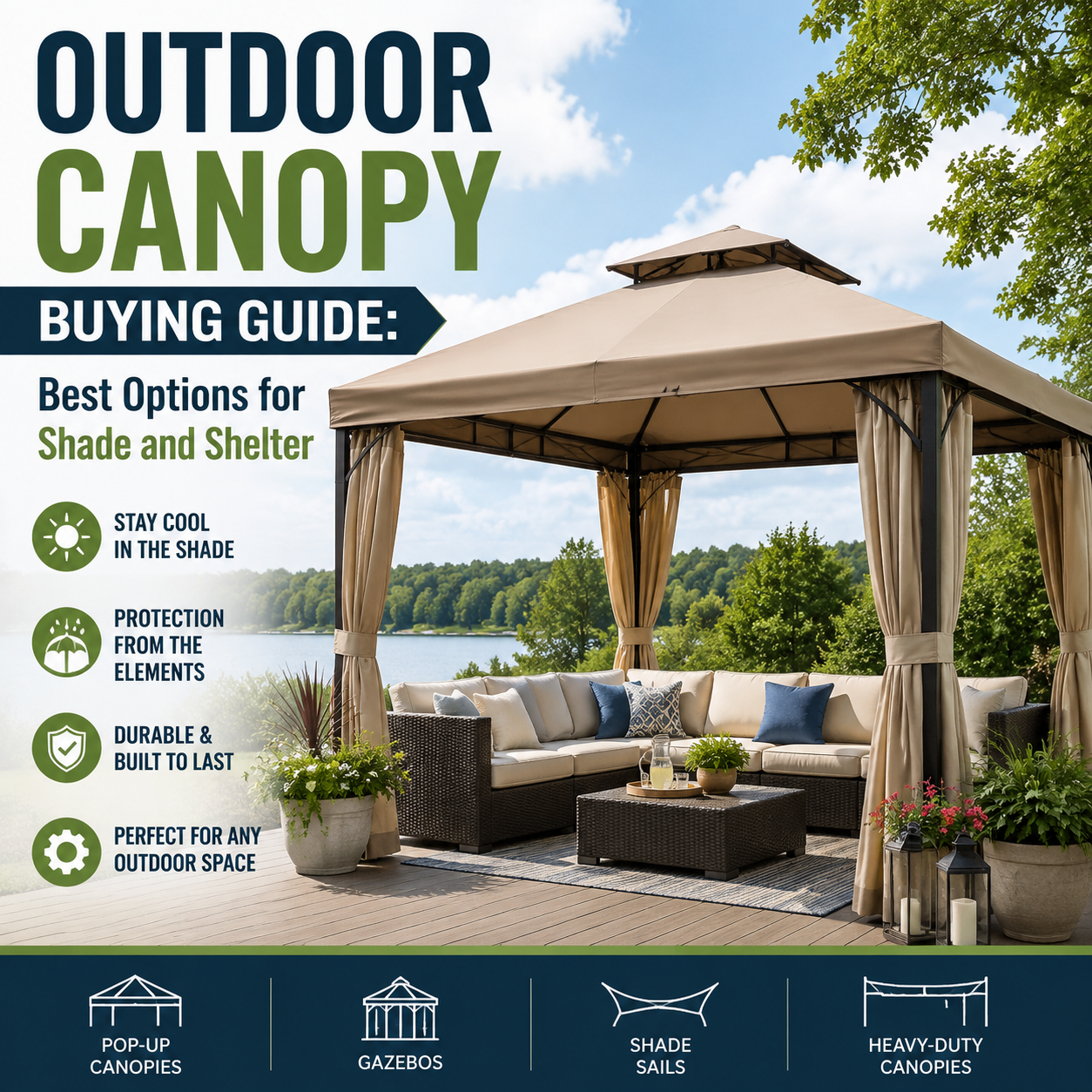
An outdoor canopy is one of the most versatile additions you can make to a backyard, patio, event space, campsite, or worksite. It offers quick shade, light weather protection, and a defined area for relaxing, entertaining, selling products, or storing equipment. Whether you need a temporary setup for a weekend gathering or a more durable structure for regular use, the right canopy can make outdoor spaces far more comfortable and functional.
This guide explains what an outdoor canopy is, the different types available, how to choose one, where it works best, and how to keep it in good condition. Along the way, you’ll find practical examples and simple tips to help you pick an outdoor canopy that fits your space and purpose. For related shelter ideas, see our Party Tent Guide: Choose the Best Outdoor Event Shelter.
Table of Contents
- What Is an Outdoor Canopy?
- Why People Use Outdoor Canopies
- Types of Outdoor Canopies
- How to Choose the Right Outdoor Canopy
- Best Uses for an Outdoor Canopy
- Features Worth Paying Attention To
- Tips for Setting Up an Outdoor Canopy
- How to Care for an Outdoor Canopy
- Common Mistakes to Avoid
- Outdoor Canopy Ideas for Different Settings
- Conclusion
What Is an Outdoor Canopy?
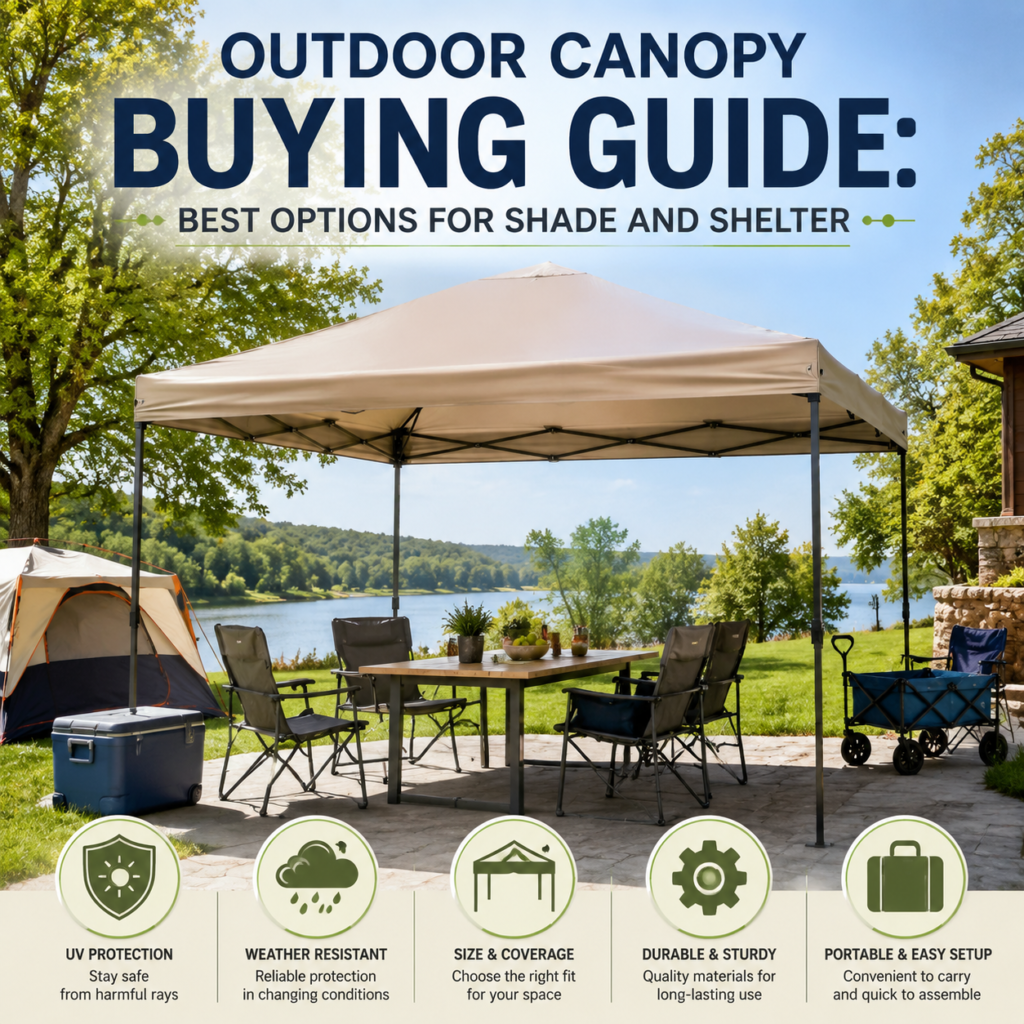
An outdoor canopy is a covered structure designed to provide shade and some degree of protection from the elements. Most canopies consist of a frame and a fabric or panel roof, though some are freestanding while others attach to a wall or existing structure.
Outdoor canopies are used in many settings, including:
- Backyards and patios
- Garden seating areas
- Weddings and events
- Markets and vendor booths
- Camping and tailgating
- Construction sites and job areas
- Poolside lounges
- Outdoor dining spaces
Unlike permanent roofing, canopies are usually easier to install, move, and remove. That flexibility is one of the main reasons they are so popular.
Why People Use Outdoor Canopies
The appeal of an outdoor canopy goes beyond simple shade. In many cases, it transforms an open area into a more usable, comfortable space.
Protection from Sun and Light Rain
The most obvious benefit is protection from direct sunlight. An outdoor canopy can reduce heat exposure and make it possible to spend more time outdoors. Many models also offer shelter from light rain, allowing gatherings or work activities to continue.
Defined Outdoor Space
A canopy helps create a sense of structure. For example, placing one over an outdoor dining table turns a plain patio into a more inviting meal area. At events, an outdoor canopy can define a registration table, food station, or lounge zone.
Flexibility
Because canopies come in many sizes and styles, they can be used seasonally, temporarily, or year-round depending on the model. This makes them ideal for people who want an adjustable solution rather than a permanent build.
Better Comfort
By reducing sun exposure and shielding against mild weather, an outdoor canopy improves comfort. Guests can stay longer, workers can focus better, and products or equipment can be kept from direct exposure.
For a different shade structure with a more decorative feel, you can also explore a canopy gazebo for patios and gardens.
Types of Outdoor Canopies
There are several types of outdoor canopies, and each has distinct strengths. Choosing the right one depends on how you plan to use it.
Pop-Up Canopies
Pop-up canopies are among the most convenient options. They have collapsible frames that expand quickly, making them perfect for temporary use.
Best for:
- Backyard parties
- Markets and fairs
- Camping
- Sporting events
- Short-term shade
Advantages:
- Fast setup
- Portable
- Easy to store
- Available in many sizes
Considerations:
- Not always ideal for heavy wind
- May require weights or stakes
- Fabric and frame quality vary widely
Gazebo-Style Canopies
Gazebo-style canopies often feature a more decorative look, sometimes with side curtains or a domed roof. They are commonly used in gardens, patios, and entertaining spaces.
Best for:
- Outdoor lounging
- Garden seating
- Weddings
- Decorative outdoor living areas
Advantages:
- Attractive appearance
- More spacious feel
- Can create a focal point in a yard
Considerations:
- Usually less portable
- Can be more expensive
- Some models are semi-permanent
Retractable Canopies
Retractable canopies extend or fold back as needed. They are often installed over patios, decks, or pergolas.
Best for:
- Patios
- Outdoor dining
- Decks
- Spaces that need adjustable shade
Advantages:
- Adjustable coverage
- Clean, modern appearance
- Excellent for mixed sun and shade needs
Considerations:
- May require professional installation
- More expensive than basic portable canopies
- Needs regular maintenance
Party Tents and Frame Canopies
Party tents are larger canopy structures often used for events, celebrations, and commercial functions. They may be open-sided or include walls.
Best for:
- Weddings
- Festivals
- Corporate events
- Large gatherings
Advantages:
- Accommodates groups
- Offers more protection
- Often modular in size
Considerations:
- Requires more setup space
- May need a team to install
- Heavier and less portable
Shade Canopies for Permanent Use
Some canopies are built for long-term installation, such as shade sails or fixed-frame covers. These are useful when you want ongoing protection without constant setup and takedown.
Best for:
- Play areas
- Pool decks
- Permanent seating spaces
- Commercial outdoor areas
Advantages:
- Durable
- Consistent coverage
- Low daily effort once installed
Considerations:
- Less flexible
- Often requires planning and installation work
- May need permits depending on location
How to Choose the Right Outdoor Canopy
Choosing the right canopy becomes much easier when you focus on a few practical factors.
1. Determine the Purpose
Start with the primary use. The right outdoor canopy for a weekend barbecue may not be the right one for a vendor booth or a shaded patio.
Ask yourself:
- Is this for occasional or regular use?
- Do I need shade, rain protection, or both?
- Will it be used for leisure, business, or storage?
- Do I need something portable?
For example, a pop-up canopy is great for a craft fair, while a retractable canopy may be better for a patio you use every day.
2. Consider the Size
Canopies come in a wide range of dimensions, from small personal covers to large event structures. Measure the area where you plan to place it and leave space for movement, anchoring, and access.
A few examples:
- A 10’ x 10’ canopy may suit a small patio set or vendor table
- A 10’ x 20’ canopy may be better for larger gatherings or vehicle coverage
- Larger event canopies can accommodate dining tables, seating, and serving areas
It’s usually wise to choose slightly more coverage than you think you need, especially if you want room for tables, chairs, or guests to move around.
3. Check Frame Material
The frame plays a major role in stability and durability. Common frame materials include:
- Steel: Strong and affordable, but heavier and sometimes prone to rust if not coated well
- Aluminum: Lightweight and resistant to corrosion, good for portability
- Powder-coated metal: Offers added weather resistance and a more finished look
If you plan to move the canopy often, a lighter frame may be easier to handle. If it will stay in one place for long periods, a sturdier frame may be worth the extra weight.
4. Look at Canopy Fabric
The fabric or cover determines how well the canopy handles sun and weather.
Key features to consider:
- UV resistance: Helps reduce sun damage and improves shade quality
- Water resistance: Useful for light rain
- Thickness and density: Thicker materials often last longer
- Breathability: Some fabrics allow airflow to reduce heat buildup
Common materials include polyester, polyethylene, and vinyl-coated fabrics. Each has strengths, so the best choice depends on whether you prioritize portability, durability, or weather resistance.
5. Think About Anchoring and Stability
An outdoor canopy should be secure, especially if wind is a concern. Stability can depend on:
- Stakes
- Weighted bags
- Sandbags
- Water weights
- Tie-downs
- Wall or ground attachments
If your area is breezy, anchoring becomes especially important. Even a sturdy canopy can be unsafe if it is not properly secured.
6. Match the Canopy to the Climate
Your local weather should guide your decision.
- In hot, sunny climates, prioritize UV protection and airflow
- In rainy areas, look for sloped roofs and water-resistant materials
- In windy areas, choose a strong frame and reliable anchoring
- In snowy regions, avoid using lightweight canopies as seasonal shelters unless they are specifically designed for snow loads
A canopy that works beautifully in one climate may fail quickly in another if it is not suited to local conditions.
Best Uses for an Outdoor Canopy
Outdoor canopies are useful in both residential and commercial settings. Here are some of the most common applications.
Backyard Entertaining
Canopies are ideal for parties, cookouts, and family gatherings. They create shade over seating or food areas and can help keep guests comfortable for longer periods.
Example: A family hosting a summer birthday party may set up an outdoor canopy over the dessert table and outdoor seating, giving guests a cooler place to gather.
Patio or Deck Shade
A permanent or retractable canopy can turn a deck or patio into a more usable outdoor room. This is especially valuable when the sun hits a seating area during the hottest part of the day.
Example: A homeowner installs a retractable canopy above the patio table so the area stays shaded during lunch but open to the sky in the evening.
Markets and Vendor Booths
Pop-up canopies are a staple at farmers markets, fairs, and pop-up shops. They provide a professional appearance and keep products protected from direct sun.
Example: A jewelry seller at an outdoor market uses a branded canopy with sidewalls to display products and define the booth space.
Weddings and Celebrations
Large event canopies help organize seating, dining, and ceremony areas. They also offer weather backup for outdoor celebrations.
Example: A wedding reception uses a frame canopy with elegant draping to cover the dance floor and dining tables.
Camping and Recreation
Portable canopies offer instant shade at campsites, beaches, and tailgates. They can create a shared cooking or lounge area.
Example: A group camping trip sets up an outdoor canopy over the picnic table to provide a central area for meals and card games.
Worksites and Storage
Canopies are also used to shelter tools, materials, or workers from sun and light rain. This is common on construction sites, landscaping projects, and outdoor maintenance areas.
Example: A landscaping crew uses an outdoor canopy to cover equipment and create a shaded break area during long summer shifts.
Features Worth Paying Attention To
When comparing products, certain features can make a canopy easier and safer to use.
Adjustable Height
Some canopies allow height adjustment, which is useful for leveling on uneven surfaces or increasing clearance.
Ventilated Roofs
A vent at the top can improve airflow and reduce wind pressure. This is especially valuable in warmer climates.
Sidewalls and Curtains
Side panels can provide privacy, wind protection, and extra shade. They’re useful for events, storage, or vendor booths.
Carry Bags and Portability
If you’ll transport your canopy often, a wheeled storage bag or compact carry case can make a big difference.
Easy Assembly
Look for intuitive setup features such as push-button frames, color-coded parts, or tool-free assembly. These save time and reduce frustration.
Fire Resistance and Safety Ratings
For commercial or event use, fire-resistant fabric may be required or strongly recommended. Always check local regulations when using canopies in public settings.
For a helpful reference on outdoor fabric and UV exposure, the U.S. Environmental Protection Agency explains sun protection basics at EPA Sun Safety.
Tips for Setting Up an Outdoor Canopy
Even a good canopy can underperform if it is set up poorly. A few basic practices help ensure safety and usability.
Choose a Flat Surface
Whenever possible, set up on level ground. This improves stability and makes anchoring easier.
Avoid Hazardous Areas
Do not place a canopy near overhead power lines, unstable trees, or anything that could fall onto it during wind.
Secure It Properly
Use the recommended anchors for your surface and conditions. For example:
- Stakes on grass
- Weights on concrete
- Tie-downs or brackets for semi-permanent structures
Watch the Weather
Light rain or mild wind may be manageable, but strong wind, thunderstorms, or heavy rain can create dangerous conditions. In severe weather, dismantle or secure the canopy according to the manufacturer’s instructions.
Leave Room for Airflow
If the canopy will house people or equipment, allow enough ventilation and avoid trapping heat inside. Sidewalls can be helpful, but too much enclosure in hot weather can make the space uncomfortable.
How to Care for an Outdoor Canopy
A little maintenance goes a long way. Proper care extends the life of the frame and cover.
Clean It Regularly
Dirt, pollen, bird droppings, and mildew can damage the canopy fabric over time. Clean it with mild soap and water, then let it dry fully before storage.
Inspect for Damage
Check the frame, joints, connectors, and fabric before and after use. Look for:
- Tears
- Rust
- Bent poles
- Loose joints
- Broken zippers or fasteners
Catching small issues early can prevent bigger problems later.
Store It Dry
Never pack away a wet canopy if you can avoid it. Moisture can lead to mildew, odor, and material breakdown. Let it dry fully before storing.
Protect It from Long-Term Exposure
If your canopy stays outside, use covers or choose materials designed for outdoor permanence. Long exposure to sun and rain will wear down most fabrics over time.
Replace Worn Components
Sometimes the whole canopy does not need replacing. In many cases, a damaged top cover, sidewall, or connector can be swapped out separately.
Common Mistakes to Avoid
People often make a few predictable mistakes when buying or using an outdoor canopy.
Choosing Based on Price Alone
A cheaper canopy may seem like a bargain until it bends, leaks, or tears after a few uses. It’s better to balance cost with durability and intended use.
Ignoring Wind Conditions
Many canopy problems happen because the structure was not properly anchored or was used in unsafe weather. Wind should always be considered seriously.
Buying the Wrong Size
A canopy that is too small may feel cramped. One that is too large may be difficult to secure or may not fit the space well. Measure first and plan the layout.
Skipping Maintenance
Even simple cleaning and inspection can greatly extend canopy life. Neglect usually shortens durability.
Overloading the Structure
A canopy is not meant to hold heavy hanging objects unless it is specifically designed for that purpose. Extra loads can strain the frame or cause collapse.
Outdoor Canopy Ideas for Different Settings
Here are a few practical examples of how an outdoor canopy can be used creatively.
- Dining area: Set up a canopy over an outdoor table and chairs for shaded meals
- Kids’ play zone: Create a protected space for toys, crafts, or reading
- Outdoor office: Use an outdoor canopy for a temporary workspace during pleasant weather
- Vendor display: Build a branded booth with sidewalls, signage, and product tables
- Garden lounge: Add cushions, rugs, and string lights beneath a canopy for a cozy retreat
- Poolside shade: Place a canopy near lounge chairs for a break from direct sunlight
These setups show how a simple canopy can do more than provide cover. It can help shape the way you use your outdoor space.
Conclusion
An outdoor canopy is a practical, flexible solution for shade, shelter, and space definition. From simple pop-up models to permanent patio covers, there is a canopy for nearly every use and budget. The best choice depends on your climate, your space, and how often you plan to use it.
When you choose the right frame, fabric, size, and anchoring system, an outdoor canopy can make outdoor areas more comfortable and functional for years. Whether you’re hosting guests, selling goods, camping, or relaxing at home, the right outdoor canopy adds comfort, convenience, and value to the space around you.


Add comment