
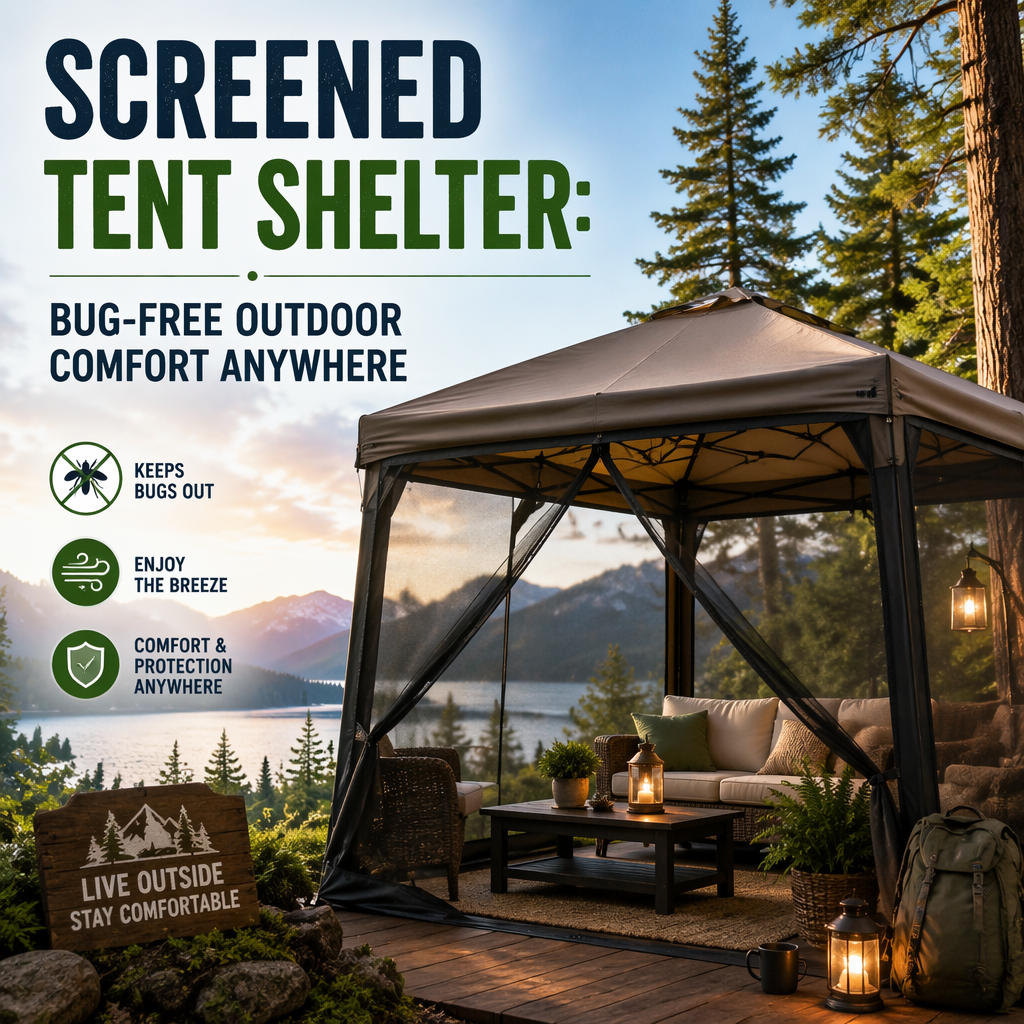
A screened tent shelter is a portable outdoor room with mesh walls that helps keep mosquitoes, flies, and other insects away while still letting fresh air circulate. It’s a great setup for eating, relaxing, cooking, or gathering at a campsite, picnic area, beach, or in your backyard—even when bugs make outdoor time less enjoyable.
Unlike a sleeping tent, a screened tent shelter usually has a taller ceiling, an open floor plan, and enough space for chairs and a table. Some models come with no built-in floor, while others include removable flooring, weather panels, or reinforced walls.
The best screened tent shelter depends on how many people will use it, where it will be set up, and how much protection you need from insects, sun, wind, and rain. This guide covers key features, sizing, safe setup, and maintenance so you can choose with confidence and keep your shelter working season after season.
Table of Contents
- What Is a Screen Tent Used For?
- Screen Tent vs. Regular Camping Tent
- Screen Tent vs. Canopy
- Key Features to Consider
- How to Choose the Right Screened Tent Shelter
- How to Set Up a Screen Tent Correctly
- How to Secure a Screen Tent in Wind
- Can You Cook Inside a Screen Tent?
- Are Screen Tents Waterproof?
- Can You Sleep in a Screen Tent?
- How to Keep Bugs Out
- Cleaning and Maintenance
- Common Screen Tent Problems
- Frequently Asked Questions
- Final Buying Checklist
What Is a Screen Tent Used For?
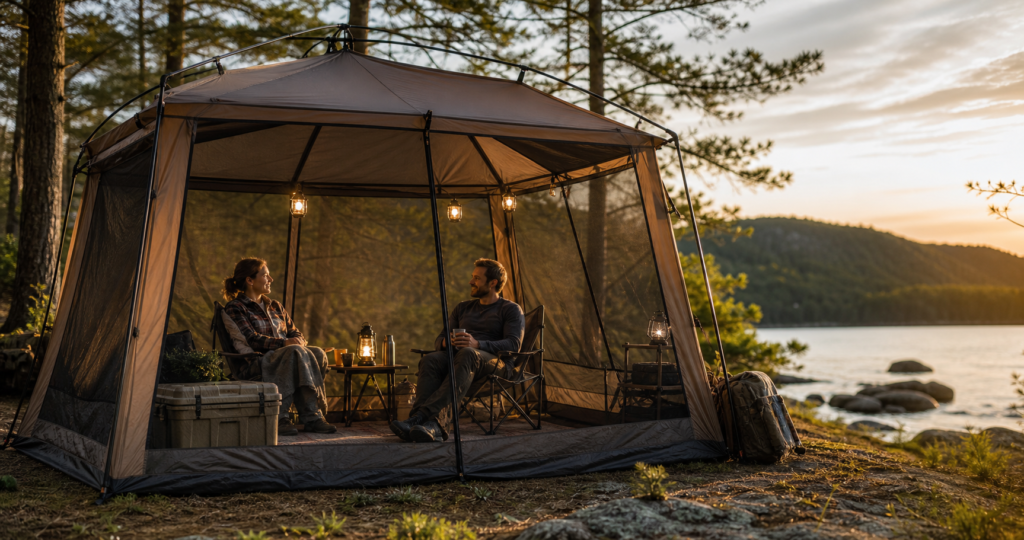
A screen tent turns an exposed outdoor area into a more comfortable living space. Its mesh walls provide ventilation and visibility while creating a barrier against insects. A screened tent shelter is especially helpful when you want to spend time outside but mosquitoes, flies, and other pests make it difficult to eat, relax, or keep food covered.
Common uses include:
- Creating a bug-free dining area at a campsite
- Covering a picnic table
- Providing shade in a backyard or at the beach
- Protecting food from flies and other pests
- Establishing a shared gathering area during group trips
- Adding sheltered space next to an RV or camper
- Creating a ventilated outdoor kitchen area where permitted
This type of outdoor screen room is especially useful in warm, humid, or wooded locations where biting insects can make normal outdoor activities uncomfortable.
Screen Tent vs. Regular Camping Tent
A regular camping tent is designed primarily for sleeping. It typically has an enclosed floor, weather-resistant fabric, and a lower profile that helps it handle wind and rain.
A screened tent shelter serves a different purpose. It is usually taller and more spacious, making it better for daytime activities and group gatherings. Mesh sidewalls improve airflow but provide less privacy and less insulation.
| Feature | Screen Tent | Camping Tent |
|---|---|---|
| Primary use | Dining and relaxing | Sleeping |
| Standing room | Usually available | Depends on the model |
| Insect protection | Excellent when fully enclosed | Excellent |
| Ventilation | Very high | Moderate to high |
| Built-in floor | Sometimes | Usually |
| Rain protection | Moderate | Usually stronger |
| Privacy | Limited | Higher |
| Space for tables and chairs | Usually available | Limited |
A screen tent often complements a camping tent rather than replacing it. Use the regular tent for sleeping and the screened shelter as a protected daytime living area. If you’re building a bug-resistant outdoor setup, you may also like Outdoor Gazebo with Netting: Best Bug-Free Comfort.
Screen Tent vs. Canopy
A canopy provides overhead shade but typically has open sides. It can protect against direct sunlight and light rain, but it does not keep insects out.
A screened tent shelter includes mesh sidewalls and closable entry points. That combination makes it a better choice when mosquito and fly protection is a priority.
Some canopies accept optional screen-wall kits. These can be useful for occasional use, but a purpose-built screened tent shelter often provides a tighter seal, easier access, and fewer gaps around doors and corners.
Key Features to Consider
Size and Capacity
Screen tent dimensions are usually listed by floor area, such as 10 by 10 feet or 12 by 12 feet. Manufacturer capacity claims can be optimistic, especially once you add a table, chairs, coolers, and cooking equipment.
As a practical guide:
- Two to four people: A compact shelter can work for several chairs and a small table.
- Four to six people: A 10-by-10-foot model often balances space and portability.
- Six or more people: Consider a larger screened tent shelter, especially if it needs to cover a full-size picnic table.
Always check usable interior space, not just exterior dimensions. Sloped walls, inward-curving mesh, and central support poles can reduce functional room. If you plan to move chairs around often, prioritize a screened tent shelter with wider door openings and fewer interior obstacles.
Peak Height and Wall Shape
A high center point doesn’t automatically mean you’ll have comfortable standing space. Look for wall shapes that stay more vertical rather than sharply angled.
When tall adults will use the shelter or when you’ll place tables near sidewalls, a screened tent shelter with better vertical walls often feels roomier and more comfortable for food prep, games, and conversations.
Mesh Quality
The mesh should block local insects while still allowing good airflow. Standard mosquito mesh works for many campsites, but very small pests such as no-see-ums may require finer mesh. In addition, mesh quality affects durability—door movement, wind pressure, and seam stress can all shorten a shelter’s lifespan if materials are weak.
When comparing options, inspect specs for:
- Mesh density or mesh type
- Reinforced attachment points
- Durable stitching
- Minimal gaps near doors and corners
- Closely fitting zippers
Finer mesh can slightly reduce airflow, so the right screened tent shelter depends on the bugs common at your destination and the temperatures you expect.
Weather Protection
Most screened tent shelters provide shade and limited rain protection, but they are not designed for severe storms. For better all-around coverage, look for a screened tent shelter with a rain-resistant roof and a design that manages water runoff.
- A waterproof or water-resistant roof
- Sealed or taped roof seams
- A roof that extends beyond the mesh walls
- Proper drainage points
- Optional rain panels or wind panels
- Strong guyline attachment points
Mesh sidewalls won’t stop wind-driven rain. If wet weather is likely, choose a screened tent shelter with integrated panels or compatible covers, and keep the entry closed as much as possible during storms.
UV Protection
For sunny campsites, check whether the roof fabric has a stated ultraviolet protection factor, or UPF rating. A roof rated UPF 50 or 50+ typically offers stronger protection from ultraviolet radiation than untreated fabric.
Shade reduces direct sun exposure, but reflected UV radiation can still reach you through open or mesh sides. Sunscreen and protective clothing remain important.
For general guidance on UV exposure, see the CDC’s UV Index information.
Floor Design
Many screen tents are floorless so they can fit over picnic tables and prevent trapped dirt or rainwater. A floorless design can also make entry easier because there’s no raised threshold.
However, a built-in or removable floor can offer better protection against crawling insects, mud, and damp ground. It may also require more cleaning and can complicate setup around fixed tables.
Choose based on your main use:
- Floorless: Best for picnic tables, outdoor kitchens, and fast cleaning
- Built-in floor: Better for children, pets, and protection from crawling pests
- Removable floor: Offers the most flexibility
Doors and Entry Points
One door may be enough for a small shelter. Larger screened tent shelters benefit from two doors so people can enter without moving chairs around or walking through traffic near the table.
Quality doors should have smooth zippers, clear opening paths, and ties or toggles that hold panels open. Check the threshold height too—lower, flatter entries are easier for children and people with limited mobility.
Setup System
Setup methods vary widely. Traditional pole systems are usually compact and affordable, but they may take longer and require more than one person.
Instant or hub-style shelters use preattached frames for quicker assembly. The tradeoffs can include larger packed sizes, extra weight, and additional mechanical joints that may wear over time.
Before buying, consider:
- Whether one person can assemble it
- The number of loose poles and clips
- Whether instructions are stored in the bag
- Packed length and packed weight
- How easy it is to fold after use
A screened tent shelter should feel manageable in real conditions—not just in a showroom. If you often set up after work, at night, or in windy areas, faster assembly can be a major advantage.
Frame Strength
Steel frames are usually sturdy and affordable, but they’re heavier and may rust if the protective coating gets damaged. Aluminum frames are lighter and corrosion-resistant, though they can cost more and may bend under heavy stress.
Fiberglass poles are lightweight and flexible, but they can split or break and are typically found on lighter-duty screened tent shelters.
Regardless of material, frame performance depends on proper anchoring. Stakes and guylines are essential in breezy conditions, especially for tall, mesh-sided designs.
Portability
Some shelters look compact when set up but remain difficult to transport. Check both packed weight and packed dimensions.
Car campers can usually accommodate a heavier instant screened tent shelter. Hikers, paddlers, and travelers with limited cargo space should prioritize lighter and more compact models.
How to Choose the Right Screened Tent Shelter
Start by identifying where and how you’ll use the shelter. Then match those needs to the screened tent shelter’s size, roof coverage, anchoring system, and mesh density.
For Car Camping
Prioritize interior space, insect protection, and dependable anchoring. Packed weight matters less when the screened tent shelter travels in a vehicle. A hub-style screen tent can be worthwhile for frequent trips because it reduces setup time.
For RV Camping
Choose a screened tent shelter that fits typical campground pads and doesn’t interfere with awnings, hookups, or nearby sites. Multiple doors can improve access between the shelter, RV, and cooking area. Also consider where guyline points land so you don’t trip when moving around.
For Backyard Use
Look for convenient setup, stable construction, and a roof with good UV protection. If the screen room will remain outside for extended periods, confirm whether the manufacturer permits long-term installation. Many portable models should be taken down during storms and when not in use.
If you plan to use the screened tent shelter as a seasonal outdoor room, accessories like comfortable outdoor cushions can make the setup feel more like a lounge—see Outdoor Cushions: Best Comfort and Durability Guide.
For the Beach
Pick a screened tent shelter with strong UV protection, good ventilation, sand-compatible anchors, and corrosion-resistant components. Standard stakes often pull out of loose sand, so purpose-built sand anchors or buried anchor bags may be necessary. Salt air can also be tougher on zippers and metal hardware, so corrosion resistance matters.
For Picnics and Events
Measure the table and surrounding seating area before buying. A floorless model with wide doors is usually easiest to position over a picnic table. If multiple people will enter and exit, a screened tent shelter with two doors and a smooth zipper track helps keep traffic moving and reduces wear.
How to Set Up a Screen Tent Correctly
Even a high-quality screened tent shelter can perform poorly if it’s assembled incorrectly. Follow the manufacturer instructions, then use these best practices to improve comfort and insect protection.
- Choose a level site: Uneven ground can stretch the frame and create gaps in door alignment.
- Clear sharp debris: Rocks, sticks, and sand can damage mesh and any floors.
- Lay out components: Identify poles, joints, and corner pieces before starting assembly.
- Keep tension even: Seat each corner properly before fully tightening.
- Close and check zippers: After assembly, test zippers and confirm doors close completely.
When the entry is fully closed, a screened tent shelter provides far better insect blocking than leaving a door partially open.
How to Secure a Screen Tent in Wind
Wind is one of the most common reasons screened tent shelters don’t hold their shape. Proper anchoring helps keep the roof stable, reduces flapping, and minimizes gaps that insects could potentially enter.
Use these steps:
- Use the included guylines: Don’t skip them, especially on taller shelters.
- Stake at the correct angle: Stakes should pull taut in line with the guyline direction.
- Add weight where stakes are limited: Use sandbags or anchor bags designed for soft ground.
- Recheck after gusts: Inspect tension and re-tighten quickly if wind increases.
- Close panels during gusts: Keep the screened tent shelter’s door fully zipped during strong movement.
Can You Cook Inside a Screen Tent?
In many cases, you can prepare food near or inside a screened tent shelter, but safety comes first. Mesh helps ventilation, yet cooking appliances still produce heat and fumes. Always follow the appliance manufacturer’s instructions and campground rules.
Practical guidelines:
- Use stable tables designed to hold cookware safely.
- Keep open flames and hot surfaces away from mesh walls.
- Ensure adequate airflow and monitor wind direction.
- Never use a fire, charcoal grill, or other high-heat setup indoors unless specifically allowed and engineered for that use.
- Keep trash sealed to reduce flies and insects.
Are Screen Tents Waterproof?
Most screened tent shelters are not fully waterproof like a dedicated rain enclosure. They are generally designed for shade and insect protection, with limited rain resistance on the roof.
To stay drier in light rain, focus on:
- A water-resistant or waterproof roof fabric
- Sealed/taped seams on the roof panels
- Roof overhang that directs water away from doors
- Proper drainage so water doesn’t pool
Even with a good roof, keep in mind that wind-driven rain can reach mesh walls and doors. If severe weather is expected, plan to take the screened tent shelter down or move to a more sheltered area.
Can You Sleep in a Screen Tent?
Some people do sleep in a screened tent shelter, especially when temperatures are warm and bugs are the main concern. Still, it’s important to set expectations: mesh environments can feel cooler at night and may offer limited privacy and insulation.
If you plan to sleep in one, choose a model with a more enclosed configuration (for example, a screened tent shelter with a floor and closable panels). Use appropriate bedding for temperature and keep doors closed to improve insect blocking.
For full-weather comfort, you may also consider pairing your setup with other shade structures. For example, an outdoor screen-based shelter can complement a larger outdoor lounging area.
How to Keep Bugs Out
Even the best screened tent shelter works best when you reduce entry opportunities. Small habits can make a big difference:
- Keep doors zipped when not actively entering or exiting.
- Check for gaps around doors and corners after setup.
- Seal or close any unused openings or vents.
- Use lighting wisely—bright lights can attract insects near your shelter.
- Store food and trash in sealed containers.
- Consider a safe outdoor repellent strategy outside the shelter if needed.
If you’re building an insect-resistant outdoor space, a screened tent shelter is often most effective when paired with additional netting solutions for larger areas.
Cleaning and Maintenance
Proper care can extend the life of your screened tent shelter and keep it looking and performing well.
After Each Use
- Shake out loose dirt and debris before packing.
- Wipe down surfaces with a soft brush or damp cloth.
- Make sure the fabric is dry before storing to reduce mildew risk.
Seasonal Cleaning
- Clean mesh gently—avoid harsh scrubbing that can damage the weave.
- Check zippers for sand and residue, then clean carefully.
- Inspect seams and corners for small tears, and repair early.
- Store the shelter in a cool, dry place away from direct sunlight.
If your screened tent shelter includes a removable floor, clean that piece separately so mud and moisture don’t remain trapped.
Common Screen Tent Problems
Even with good gear, screened tent shelters can run into predictable issues. Here are common problems and what you can do:
- Gaps near the door: Recheck leveling, tension, and zipper alignment.
- Mesh damage: Clear debris before setup and repair small tears early.
- Loose frame or instability: Improve anchoring with stakes, guylines, and anchor bags for soft ground.
- Zipper snags: Clear sand from zipper teeth and avoid forcing the slider.
- Water pooling: Ensure correct pitch and drainage points; avoid low spots.
- Mildew smell: Dry thoroughly before storage and clean with gentle methods.
Addressing issues early helps your screened tent shelter stay reliable for future trips.
Frequently Asked Questions
Are screened tent shelters good for mosquitoes?
Yes. A screened tent shelter is designed to block mosquitoes and many other flying insects when doors and panels are kept fully closed.
Do I need a floor?
A floorless setup can be great for picnic tables and quick cleaning. A built-in or removable floor adds protection from crawling insects, mud, and damp ground.
How do I stop insects from getting in?
Keep entry points closed, ensure zippers seal properly, reduce nearby food odors, and avoid leaving lights directly next to openings.
Can wind damage a screen tent?
Wind can stress frames and create gaps if anchoring is weak. Use guylines correctly and recheck after gusts.
Final Buying Checklist
Before you purchase a screened tent shelter, confirm the following:
- Correct size for your group and table setup
- Mesh quality suited to local insects
- Roof coverage and seam protection for expected conditions
- Door design that supports your traffic flow
- Anchoring system (stakes/guylines) for your typical ground type
- Setup style you can assemble comfortably
- Portability that matches your transport plan
- Care and storage approach you can maintain
Choosing the right screened tent shelter helps you create a comfortable, bug-free outdoor space for meals, relaxation, and gatherings—so you can enjoy the outdoors with fewer interruptions.



Add comment