
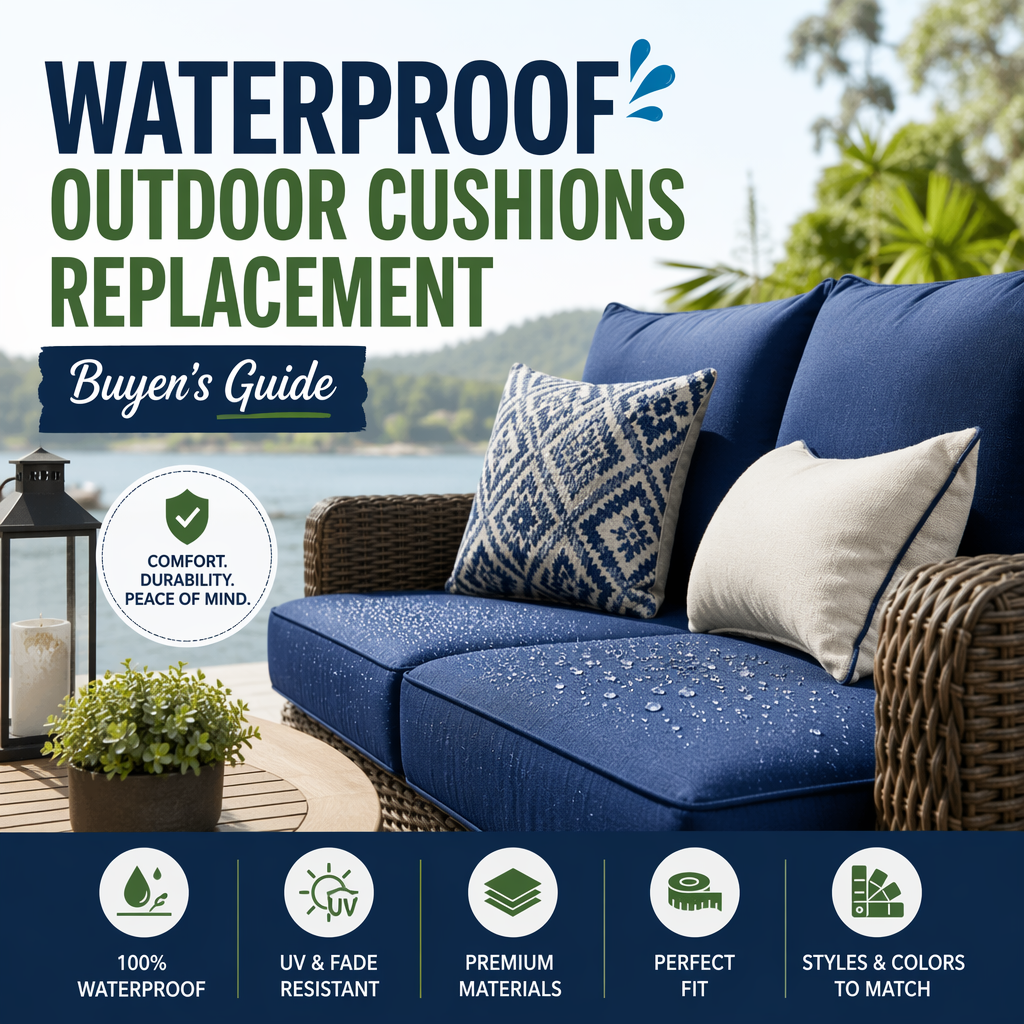
Replacing worn, faded, or waterlogged patio seating can restore comfort quickly—but only if the waterproof outdoor cushions replacement matches how your furniture is used outdoors. Some cushions are truly waterproof, while others are water-resistant or quick-drying. This guide helps you choose the right cushion type, measure accurately, and maintain replacement cushions so they stay comfortable for longer.
Table of Contents
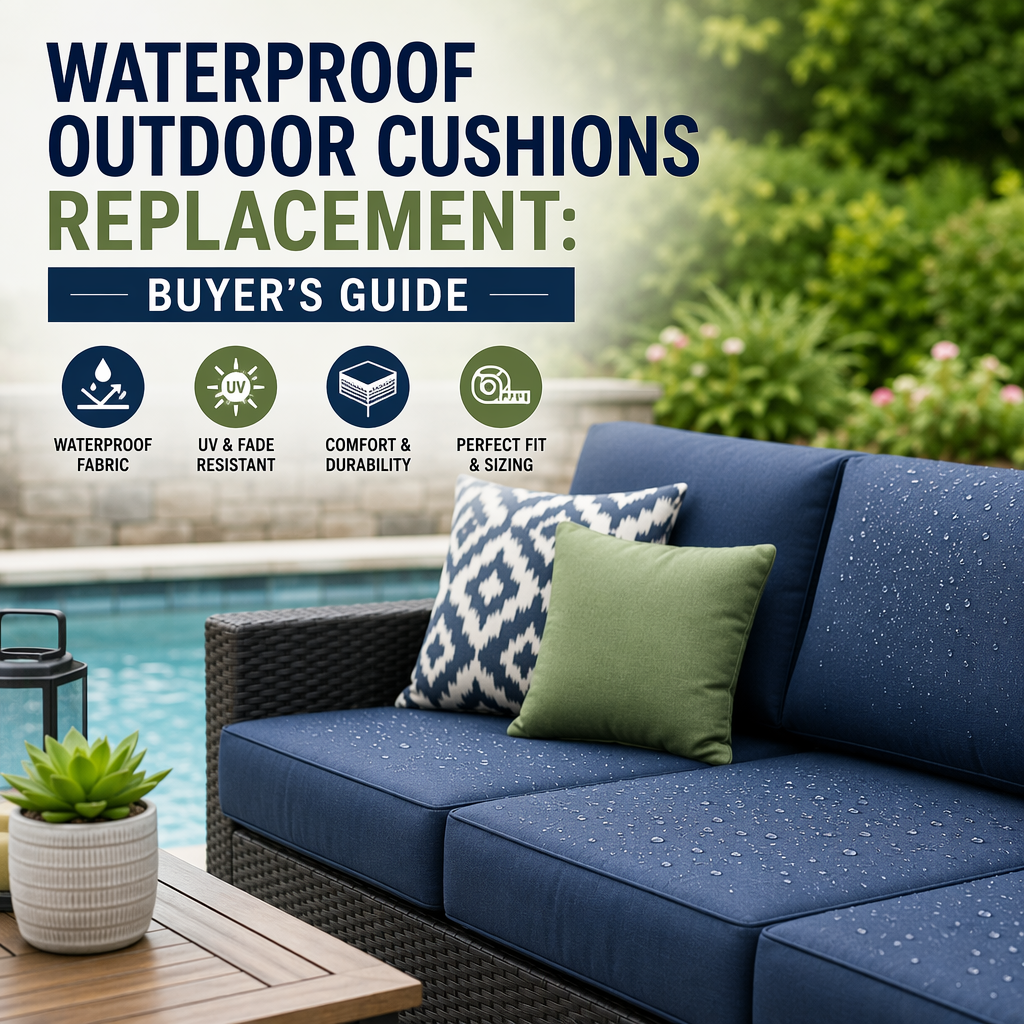
- Are Outdoor Cushions Really Waterproof?
- What to Look for in Waterproof Outdoor Replacement Cushions
- How to Measure for Replacement Outdoor Cushions
- Replacement Cushions, Covers, or Inserts: Which Do You Need?
- Best Replacement Cushion Types for Different Outdoor Areas
- Stock vs. Custom Waterproof Outdoor Cushions
- How Thick Should Replacement Outdoor Cushions Be?
- How to Keep Outdoor Replacement Cushions Dry
- Can Outdoor Cushions Be Left Outside in the Rain?
- Can You Waterproof Existing Outdoor Cushions?
- How Long Do Outdoor Replacement Cushions Last?
- Frequently Asked Questions
- Final Buying Checklist
Are Outdoor Cushions Really Waterproof?
Some outdoor cushions are waterproof, but many are only water-resistant—so a waterproof outdoor cushions replacement decision should be based on construction details, not marketing alone.
A waterproof cushion is designed to prevent water from reaching the inner filling under normal outdoor exposure. It may use coated fabric, sealed construction, or a waterproof liner.
A water-resistant cushion can repel light rain and spills temporarily, but water may eventually soak through the fabric, seams, zipper, or piping.
A quick-drying cushion may allow water to enter but uses open-cell foam, mesh panels, or breathable construction to drain and dry rapidly.
These terms are not interchangeable. For uncovered patios or poolside furniture, quick drainage and mildew resistance can be just as important as a waterproof exterior. A completely sealed cushion may trap condensation if moisture enters through a seam or zipper.
What to Look for in Waterproof Outdoor Replacement Cushions
A quality replacement cushion should handle the conditions in your specific outdoor space. Evaluate the entire cushion rather than relying on a waterproof label alone—especially when choosing a waterproof outdoor cushions replacement for rainy regions, shaded humidity, or mixed sun exposure.
Durable Outdoor Fabric
The cover fabric is the cushion’s first defense against moisture, stains, and sunlight. Common outdoor fabrics include:
- Solution-dyed acrylic: Highly resistant to fading, moisture, stains, and mildew. It offers a soft, fabric-like feel and is often used for premium patio cushions.
- Olefin: A durable synthetic fabric with strong resistance to water, mildew, abrasion, and fading. It frequently offers good value for everyday outdoor furniture.
- Polyester with a protective coating: An affordable option that can repel water effectively when new. Performance varies based on fabric weight and coating quality.
- Marine-grade vinyl: Highly water-resistant and easy to wipe clean, although it can feel hot and less breathable in direct sunlight.
- Textilene or mesh fabric: Breathable and quick-drying, making it useful for poolside furniture and humid environments.
Look for a clearly stated outdoor-use rating rather than assuming any synthetic fabric will perform well outside.
Quick-Drying Fill
Standard indoor foam absorbs water and may remain damp long enough to develop odors or mildew. Better replacement cushions use materials suited to outdoor conditions—this is the core of a successful waterproof outdoor cushions replacement strategy.
Reticulated or open-cell foam allows water and air to pass through. It is an excellent option when you want a replacement cushion that handles frequent rain, although it generally costs more than conventional foam.
High-density polyurethane foam provides firm support and retains its shape well. It should be protected by a waterproof liner or used where cushions receive limited rain exposure.
Polyester fiberfill feels soft and drains more easily than dense foam, but lower-quality filling may flatten with repeated use.
Some cushions combine a supportive foam core with polyester batting. This construction offers structure and a softer outer feel, provided the materials are protected from prolonged moisture. For many homeowners, the best outdoor cushion replacement approach is pairing a strong cover fabric with a fill that won’t stay wet.
UV and Fade Resistance
Water is not the only threat to outdoor cushions. Continuous sun exposure can fade colors, weaken fabric, and break down protective coatings—an issue that can shorten the useful life of a waterproof outdoor cushions replacement even when it resists rain.
Check for UV-resistant fabric, solution-dyed fibers, or a documented fade-resistance rating. Solution-dyed materials generally retain color better because pigment is incorporated into the fiber rather than applied only to its surface.
Dark, saturated colors may show fading sooner than muted tones. Very light fabrics can hide sun fading but may display dirt and stains more easily.
Mildew Resistance
Mildew grows when moisture remains trapped in fabric or filling. Mildew-resistant materials reduce the risk, but they do not eliminate it—so your waterproof outdoor cushions replacement should still include good airflow and cleaning habits.
Good drainage, airflow, removable covers, and regular cleaning remain necessary. Cushions should not sit wet against solid furniture surfaces for extended periods.
If you’re comparing cushion options, focus on how quickly the replacement cushion drains and dries as much as how water-tight it feels.
Strong Seams and Protected Zippers
Water can enter through stitched seams even when the fabric itself is waterproof. Inspect product specifications for:
- Double-stitched or reinforced seams
- Covered or corrosion-resistant zippers
- Internal waterproof liners
- Mesh drainage panels
- Secure piping and edge construction
Removable zippered covers are easier to clean and allow you to replace the foam later. However, the zipper area may be a weak point in wet conditions unless it is protected.
Ties or Nonslip Features
Replacement cushions should remain secure during use and moderate wind. Look for fabric ties, hook-and-loop straps, nonslip backing, or a shape that fits tightly within the furniture frame.
A loose fit can lead to gaps where water pools, so a properly sized replacement cushion also supports better drainage—helpful for any waterproof outdoor cushions replacement that depends on fast drying.
How to Measure for Replacement Outdoor Cushions
Accurate measurements are essential. Even a difference of one or two inches can cause cushions to bunch, slide, or leave uncomfortable gaps. This is one reason many waterproof outdoor cushions replacement projects fail—size mismatches can undermine the performance of even the best materials.
Remove the old cushion before measuring the furniture whenever possible. Old cushions may have compressed, stretched, or lost their original shape.
Measuring a Seat Cushion
Measure the usable seating area from side to side for the width. Measure from the front edge to the back for the depth. Then determine the preferred thickness based on the furniture frame and desired comfort.
For a replacement based on an existing cushion, measure it from seam to seam without pulling or flattening the fabric.
Measuring a Back Cushion
Measure the width of the backrest area and the height from the seat surface to the intended top edge. Consider whether the cushion sits on top of the seat cushion, behind it, or directly against the furniture frame.
The seat cushion’s thickness can affect the required back-cushion height. Measure both pieces as a set when replacing them together for a better waterproof outdoor cushions replacement fit.
Measuring Curved or Irregular Cushions
For rounded backs, tapered seats, chaise lounges, or sectional corner pieces, create a paper or cardboard template. Mark the front, back, left, and right sides clearly.
Custom replacement cushions are often the best choice when furniture has:
- Curved or angled frames
- Tapered seats
- Rounded corners
- Notched backs
- Unusual sectional configurations
- Nonstandard depths or widths
Do not assume that cushions described as small, deep-seat, loveseat, or universal will fit without checking the actual dimensions.
Replacement Cushions, Covers, or Inserts: Which Do You Need?
The condition of the current cushions determines how much needs to be replaced. For the right waterproof outdoor cushions replacement plan, you’ll usually pick one of three paths: whole cushion, cover-only, or insert-only.
Choose Complete Replacement Cushions When:
- The foam has flattened or become uneven
- The filling smells musty
- Water remains trapped inside
- The cushion no longer supports body weight
- Both the cover and insert are damaged
- The existing cushions are the wrong size
A complete replacement provides new fabric and filling, making it the most practical option for heavily worn cushions.
Choose Replacement Covers When:
- The foam remains firm and comfortable
- Only the fabric is faded, stained, or torn
- You want to change the color or style
- The current inserts fit the furniture correctly
Confirm that the new covers match the insert dimensions and shape. Covers that are too loose will wrinkle, while overly tight covers can strain seams and zippers.
Choose New Inserts When:
- The covers remain usable
- The foam has compressed or broken down
- You want firmer or softer support
- You need better drainage
New inserts can restore comfort at a lower cost than replacing the entire cushion set. Use outdoor-rated foam or fill, and add waterproof liners if the covers do not provide adequate moisture protection. If you want more all-weather options, see our guide on waterproof outdoor cushions for comfort that dries fast.
Best Replacement Cushion Types for Different Outdoor Areas
The right cushion depends on how much exposure it will receive. A well-matched replacement cushion can reduce mildew and help the seating feel comfortable even after wet weather—especially if you’re investing in a waterproof outdoor cushions replacement.
Uncovered Patios
Choose quick-drying foam, fade-resistant fabric, mildew resistance, and drainage features. Cushions in fully exposed areas should still be stored during severe weather and extended periods of rain.
If your patio gets frequent downpours, a waterproof outdoor cushions replacement with open-cell drainage performance is often the safest bet.
Covered Porches
Water-resistant fabric and conventional outdoor foam may be sufficient when cushions receive only wind-driven rain or occasional spills. UV protection remains important if sunlight reaches the seating area.
Poolside Furniture
Prioritize fast drainage, chlorine resistance, mildew resistance, and fabric that is comfortable against bare skin. Open-cell foam and breathable mesh construction perform well in this environment. For poolside seating, a waterproof outdoor cushions replacement should emphasize quick-dry performance as much as water repellency.
Coastal Locations
Salt air can affect zippers, fasteners, and furniture frames. Look for corrosion-resistant components, tightly woven fabric, and materials that can be rinsed easily.
Humid Climates
Select breathable, quick-drying cushions with removable covers. Avoid leaving wet cushions stacked together, since restricted airflow encourages mildew growth.
Stock vs. Custom Waterproof Outdoor Cushions
Stock replacement cushions are affordable, widely available, and convenient when your furniture uses common dimensions. They are well suited to standard dining chairs, benches, loveseats, and deep-seat patio furniture.
Custom cushions are more appropriate when the frame has unusual dimensions or when you need a specific combination of fabric, foam density, thickness, piping, and ties.
When comparing the two options, consider:
- Total cost for the complete furniture set
- Expected years of use
- Accuracy of fit
- Available fabric choices
- Warranty coverage
- Replacement cover availability
- Production and delivery time
A lower-priced stock cushion is not a bargain if it shifts constantly or leaves part of the furniture frame exposed. Conversely, custom cushions may not be necessary for inexpensive or temporary patio furniture.
If you’re shopping for the right cushion style, you may also find helpful comparisons in our guides, such as Outdoor Furniture Cushions: Best Comfort & Durability.
How Thick Should Replacement Outdoor Cushions Be?
Outdoor dining-chair cushions are often relatively thin, while lounge and deep-seat furniture require thicker cushions for support. In a waterproof outdoor cushions replacement, thickness affects both comfort and fit, especially when back cushions need to align correctly.
Common thickness ranges include:
- 1 to 2 inches: Chair pads and lightly cushioned dining seats
- 3 to 4 inches: Standard patio chairs, benches, and compact lounge seating
- 5 to 6 inches: Deep-seat chairs, sofas, sectionals, and premium lounge furniture
Thickness alone does not determine comfort. Foam density, firmness, seat suspension, and body weight also matter. A thin, high-density foam cushion may provide more support than a thick cushion filled with loose, low-density fiber.
Check the frame before increasing cushion thickness. A cushion that is too thick can raise the seating position uncomfortably or make the back cushion fit incorrectly.
How to Keep Outdoor Replacement Cushions Dry
Even high-quality waterproof outdoor cushions replacement products last longer with basic protection.
Brush Off Dirt Regularly
Dust, pollen, leaves, and organic debris can hold moisture against the fabric. Brush or vacuum cushions regularly, especially along seams and piping.
Clean Spills Promptly
Blot liquid spills with a clean cloth. Avoid aggressive rubbing, which can spread the stain or damage a surface coating. Follow the manufacturer’s care instructions for cleaning products and machine washing.
Position Cushions for Drainage
After rain, stand cushions on an edge in a ventilated area. Open zippers where appropriate and keep drainage panels facing downward. Do not place damp cushions in a closed storage box.
Use Furniture Covers Correctly
A breathable, well-fitted furniture cover can reduce rain and UV exposure. Covers should include vents or sufficient airflow to prevent condensation from becoming trapped underneath. If you use a cover, plan to check your cushions after storms so trapped moisture doesn’t linger—an important step when you’re relying on waterproof outdoor cushions replacement construction.
If you prefer extra protection, look for all-weather designs like outdoor waterproof cushion options that prioritize drying and airflow.
Store Cushions During Harsh Weather
Bring cushions indoors during storms, freezing conditions, or long periods of nonuse. Use a dry, ventilated storage area rather than a location with persistent humidity.
Can Outdoor Cushions Be Left Outside in the Rain?
Waterproof or quick-drying outdoor cushions can tolerate occasional rain, but leaving them exposed continuously will shorten their service life. Prolonged moisture can enter through seams, promote mildew, weaken filling, and stain the furniture underneath—this includes many waterproof outdoor cushions replacement models.
Exposure recommendations vary by product. Check the manufacturer’s care instructions and warranty conditions. When heavy rain is expected, moving the cushions under cover remains the most reliable approach—especially for a waterproof outdoor cushion replacement that relies on zippers and seams for protection.
Can You Waterproof Existing Outdoor Cushions?
A fabric-protection spray may improve water repellency on some outdoor cushions, but it does not turn the entire cushion into a fully waterproof product. Water can still enter through seams, zippers, worn areas, or the underside—so it’s not a substitute for a properly selected waterproof outdoor cushions replacement.
Before applying a treatment:
- Confirm that the product is compatible with the fabric.
- Clean and dry the cushion completely.
- Test the spray on an inconspicuous area.
- Apply it outdoors with adequate ventilation.
- Follow the stated curing time.
- Reapply only at the recommended interval.
Some treatments can alter fabric color, texture, breathability, or warranty coverage. They are most useful for restoring surface water repellency, not correcting unsuitable foam or damaged construction.
For general guidance on fabric care and safe cleaning practices, you can also reference the care resources from the U.S. Centers for Disease Control and Prevention when dealing with dampness and mildew risk.
How Long Do Outdoor Replacement Cushions Last?
Outdoor cushion lifespan depends on material quality, climate, exposure, storage, and frequency of use. Budget cushions left outdoors year-round may show significant wear within a few seasons. Higher-quality cushions with solution-dyed fabric and durable foam can last considerably longer when cleaned and stored properly—especially when your waterproof outdoor cushions replacement includes strong seams and drainage-ready materials.
Common signs that replacement is needed include:
- Permanent flattening
- Crumbling or uneven foam
- Persistent mildew or odors
- Torn seams
- Brittle or cracked fabric
- Severe fading
- Broken zippers
- Water that no longer drains or dries properly
Replacing covers before the fabric fails completely may protect otherwise usable inserts. This can be a smart alternative when your current cushion hardware is still in good shape.
Frequently Asked Questions
What is the best material for waterproof outdoor cushions replacement?
Solution-dyed acrylic and olefin are strong choices for covers because they resist moisture, fading, and mildew. For filling, reticulated open-cell foam performs especially well in wet locations because it drains quickly. Many people choose this combination as their waterproof outdoor cushions replacement because it reduces lingering moisture.
Are waterproof replacement cushions completely maintenance-free?
No. They still require cleaning, airflow, occasional drying, and protection from severe weather. Waterproof materials reduce water penetration but do not prevent dirt accumulation, seam wear, condensation, or mildew under all conditions.
Is it cheaper to replace outdoor cushion covers or whole cushions?
Replacement covers are usually cheaper when the existing foam is still supportive, clean, dry, and correctly sized. Complete cushions are a better value when the inserts have flattened, absorbed odors, or begun to deteriorate.
How do I prevent outdoor cushions from sliding?
Use cushions with ties, straps, hook-and-loop attachments, or nonslip backing. A correctly fitted cushion will also move less than one that is too small for the frame.
Can indoor foam be used in outdoor cushion covers?
Indoor foam is not ideal for furniture exposed to rain or high humidity because it can retain moisture. If it must be used in a protected location, place it inside a properly fitted waterproof liner and inspect it regularly for trapped moisture.
Should outdoor cushion covers be machine washable?
Machine-washable covers can simplify maintenance, but only wash them this way when the care label specifically permits it. Some waterproof coatings and fabric treatments can be damaged by heat, strong detergent, bleach, or machine agitation.
Final Buying Checklist
Before ordering waterproof outdoor cushions replacement, verify:
- Exact width, depth, height, and thickness
- Cushion shape and corner style
- Seat and back arrangement
- Outdoor-rated cover fabric
- UV and fade resistance
- Water-resistant or waterproof construction
- Quick-drying, mildew-resistant filling
- Reinforced seams and durable zippers
- Ties, straps, or nonslip features
- Cleaning and storage requirements
- Return policy and warranty
- Whether replacement covers are sold separately
The most effective waterproof outdoor cushions replacement is not simply the product with the strongest water-repellency claim. It is a correctly sized cushion made from durable outdoor fabric, supportive filling, and construction suited to the amount of rain, sun, and humidity your furniture receives. Careful measuring and routine maintenance will improve comfort, reduce moisture problems, and extend the life of the replacement cushions.



Add comment