
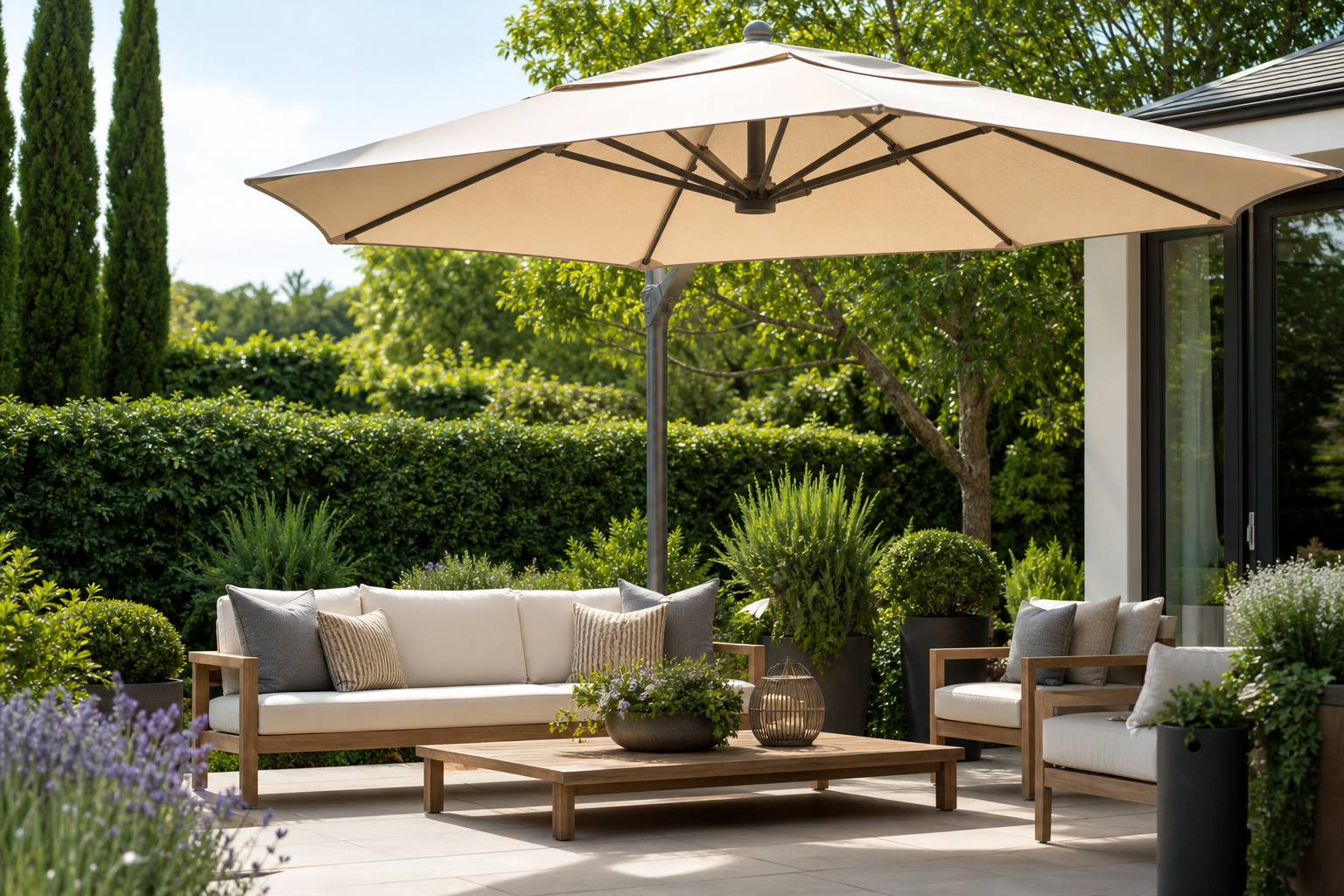
A garden patio umbrella helps you turn sunny outdoor areas into comfortable spaces for dining, relaxing, and entertaining. With the right style and size, an umbrella can reduce glare and heat on your patio furniture, create a defined “outdoor room,” and make everyday outdoor living feel more polished—whether you have a small seating nook or a large deck.
Choosing one involves more than picking a color. Size, shape, frame material, canopy fabric, opening mechanism, wind resistance, and base weight all affect performance. This guide breaks down the main options and buying factors so you can pick a garden patio umbrella that fits your layout, climate, and budget—without guesswork.
- What Is a Garden Patio Umbrella?
- How to Choose the Right Garden Patio Umbrella
- Select a Durable Canopy Fabric
- Compare Frame Materials
- Understand Opening and Tilt Mechanisms
- Choose the Correct Umbrella Base
- Wind Safety and Stability
- UV Protection and Shade Coverage
- Useful Features to Consider
- Garden Patio Umbrella Placement Tips
- How to Clean a Garden Patio Umbrella
- How to Store a Patio Umbrella
- Common Buying Mistakes
- What Color Patio Umbrella Is Best?
- Frequently Asked Questions
- Final Buying Checklist
What Is a Garden Patio Umbrella?
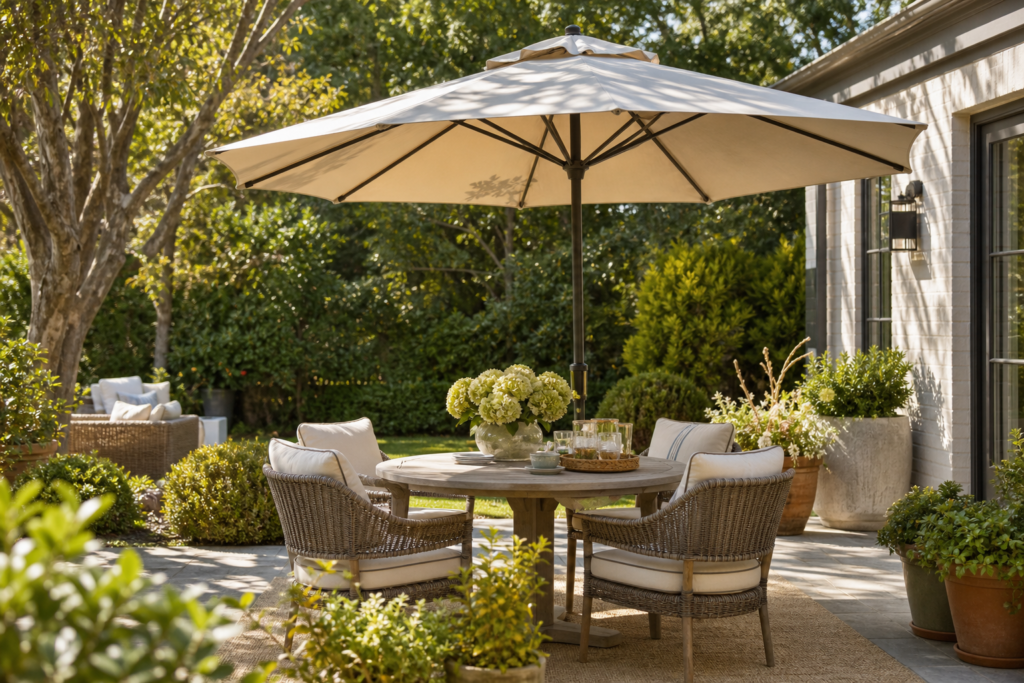
A garden patio umbrella is a freestanding or table-mounted outdoor shade structure. It usually consists of a fabric canopy supported by ribs, a central or offset pole, an opening mechanism, and a weighted base.
The two most common designs are:
- Market umbrellas: These have a pole through the center of the canopy and are commonly used with outdoor dining tables.
- Cantilever umbrellas: Also called offset umbrellas, these suspend the canopy from a side-mounted frame to provide unobstructed shade over lounge furniture, pools, and larger seating areas.
Many umbrellas also include features like tilt controls, rotating canopies, vents, solar-powered lights, or removable covers—each of which can affect comfort and day-to-day usability.
How to Choose the Right Garden Patio Umbrella
The best garden patio umbrella is large enough to shade the intended area, stable enough for local conditions, and built from materials that can handle outdoor exposure. Start by identifying where the umbrella will go and what it needs to cover—table shade for meals, lounge shade for relaxation, or broader coverage for mixed-use patios.
Measure the Area You Want to Shade
Measure the width and length of the table, seating arrangement, or lounge zone. As a general rule, the canopy should extend approximately 60 cm to 75 cm beyond the area being shaded on each side. That extra “reach” helps account for movement of the sun and shifting people around the seating area.
Typical umbrella sizes include:
| Canopy Size | Suitable Use |
|---|---|
| 1.8-2.1 m | Bistro tables and compact balconies |
| 2.4-2.7 m | Four-person dining tables |
| 3-3.3 m | Six-person tables or medium lounge areas |
| 3.5 m and larger | Large dining sets, sectional sofas, and poolside spaces |
A larger canopy can be more comfortable, but it also increases surface area for wind and usually requires a heavier base. If you live in a windy area, prioritize stability and follow wind-limit guidance carefully.
Choose the Best Shape
The canopy shape should complement the furniture or space beneath it:
- Round or octagonal: Works well with round tables and compact seating areas.
- Square: Suitable for square tables, balconies, and symmetrical layouts.
- Rectangular: Best for long dining tables, outdoor sofas, and narrow patios.
When possible, match the canopy shape to the table or seating. That approach reduces wasted open space and often gives you more usable shade.
Decide Between Center-Pole and Cantilever Designs
A center-pole garden patio umbrella is usually simpler, lighter, and more affordable. It is a practical choice for a table with an umbrella hole or for use with a compact freestanding base. However, the pole in the middle can be a limitation for lounge areas where people want open, walk-through space.
A cantilever umbrella offers greater flexibility because its pole stays outside the shaded area. Many models can rotate or tilt, letting the canopy follow the sun across a wider range. That flexibility is great for lounge seating and poolside spaces, but cantilever options often cost more and require substantial bases to remain stable.
Choose a center-pole umbrella for straightforward table shade. Choose a cantilever option when you need open space beneath the canopy or want to cover a larger lounge arrangement.
If you’re also updating comfort accessories, pair your shade with outdoor textiles—see Outdoor Patio Cushions That Instantly Upgrade Comfort for ideas that match different patio setups.
Select a Durable Canopy Fabric
Canopy fabric determines how well the umbrella resists fading, moisture, mildew, and ultraviolet radiation. It’s one of the biggest factors in how long a garden patio umbrella stays looking good.
When you compare fabrics, look for details like UV rating, water resistance, and whether the fabric is solution-dyed or includes protective coatings. Also consider the conditions in your area—coastal humidity, heavy afternoon sun, and frequent storms all affect how long materials perform.
Solution-Dyed Acrylic
Solution-dyed acrylic is one of the most durable outdoor fabric options. Its color is added during fiber production rather than applied only to the surface, which improves fade resistance. It also performs well against moisture and mildew when maintained correctly.
This material is often more expensive, but it’s a strong choice for garden patio umbrellas used frequently or left outdoors for much of the season.
Polyester
Polyester offers a practical balance between price and performance. Quality polyester canopies may include UV-resistant and water-repellent coatings, but they typically fade sooner than solution-dyed acrylic.
Check the fabric weight and any stated UV rating because low-cost polyester varies in quality.
Olefin
Olefin is lightweight, stain-resistant, and relatively resistant to moisture and fading. It generally costs less than premium acrylic while still providing dependable outdoor performance.
Is a Patio Umbrella Waterproof?
Most patio umbrella canopies are water-resistant rather than fully waterproof. They can handle brief, light rain, but prolonged exposure or heavy rain may allow water through the fabric and seams.
A garden patio umbrella should not be treated as an all-weather shelter. Close it during storms and allow a wet canopy to dry completely before storing it.
Match Fabric to Your Typical Weather
If your patio gets intense afternoon sun, prioritize UV-focused fabrics and color-fast options. In humid or rainy regions, prioritize water-resistant materials and a model designed to handle closing and re-opening frequently. Even high-quality fabric benefits from a protective cover when the umbrella is stored or left out for extended periods.
Compare Frame Materials
The frame supports the canopy and affects the umbrella’s weight, appearance, maintenance requirements, and lifespan. A strong frame also helps keep the canopy aligned and reduces wobbling.
Aluminum
Aluminum frames are lightweight, rust-resistant, and easy to move. Powder-coated finishes add protection and come in many colors. Aluminum is one of the most common choices for residential patios and for many garden patio umbrellas because it offers a good mix of strength and convenience.
Because aluminum frames are relatively light, an aluminum garden patio umbrella still needs a properly weighted base for stability.
Wood
Wood frames offer a traditional look that pairs well with garden furniture and natural landscapes. Common options include teak, eucalyptus, and other hardwoods.
Wood requires more maintenance than aluminum. Periodic cleaning and protective oil or sealant may be necessary depending on the wood and desired finish. Some wood umbrellas also use pulley systems instead of crank mechanisms.
Fiberglass
Fiberglass ribs are flexible and can bend under wind pressure instead of snapping easily. Some umbrellas combine fiberglass ribs with aluminum poles to balance strength, flexibility, and corrosion resistance.
Steel
Steel is strong and often affordable, but it can rust if protective coatings are damaged. Inspect coated steel frames periodically and address scratches quickly before corrosion spreads.
Understand Opening and Tilt Mechanisms
The operating mechanism should be easy for all regular users to handle. For everyday convenience, choose a garden patio umbrella with controls that you can operate smoothly, even when the canopy is partially open.
Common opening systems include:
- Crank lift: Opens and closes the canopy by turning a handle.
- Push-up: Similar to a handheld umbrella and locks with a pin or collar.
- Pulley: Uses a rope to raise the canopy, often found on wooden models.
- Automatic lift: Uses internal tension or assisted movement for easier operation.
A tilt function helps maintain shade as the sun moves. Push-button tilt is straightforward, while collar tilt lets you adjust the angle by rotating a collar above the crank. Premium cantilever umbrellas may provide multiple tilt positions and 360-degree rotation.
What to Check in Real Use
Before buying, think about how often you plan to open, tilt, and close the umbrella. If you frequently host guests, smoother controls can save time. Also check whether the umbrella tilts with one hand and whether the locking mechanism feels secure when the canopy is moved.
Choose the Correct Umbrella Base
A suitable base is essential for stability. The required weight depends on the umbrella’s size, design, pole diameter, exposure to wind, and whether it is supported by a table.
Approximate residential guidelines include:
| Umbrella Size | Suggested Minimum Base Weight |
|---|---|
| Up to 2.1 m | 16-23 kg |
| 2.4-2.7 m | 23-32 kg |
| 3-3.3 m | 32-45 kg |
| Large cantilever models | 45-90 kg or manufacturer-specified ballast |
These are general estimates, not substitutes for the manufacturer’s instructions. A table can help support a center-pole umbrella, but it does not eliminate the need for a compatible base or proper installation.
Cantilever models often use cross bases with paving slabs or fillable ballast boxes. Some can be permanently anchored to concrete or decking. Permanent installation can improve stability, but the mounting surface must be structurally suitable.
Confirm that the base sleeve fits the pole diameter and that its tightening mechanism holds the pole firmly.
Base Placement Matters
A properly weighted base can still become unstable if it sits on an uneven or slippery surface. Place the base on a firm, level patio surface and verify that it doesn’t rock when you apply gentle pressure.
Wind Safety and Stability
No portable patio umbrella is safe in every wind condition. A heavy base improves stability but doesn’t make an open canopy storm-proof. Treat your garden patio umbrella as a shade solution that needs responsible use.
For safer use:
- Close the umbrella when it is unattended.
- Lower it during gusty conditions.
- Secure the closed canopy with its attached strap.
- Do not use it during thunderstorms or severe weather.
- Avoid placing it near grills, fire pits, overhead lines, or fragile objects.
- Follow the manufacturer’s stated wind limits.
- Use permanent anchoring where appropriate for exposed locations.
A vented canopy allows some air to escape through the top and may reduce lifting pressure. It can improve stability, but it does not replace a correctly sized base or safe operating habits.
UV Protection and Shade Coverage
Shade can reduce direct sun exposure, but not every canopy provides the same level of ultraviolet protection. Look for a published UPF rating. A fabric rated UPF 50+ blocks at least 98% of UV radiation under test conditions.
Coverage also changes as the sun moves. Tilting or rotating a garden patio umbrella can help, particularly in the morning and late afternoon. Reflected UV radiation may still reach people beneath the canopy, so sunscreen, protective clothing, and other sun-safety measures remain important.
For general information on UV protection standards, see Skin Cancer Foundation’s overview of UV and sun protection.
Plan for “Real World” Sun Angle
Even when the umbrella looks positioned correctly at noon, the sun angle can shift quickly. If you routinely sit outdoors in the morning or evening, prioritize tilt/rotation features and choose a canopy shape and size that still covers your seats throughout your typical usage window.
Useful Features to Consider
Additional features can improve convenience, but they should support how you plan to use the umbrella. The right upgrades help a garden patio umbrella stay practical day after day.
Rotating Canopy
A rotating cantilever model can shade different areas without moving the base. This is useful for patios used throughout the day or for mixed seating arrangements.
Integrated Lighting
Solar-powered or wired LED lights can illuminate a dining area after sunset. Check whether replacement batteries or light components are available.
Removable Canopy
A removable canopy is easier to clean, repair, or replace. Replacement fabric can extend the life of a sound frame, which can be a cost-effective advantage over time.
Canopy Vent
A vent releases warm air and can help reduce pressure beneath the canopy in light wind.
Protective Cover
A fitted cover protects the canopy from dirt, bird droppings, moisture, and UV exposure when the umbrella is closed. Covers with support rods are easier to install on tall models and can help the fabric stay cleaner between uses.
Optional Side Panels and Privacy
Some outdoor umbrella setups can include side panels or compatible accessories that help block wind and provide privacy. If your goal is a more sheltered seating area, consider whether those accessories are available for the model you choose.
Garden Patio Umbrella Placement Tips
Good placement improves shade, safety, and usability.
Before installing the umbrella:
- Observe where the sun falls at the times you normally use the patio.
- Check the canopy’s full opening width and tilt range.
- Leave clearance from walls, roof edges, branches, and doors.
- Ensure the base sits on a firm, level surface.
- Keep walking routes free from the pole and base.
- Confirm that opening the canopy will not strike nearby furniture or lighting.
For dining areas, center-pole umbrellas generally work best with a table designed to accommodate the pole. For lounge areas, position a cantilever base outside the primary circulation route while keeping the canopy centered over the seats.

Add comment