
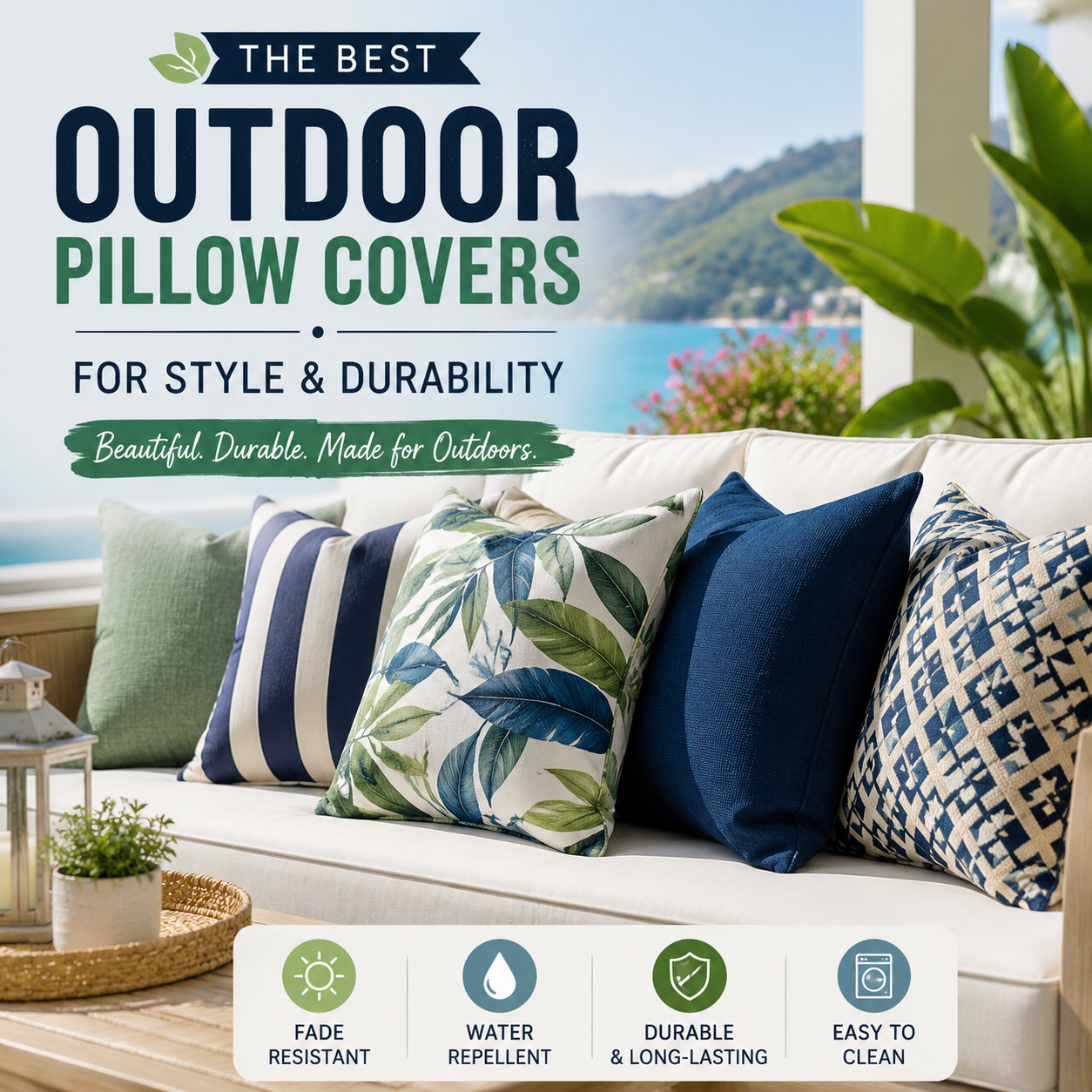
Outdoor pillow covers are an easy way to protect patio cushions, refresh your outdoor décor, and make your seating area more comfortable and stylish. If you want pillows that can handle sun, rain, dirt, and frequent use, the right cover makes a big difference.
This guide explains what they are, why they matter, how to choose the best materials, and what to look for before buying. It also covers cleaning, sizing, and styling tips so you can make a smart choice for your patio, porch, balcony, or poolside space.
Table of Contents
- What Are Outdoor Pillow Covers?
- Why Use Outdoor Pillow Covers?
- Best Materials for Outdoor Pillow Covers
- Features to Look For
- How to Choose the Right Size
- Are They Waterproof?
- Can Outdoor Pillow Covers Be Left Outside All the Time?
- How to Clean Outdoor Pillow Covers
- Styling Tips
- Outdoor vs. Indoor Pillow Covers
- What to Look for When Buying Online
- Common Questions
- Choosing the Right Covers for Your Space
- Final Thoughts
What Are Outdoor Pillow Covers?
Outdoor pillow covers are protective fabric covers designed specifically for use outside. They are made to stand up to weather conditions that regular indoor pillow covers cannot handle well, such as:
- Sun exposure
- Moisture and humidity
- Dirt and dust
- Mold and mildew
- Fading from UV rays
They are used on patio furniture, porch seating, poolside loungers, garden benches, and other outdoor spaces. If you are also shopping for seat protection, see our guide to Outdoor Chair Cushion for All-Day Comfort.
In many cases, these covers are the part of the setup that gets the most wear. They are touched often, exposed to changing conditions, and visible from every angle, so choosing a strong fabric matters as much as choosing a pretty pattern. A good cover can make a simple cushion look more polished while also helping it last longer.
Why Use Outdoor Pillow Covers?
Outdoor pillow covers do more than just look good. They help protect your pillows and extend their life. That means fewer replacements, less fading, and less time spent scrubbing or worrying about stains.
1. They protect against weather damage
Outdoor spaces are exposed to changing conditions. A quality cover helps shield the pillow insert from moisture and sun damage. Even when a patio is partially covered, wind can carry dust and debris onto fabric, and sunlight can slowly weaken fibers over time.
2. They improve durability
Outdoor pillow covers are typically made from stronger, more resilient fabrics than indoor versions. This means they can handle regular exposure to the elements. Reinforced stitching, fade resistance, and better closures all help the cover hold up through repeated use.
3. They make cleaning easier
Many outdoor pillow covers are easy to wipe clean or machine wash, which is helpful for busy outdoor areas. This is especially useful when you have kids, pets, or frequent gatherings, because spills and messes are easier to manage when the cover can be removed quickly.
4. They refresh your outdoor style
Changing pillow covers is one of the simplest ways to update the look of a patio, deck, or balcony without replacing all of your furniture. A small switch in color or texture can make the entire area feel more inviting and coordinated.
5. They help reduce wear and tear
Even if pillows are stored outdoors, covers help reduce fading, stains, and general deterioration. When you combine them with good care habits, they can support a longer lifespan for the whole cushion setup.
6. They make seasonal decorating easier
Another benefit is flexibility. You can swap covers by season, event, or color theme without buying entirely new pillows. That makes it easier to keep your seating fresh through spring, summer, and fall.
Best Materials for Outdoor Pillow Covers
When choosing a cover, material is one of the most important factors. The right fabric should balance comfort, appearance, and weather resistance. It should also fit the way you actually use your outdoor space, whether that means daily lounging or occasional entertaining.
Polyester
Polyester is one of the most common materials for outdoor pillow covers. It is affordable, durable, and often treated to resist fading and water.
Best for: everyday patio use, budget-friendly décor, and easy maintenance.
Polyester can be a practical choice when you want a wide range of colors and prints. It is also commonly available in different weights, so you can choose something lightweight for decorative pillows or something more structured for frequent use.
Olefin
Olefin is known for its strength, color retention, and resistance to moisture and mildew. It performs well in sunny or humid conditions.
Best for: areas with strong sun exposure or high humidity.
Because olefin resists fading so well, it is often a smart option for places that get direct afternoon sun. It can also be a good fit for coastal homes, where salt air and humidity can be tough on outdoor fabrics.
Acrylic
Solution-dyed acrylic is a premium choice for outdoor fabrics. It holds color well and resists fading better than many other materials.
Best for: long-term outdoor use and high-quality outdoor furniture sets.
This type of fabric is popular when the goal is both appearance and performance. It often feels more upscale and can help your pillow covers keep a rich color even after plenty of sun exposure.
Sunbrella-style fabrics
Many outdoor pillow covers are made from performance fabrics similar to Sunbrella. These fabrics are designed to resist UV damage, stains, and moisture.
Best for: homeowners who want a durable, low-maintenance option.
If you want a long-lasting look with less maintenance, performance fabric is often worth the higher price. It can be especially useful for spaces that stay set up year-round.
Canvas and blended fabrics
Some covers use canvas or fabric blends that offer a sturdier feel. These can work well in covered outdoor areas where extreme weather is less of a concern. If you choose a blend, look closely at the care instructions and the weather-resistance details so you know what kind of exposure it can handle.
Features to Look For in Outdoor Pillow Covers
Not all covers are made the same. Before buying, look at these important features. Small details can have a big effect on comfort, durability, and how easy the cover is to use day to day.
UV resistance
Outdoor pillows spend a lot of time in the sun. UV-resistant fabric helps prevent fading and keeps colors looking fresh longer. This matters most when the pillows are in direct sunlight for several hours each day.
Water resistance
Water-resistant covers help protect against light rain, spills, and humidity. While not all are fully waterproof, water resistance is very useful. It gives you more flexibility when weather changes quickly or when guests set drinks down on the cushions.
Mildew resistance
If your outdoor area tends to stay damp, mildew resistance is important. It helps prevent odors and fabric damage. This feature is especially helpful in shaded spots, humid climates, and near pools or gardens.
Hidden zipper or closure
A good closure makes it easier to insert and remove pillows while keeping the cover neat and secure. Hidden zippers also create a cleaner look, which is helpful if your cushions are part of a polished patio design.
Easy-care fabric
Machine-washable or wipe-clean covers save time and make outdoor maintenance much easier. If you host often or use your outdoor furniture every day, this feature can save a lot of effort over the course of a season.
Strong stitching
Outdoor pillow covers should have reinforced seams so they do not tear easily with regular use. Double stitching, well-finished edges, and quality seam construction all help a cover keep its shape longer.
Comfortable texture
Even though the cover is made for outdoor use, it should still feel pleasant to rest against. A rough or overly stiff texture can make the pillow less comfortable, especially on a sofa or chaise where people sit for long periods.
How to Choose the Right Size
Getting the correct size is essential for a good fit. A cover that is too small will stretch awkwardly, while one that is too large may look loose and sloppy. A proper fit also helps the pillow keep its shape and makes the whole seating area look more professional.
Measure the pillow insert
Use a tape measure to check the length and width of the pillow insert. Covers are usually sold by standard sizes such as:
- 16 x 16 inches
- 18 x 18 inches
- 20 x 20 inches
- 12 x 20 inches
If the insert is stuffed firmly, the actual fabric cover may need to be the same size or slightly smaller for a full look. If the insert is soft or lightly filled, matching the exact size may still leave the cover looking a little loose.
Choose a snug fit
In most cases, it is best to select a cover that matches the insert size closely for a fuller, more polished look. A snug fit helps the pillow appear plump and finished rather than saggy.
Check the shape
Outdoor pillow covers come in square, rectangular, and sometimes lumbar styles. Match the cover shape to the pillow and furniture style. A long lumbar pillow works well on benches and sofas, while square pillows tend to suit chairs and sectionals.
Think about how the pillow will be used
If the pillow is mostly decorative, you may prioritize appearance and color. If people will lean on it often, then durability, closure quality, and comfort become more important. The best size choice depends on the role the pillow plays in your outdoor setup.
Are Outdoor Pillow Covers Waterproof?
This is one of the most common questions buyers ask. The answer is: not always.
Many outdoor pillow covers are water-resistant, which means they can repel light moisture but may still absorb water over time. Waterproof covers provide stronger protection, but they may feel less soft or breathable.
If your pillows will be exposed to heavy rain or left outside year-round, look for:
- Waterproof backing
- Sealed seams
- Quick-drying materials
- Storage-friendly designs
For covered patios or seasonal use, water-resistant covers are often enough. For more on weather-ready fabrics and cushion care, the U.S. Environmental Protection Agency offers helpful general guidance on reducing moisture-related issues around the home.
It is also worth remembering that waterproof and breathable are not the same thing. A cover that blocks water very well may trap heat or feel less comfortable in warm weather, so it helps to choose based on your climate and how often the pillows are used.
Can Outdoor Pillow Covers Be Left Outside All the Time?
Some can stay outside for long periods, but it depends on the fabric and weather conditions. Even durable covers will last longer if you bring them in during storms, winter, or extended periods of non-use.
To extend the life of your covers:
- Store them during heavy rain or snow
- Keep them out of direct exposure when possible
- Use furniture covers when the space is not in use
- Clean them regularly
Seasonal care also helps if you like switching between lighter summer colors and richer fall tones. When paired with other outdoor accessories, such as Outdoor Cushions: Best Comfort and Durability Guide, the whole seating area can stay coordinated and easier to maintain.
If your space is fully uncovered, a storage routine matters even more. Bringing cushions in overnight or during bad weather can prevent unnecessary damage and keep them looking better for a longer period.
How to Clean Outdoor Pillow Covers
Cleaning depends on the fabric and care instructions, but most are designed for simple maintenance. A little regular attention can stop grime from building up and help colors stay brighter.
Basic cleaning steps
- Remove the cover from the pillow insert
- Shake off loose dirt or debris
- Spot clean stains with mild soap and water
- Let the cover air dry completely
- Reinsert the pillow only when fully dry
For machine-washable covers
If the care label allows machine washing:
- Use cold or warm water
- Choose a gentle cycle
- Avoid harsh bleach unless recommended
- Air dry to prevent shrinking or damage
Always check the manufacturer’s instructions before washing.
How to handle stubborn stains
For sunscreen, food spills, or bird droppings, act quickly. Blot the stain first instead of rubbing it deeper into the fabric. Use a mild cleaning solution and test it on a hidden area before treating the full spot. If the cover is heavily soiled, a longer soak in cool water may help loosen dirt before a gentle wash.
How to dry them safely
Air drying is usually the safest choice for most outdoor fabrics. Lay covers flat or hang them in a shaded, well-ventilated area. Direct high heat can damage performance coatings or cause shrinkage, especially on fitted or zippered covers.
Before putting them back on the pillows, make sure both the fabric and the zipper area are fully dry. That helps reduce mildew risk and keeps trapped moisture from causing a smell.
Styling Tips for Outdoor Pillow Covers
These covers can do more than protect your cushions. They can also help define the look of your outdoor space.
Use color to create a mood
- Neutral tones create a calm, modern look
- Bright colors add energy and personality
- Earth tones blend well with natural surroundings
- Coastal blues and whites work well for relaxed patios
Mix patterns carefully
Combining solid colors with simple patterns can make the space feel layered without looking too busy. A striped pillow next to a solid cushion often feels more balanced than using several bold prints together.
Coordinate with your furniture
Choose pillow covers that complement your chairs, sofa, cushions, or umbrella for a unified style. If you already have a statement piece, such as a colorful umbrella or a patterned chair, it usually works best to let the pillow covers support that design rather than compete with it.
Change covers seasonally
Swapping covers by season is a quick way to refresh your outdoor area:
- Light colors for spring and summer
- Warm, rich tones for fall
- Durable, weather-friendly neutrals for year-round use
Build a layered outdoor look
For a more polished setup, combine different textures and shapes. Square pillows can balance lumbar pillows, while subtle stripes or textured solids can keep the arrangement interesting without overwhelming the space. If you already use a pergola, gazebo, or umbrella, coordinate the fabrics so the overall design feels intentional.
You can also make the area feel more complete by matching your pillows with other comfort-focused pieces. For inspiration, see Outdoor Gazebo Ideas: Stylish Designs for Your Backyard if you want to create a more defined outdoor gathering space.
Outdoor vs. Indoor Pillow Covers
These covers are made differently from indoor versions in several important ways.
Outdoor covers
- Resist moisture and fading
- Handle sun exposure better
- Often easier to clean
- Made for harsher conditions
Indoor covers
- Usually softer and more decorative
- Not designed for direct weather exposure
- More likely to stain, fade, or mildew outside
For patios that stay uncovered, outdoor fabrics are usually the safer choice. If your space is sheltered, you may have more flexibility with textures and finishes, but weather-resistant materials still offer better long-term value.
Indoor covers may seem like a simple substitute, but they can wear out quickly when exposed to UV light and moisture. For anyone who wants a cleaner look and less maintenance, outdoor-rated materials are usually worth it.
What to Look for When Buying Online
Shopping online can make it easier to compare sizes, materials, and prices, but it also means you need to read product details carefully.
Check the fabric description
Look for terms such as UV-resistant, water-resistant, solution-dyed, mildew-resistant, or fade-resistant. These labels usually indicate better outdoor performance.
Read measurements carefully
Do not rely on the product photo alone. Compare the listed dimensions with your pillow insert and check whether the seller recommends ordering a size up for a fuller fit.
Review closure and care details
A hidden zipper, reinforced seams, and clear washing instructions are all signs of a practical product. If care instructions are missing, that can be a warning sign.
Look at customer feedback
Reviews can help you learn whether the fabric feels durable, whether the color matches the listing, and whether the covers hold up after washing or outdoor use.
Compare return policies
Since color can look different on a screen than in real life, a fair return policy is helpful. It gives you a backup plan if the shade, texture, or size is not quite what you expected.
Common Questions
Do outdoor pillow covers need inserts made for outdoor use?
Not always, but outdoor inserts and covers work best together. If the insert can handle moisture and dry quickly, the pillow will be easier to maintain.
Can I use decorative indoor pillows outside for a short time?
Yes, for a brief period in dry conditions, but they should be brought back inside as soon as possible. Indoor fabrics can fade, stain, or mildew much faster outdoors.
What is the best fabric for humid climates?
Olefin and solution-dyed acrylic are both strong options because they resist moisture, mildew, and fading well.
How often should I replace outdoor pillow covers?
Replacement depends on sun exposure, care, and material quality. Well-made covers can last several seasons, especially if you clean and store them properly.
How can I make covers last longer?
Keep them out of harsh weather when you can, clean them before stains set in, and follow the care label closely. A little routine maintenance goes a long way toward preserving the fabric and the color.
Choosing the Right Covers for Your Space
The best choice depends on where the pillows will be used and how much exposure they will get. A covered porch may let you prioritize texture and style, while an uncovered deck calls for tougher materials and stronger weather resistance.
If your main goal is low-maintenance comfort, choose a fabric that is fade-resistant, easy to clean, and made for outdoor use. If style is the priority, look for colors and patterns that match your existing furniture and hardscaping. The right balance of performance and design can make your space feel more finished without adding extra upkeep.
It can also help to think about the whole setting rather than just the pillow itself. Seating, tables, umbrellas, and decorative accents all contribute to the final look. When your covers work well with the rest of the furniture, the outdoor area feels more intentional and welcoming.
Final Thoughts
Outdoor pillow covers are a simple upgrade that can improve comfort, protect your cushions, and make your patio look more polished. By choosing durable materials, the right size, and weather-ready features, you can get better performance and better style from the same seating area.
If you want a space that feels both inviting and practical, start with covers that are easy to care for and built for outdoor conditions. The right choice will keep your pillows looking fresh while helping your outdoor furniture last longer.
For a broader look at comfort and durability across your seating setup, you may also find value in our guide to The Best Cozy Outdoor Cushions – Waterproof & Comfy Pillows for Your Patio.


Add comment