
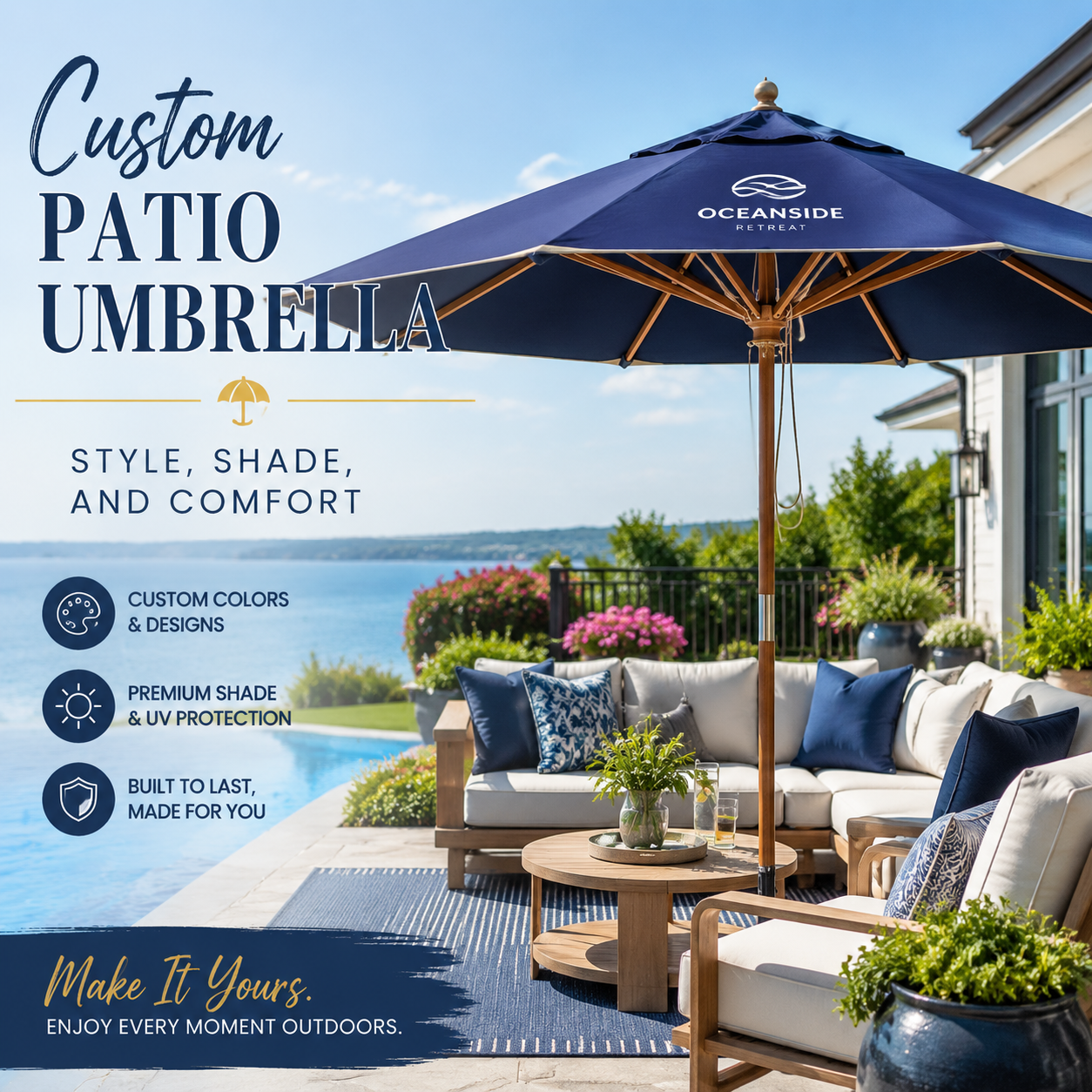
A custom patio umbrella helps you get outdoor shade that fits your space—down to canopy size, shape, fabric, and performance. Instead of settling for what’s available, you can design a patio umbrella that matches how you use your outdoor area, whether it’s a home backyard, a restaurant terrace, or a poolside lounge.
The main reason people search for a custom patio umbrella is simple: they need shade that works in real conditions. That usually means choosing the right size, shape, base, fabric, wind resistance, UV protection, and durability. This guide breaks down those decisions step by step so you can choose confidently.
- What Is a Custom Patio Umbrella?
- Why Choose a Custom Patio Umbrella?
- How to Choose the Right Size
- Choose the Right Shape
- Material Matters More Than Most People Think
- Consider Wind and Weather Exposure
- Base and Mounting Options
- Style and Branding Options
- Residential vs Commercial Use
- Common Questions About Custom Patio Umbrellas
- How to Compare Options Before Buying
- Maintenance Tips for Longer Life
- Final Thoughts
What Is a Custom Patio Umbrella?
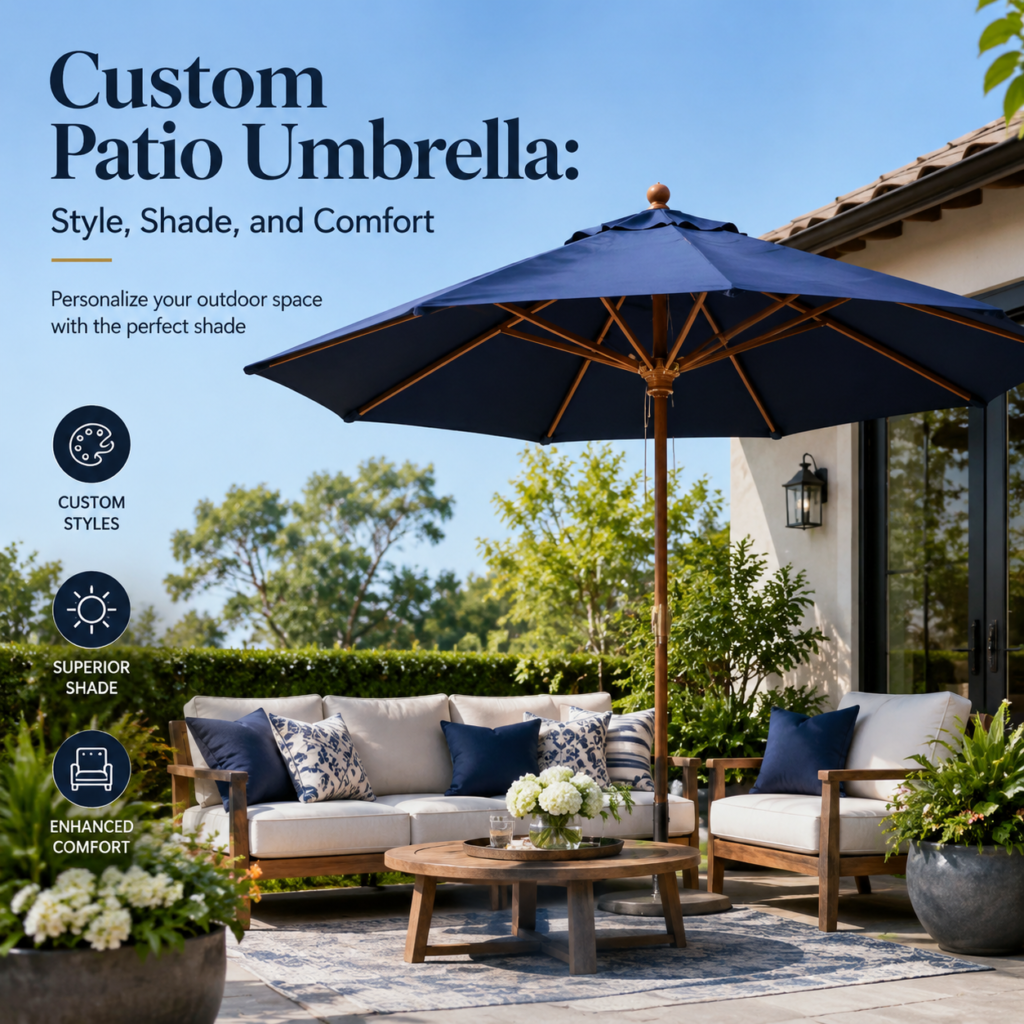
A custom patio umbrella is an outdoor umbrella designed or configured to match specific requirements. Those requirements may include:
- Exact canopy size
- Shape, such as round, square, rectangular, or offset
- Fabric color or pattern
- Frame finish and material
- Printed logo or branding
- Lift, tilt, and rotation features
- Hardware or mounting options
- Weather resistance and commercial-grade construction
Some custom patio umbrellas are made to order from the ground up. Others are standard models that can be personalized with fabric, trim, logos, or special dimensions. In both cases, the goal is the same: a better fit for the space and the way it is used.
In many cases, buyers start by comparing a range of outdoor shade products before narrowing down the exact configuration. If you want a broader look at styles and applications, see this helpful outdoor patio umbrella guide for additional planning ideas.
Why Choose a Custom Patio Umbrella?
A custom patio umbrella solves problems that standard umbrellas often cannot. The most common reasons to choose one include better coverage, a more polished look, and improved functionality.
Choosing a custom patio umbrella is especially useful when:
- The patio has an unusual layout
- Tables or seating areas need precise shade coverage
- Existing umbrellas are too small or too large
- Branding is important for a business setting
- The design needs to match outdoor furniture or architecture
- The umbrella must handle frequent use and changing weather
For homeowners, the biggest benefit is comfort. For businesses, the biggest benefits are consistency, branding, and guest experience—because a custom patio umbrella helps every space look intentional and work as expected.
It also helps to think about the umbrella as part of a larger outdoor environment. Shade, seating, lighting, and circulation all work together. For patios used after sunset, an option like an LED patio umbrella for stylish night shade can add both function and atmosphere.
How to Choose the Right Size
Size is often the most important decision in a custom patio umbrella purchase. An umbrella that is too small leaves people exposed to sun. One that is too large can overwhelm the space or become unstable in wind.
A simple approach is to match the custom patio umbrella to the area you want to shade:
- Small bistro tables or seating areas often work well with 6 to 8 foot umbrellas
- Standard dining tables usually need 8 to 10 foot coverage
- Larger lounge areas may require 10 to 13 foot canopies
- Oversized tables or commercial patios may need multiple umbrellas or an extra-large shade system
Measure the area carefully before ordering. If the umbrella will sit through the center of a table, make sure the canopy extends far enough beyond the table edges to provide usable shade. If it will be free-standing, account for the full seating zone rather than only the table footprint.
Also consider how people actually sit. If your seating is deeper, wider, or closer to the back edge of the table, you may need extra coverage so guests remain shaded throughout the afternoon. When you can, test your layout with painter’s tape or temporary measurements before finalizing canopy dimensions.
For larger projects or business properties, it can help to compare durable shade options before making a custom patio umbrella purchase. A commercial patio umbrella guide can be useful if you need broader planning support for hospitality or retail spaces.
Choose the Right Shape
The shape of a custom patio umbrella affects both appearance and coverage.
Round umbrellas are common and work well for circular tables and smaller seating areas. Square umbrellas create a clean, modern look and often provide efficient coverage for square tables. Rectangular umbrellas are useful for long dining tables or narrow patio layouts. Offset umbrellas, also called cantilever umbrellas, place the pole to the side so the canopy can shade furniture without a center post in the way.
The shape should fit the furniture arrangement, not just personal preference. For example, a long outdoor dining table usually looks and functions better under a rectangular canopy than a round one—this is one of the reasons a custom patio umbrella often feels like a perfect fit compared with generic options.
If you are still deciding on the overall patio look, browsing design-focused examples can help. A collection of patio umbrella ideas for shade and style may make it easier to picture the best layout for your custom patio umbrella.
Material Matters More Than Most People Think
The durability of a custom patio umbrella depends heavily on the materials used in the frame, ribs, pole, and canopy.
Common frame materials include aluminum, wood, and steel. Aluminum is lightweight, corrosion-resistant, and popular for both homes and commercial settings. Wood offers a warm, classic appearance, but it requires more care. Steel is strong, but it may be heavier and more prone to rust if not properly finished.
The canopy fabric also matters. Good outdoor fabrics should resist fading, dry quickly, and hold up under sun exposure. Look for materials designed for UV resistance and water repellency. In commercial settings, stain resistance and easy cleaning are also important—especially when guests use the custom patio umbrella daily.
A quality custom patio umbrella should feel sturdy, not flimsy. If it will be used daily, especially in a business environment, prioritize long-term durability over the lowest price.
When comparing fabric performance, it is worth understanding how ultraviolet exposure affects outdoor textiles over time. For a plain-language reference on UV safety and sun protection, the CDC sun safety guidance is a helpful educational resource.
Finally, confirm what “custom” means for the materials. Some products offer color or branding customization, while others also allow upgrades to canopy thickness, hem reinforcement, or faster-drying fabrics. Those details can improve comfort and reduce upkeep.
Consider Wind and Weather Exposure
Outdoor shade products are exposed to sun, rain, and wind. A custom patio umbrella should be chosen with those conditions in mind.
If the patio is in an open, breezy area, a stronger frame and a heavier base are important. Vented canopies can also help reduce wind pressure. In coastal or humid climates, corrosion resistance becomes a major factor, so materials and finishes should be chosen accordingly.
It is also important to understand that no patio umbrella is windproof. Even heavy-duty models should be closed during strong winds or storms. A custom patio umbrella should improve everyday use, but it should still be treated as a weather-sensitive product—closing it when conditions shift is one of the simplest ways to protect your investment.
For additional guidance on durability and setup for high-usage locations, a heavy duty commercial patio umbrella wholesale guide can be a practical next step.
Base and Mounting Options
The base is as important as the umbrella itself. A well-designed canopy can still fail if the support is wrong.
Common support options for a custom patio umbrella include:
- Weighted portable bases
- In-ground mounts
- Surface mounts
- Table-integrated support
- Cross bases with added weights for offset umbrellas
The right choice depends on where the custom patio umbrella will be used. A portable base offers flexibility for different seating arrangements. A fixed mount is often better for permanent installations and stronger stability. For larger umbrellas, especially offset models, the support system needs to be matched carefully to the canopy size and local wind conditions.
Plan the “day-to-day” workflow too. If staff need to open and close umbrellas quickly, choose controls and mounting methods that make that easy. If guests move seating around, consider a base style that stays secure but can still be adjusted as needed.
In many commercial settings, it is smart to plan support and replacement needs together. That can reduce downtime and make the shade area easier to maintain over time. If you are sourcing multiple custom patio umbrellas, patio umbrellas wholesale options may help you compare larger-volume solutions.
Style and Branding Options
One of the major advantages of a custom patio umbrella is the ability to match a specific aesthetic or brand identity.
Homeowners often choose custom colors, trims, and finishes to coordinate with outdoor furniture, cushions, or architectural details. Businesses often use logos, brand colors, and consistent styling to create a unified outdoor experience—so every table and entry looks cohesive.
For restaurants, hotels, resorts, cafes, and event spaces, a custom patio umbrella can do more than provide shade. It can reinforce brand recognition and make the space feel more professional and intentional. A well-designed custom patio umbrella can become part of the visual identity of the property.
If your project calls for a more upscale visual approach, you may also want to review options in this luxury patio umbrella resource for premium outdoor spaces.
When adding branding, confirm how the design will be applied and protected over time. Ask about print durability, colorfastness, and how the fabric is handled during installation so the logo stays sharp and legible in full sun.
Residential vs Commercial Use
The best custom patio umbrella for a home is not always the best choice for a business.
Residential umbrellas usually focus on comfort, style, and moderate durability. Commercial umbrellas must withstand more frequent use, more handling, and often more exposure to the public. That usually means stronger frames, better fabrics, and more attention to replacement parts and maintenance.
If the custom patio umbrella will be used in a commercial setting, look for:
- Commercial-grade construction
- Easy open and close mechanisms
- Replaceable canopy options
- Stable mounting systems
- Fade-resistant fabric
- Simple cleaning and maintenance
A commercial custom patio umbrella should not only look good on day one. It should remain dependable through repeated daily use, including quick adjustments by staff and regular cleaning by maintenance teams.
For a deeper comparison of durable shade choices for businesses, the commercial patio umbrella guide can help you think through practical specs before buying.
Common Questions About Custom Patio Umbrellas
How long does a custom patio umbrella last?
Lifespan depends on material quality, climate, and maintenance. A well-made custom patio umbrella can last several seasons or longer, especially if it is closed when not in use and cleaned regularly. Higher-end frames and fabrics generally last longer than budget options.
Are custom patio umbrellas waterproof?
Some are water-resistant, but many are not fully waterproof. Outdoor canopy fabrics are usually designed to shed light rain and resist moisture, not to function like permanent roofing. Always check the fabric specifications if rain performance matters.
Can a custom patio umbrella include a logo?
Yes. Many custom patio umbrellas can be branded with a logo, text, or other printed design. This is common for restaurants, resorts, cafes, and event venues that want a professional outdoor presence.
What is the best shape for a patio umbrella?
The best shape depends on the space. Round works well for casual and compact layouts. Square works well for modern patios and square tables. Rectangular works well for long tables. Offset styles work well when you need open space under the shade.
How do I clean a patio umbrella?
Most custom patio umbrellas can be cleaned with mild soap, water, and a soft cloth or sponge. Avoid harsh chemicals unless the manufacturer approves them. Let the canopy dry fully before closing it to reduce mildew risk.
Where should I buy a custom patio umbrella?
Buy from a supplier that clearly explains sizing, frame options, fabric choices, and support hardware. A knowledgeable outdoor shade provider can help match your custom patio umbrella to your layout and climate, especially when the project requires multiple units or commercial use.
How to Compare Options Before Buying
When comparing custom patio umbrellas, focus on the factors that affect real use rather than just appearance.
Use this checklist:
- Does the size match the area you want to shade?
- Does the custom patio umbrella shape fit the furniture layout?
- Is the frame material strong enough for the environment?
- Is the fabric suitable for UV exposure and moisture?
- Is the base or mount stable enough for everyday use?
- Will the design match the space or brand?
- Is the custom patio umbrella intended for residential or commercial use?
- Are replacement parts available if needed?
A good custom patio umbrella should solve practical problems and improve the space visually. If it only looks good but does not perform well, it will not be a good long-term choice.
When the custom patio umbrella is part of a larger outdoor setup, it can also be helpful to compare broader supplier options. An experienced outdoor umbrella supplier can simplify planning if you need consistent quality across more than one space.
Maintenance Tips for Longer Life
Regular care can extend the life of a custom patio umbrella.
Keep these habits in mind:
- Close the custom patio umbrella when not in use
- Clean the canopy periodically
- Let the fabric dry before storing it
- Check hardware for looseness
- Inspect the frame for wear or corrosion
- Use a proper cover during long periods of storage
- Store it indoors during off-season months when possible
Simple maintenance often makes a major difference in how long the custom patio umbrella stays attractive and functional.
For properties that use custom patio umbrellas in the evening, it is also useful to inspect lighting components, wiring, and hardware on a regular schedule. That is especially true if the canopy includes built-in illumination or decorative elements.
If you live in a wet climate, pay extra attention to drying time before closing. Trapped moisture can lead to mildew and fabric damage, which can shorten the useful life of even a high-quality canopy.
Final Thoughts
A custom patio umbrella is a smart choice when standard shade solutions do not fit the space, the style, or the use case. It gives you control over size, shape, materials, and appearance, which makes it easier to create comfortable and attractive outdoor seating. The best custom patio umbrella will balance shade coverage, durability, stability, and design so it works well in everyday conditions.
For homeowners, that means a more comfortable patio. For businesses, it means a stronger outdoor experience and a more polished presentation. In both cases, the right custom patio umbrella is not just an accessory—it is a practical part of how the space functions.
If you are planning a larger installation, comparing styles, construction, and sourcing options early will help you avoid costly mistakes later. With the right measurements, materials, and support system, your custom patio umbrella can serve you well for years.



Add comment