
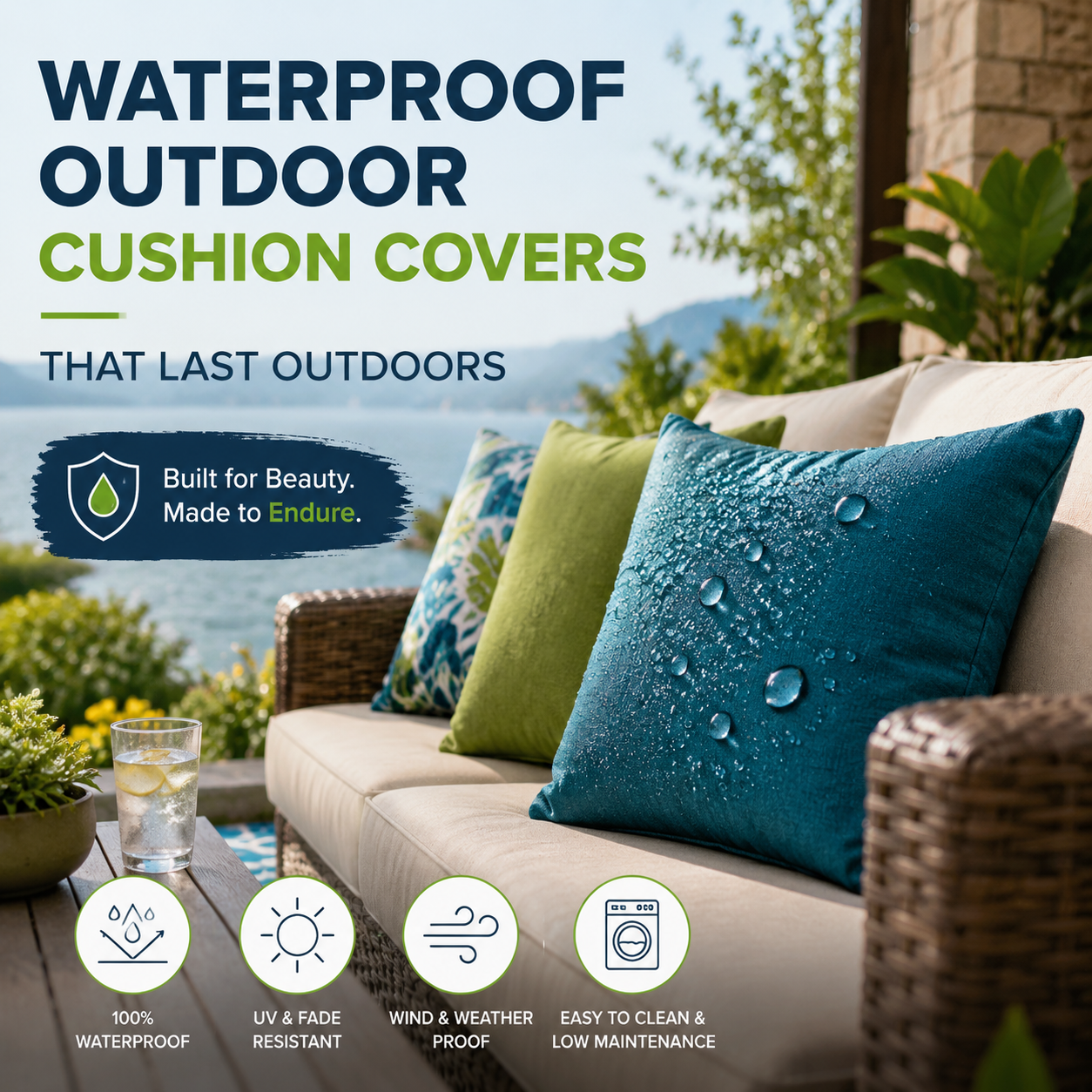
If you are shopping for waterproof outdoor cushion covers, you are probably looking for one thing: reliable protection for your patio, garden, or balcony cushions from rain, spills, and everyday weather exposure. The right cover helps keep outdoor seating clean, dry, and ready to use while also extending the life of your cushions.
This guide explains what waterproof outdoor cushion covers are, how they differ from water-resistant covers, what materials to look for, and how to choose the best option for your needs. If you are also comparing broader patio protection options, you may find this guide to waterproof outdoor cushions helpful as well.
- What Is a Waterproof Outdoor Cushion Cover?
- Waterproof vs. Water-Resistant
- Benefits of Waterproof Covers
- Best Materials
- Features to Look For
- How to Choose the Right Size
- How to Tell If It Is Truly Waterproof
- How They Help in Different Climates
- Care and Maintenance Tips
- Common Questions
- Best Uses
- How to Choose the Best Option
- Final Thoughts
What Is a Waterproof Outdoor Cushion Cover?
A waterproof outdoor cushion cover is designed to prevent water from soaking into the cushion inside. It protects outdoor cushions from rain, dew, splashes, and accidental spills. In many cases, these covers are made from durable fabrics with a waterproof coating, sealed seams, or special construction that blocks moisture.
These covers are especially useful for:
- Patio furniture cushions
- Garden bench cushions
- Outdoor chair cushions
- Swing seat cushions
- Poolside seating cushions
- Balcony and terrace cushions
The main goal is simple: keep the cushion dry and protected from weather damage. When that protection is reliable, outdoor seating stays more comfortable and requires less maintenance throughout the season.
For readers comparing cushion protection across different styles, this article on outdoor waterproof cushion options can also help you narrow down the right setup for your space.
Waterproof vs. Water-Resistant: What’s the Difference?
Many people search for waterproof outdoor cushion covers, but it helps to know the difference between waterproof and water-resistant.
Waterproof
A waterproof cushion cover is designed to stop water from passing through the fabric. This is the best choice if cushions are exposed to frequent rain or humidity.
Water-Resistant
A water-resistant cover can repel light moisture for a short time, but water may eventually soak through if exposure continues. These covers are useful for mild weather or temporary protection.
Which One Should You Choose?
If your cushions stay outside most of the time, a waterproof outdoor cushion cover is the better option. If you only need protection from light drizzle or occasional spills, water-resistant may be enough.
For all-weather performance, many homeowners also compare cushion accessories with matching protection. A useful companion read is best outdoor cushions and pillows for instant comfort, especially if you want comfort and weather protection together.
Benefits of Using Waterproof Outdoor Cushion Covers
Choosing waterproof cushion covers offers several practical benefits.
1. Protects Against Rain and Moisture
The biggest advantage is protection from rain, morning dew, and damp conditions. Dry cushions are more comfortable and less likely to develop mold or mildew.
2. Extends Cushion Life
Outdoor cushions can wear out quickly when exposed to moisture, sunlight, and dirt. A waterproof cover helps reduce damage, which can extend the life of the cushion.
3. Reduces Mold and Mildew
Moisture trapped inside cushions can lead to mold and mildew growth. Waterproof covers help keep water out, making maintenance easier.
4. Makes Cleaning Easier
A good cover can be wiped clean or washed more easily than the cushion itself. This helps protect against stains from food, drinks, dust, and bird droppings.
5. Improves Outdoor Comfort
Knowing your cushions are protected means you do not need to bring them inside every time it rains. That makes outdoor furniture more convenient to use.
In real use, waterproof outdoor cushion covers are most valuable when you want a practical, low-effort way to keep furniture ready for guests, family meals, or quiet mornings outside.
What Materials Are Best for Waterproof Outdoor Cushion Covers?
The material plays a major role in how well an outdoor cushion cover performs. Here are the most common options.
Polyester with Waterproof Coating
Polyester is one of the most popular materials for outdoor cushion covers. It is lightweight, durable, and often treated with a waterproof backing or coating.
Best for: General outdoor use, everyday weather protection, and budget-friendly options.
Acrylic Fabric
Solution-dyed acrylic is highly resistant to fading and weather exposure. While not always fully waterproof on its own, it is often treated for water resistance or combined with protective coatings.
Best for: Bright outdoor spaces with lots of sun exposure.
Vinyl or PVC-Coated Fabric
Vinyl-coated covers offer strong waterproof protection and are easy to wipe clean. However, they may feel less soft than fabric-based covers.
Best for: Areas with frequent rain, poolside use, or heavy-duty protection.
Oxford Fabric
Oxford polyester is known for strength and durability. When coated properly, it can be a reliable waterproof choice for outdoor cushions.
Best for: Durable everyday use on patios and garden furniture.
How material affects everyday use
The best material depends on where the cushion sits and how often it gets used. A covered porch may only need a soft, attractive fabric with a protective coating, while an open patio may need a tougher shell that stands up to repeated rain, sun, and debris.
Features to Look for in Waterproof Outdoor Cushion Covers
Not all covers are made the same. If you want the best protection, look for these features.
Waterproof Seams
Even if the fabric is waterproof, water can still enter through stitching. Sealed or taped seams provide better protection.
Hidden or Heavy-Duty Zippers
A strong zipper helps keep the cover secure and makes removal easier for cleaning. Waterproof or covered zippers offer extra protection.
UV Resistance
Sunlight can fade fabrics over time. UV-resistant materials help maintain color and durability.
Breathability
Some waterproof covers trap heat or moisture inside. Breathable designs can help reduce condensation and mildew buildup.
Easy-Clean Surface
A smooth surface that wipes clean quickly is useful for everyday outdoor use.
Fade Resistance
Outdoor cushions are exposed to the sun, so fade-resistant fabric helps the cover keep its appearance longer.
Secure Fit
A properly fitting cover stays in place better and protects the cushion more effectively. Measure your cushion carefully before buying.
If you need protection for a soft decorative piece as well as a seat cushion, you may also want to compare this with a waterproof outdoor pillow guide to keep the entire seating area coordinated.
How to Choose the Right Size
Size is one of the most important factors when selecting waterproof outdoor cushion covers.
Measure:
- Length
- Width
- Thickness or depth
Make sure the cover matches your cushion dimensions closely. A cover that is too small will be difficult to fit, while one that is too large may look loose and not protect as well.
If your cushion has rounded edges or an unusual shape, check the product description for shape compatibility. Some covers are made for square cushions, while others are designed for rectangular or curved styles.
When in doubt, compare the listing’s measurements with your cushion at its fullest point. A snug but realistic fit usually works best because it helps block moisture and keeps the cushion looking neat.
How to Make Sure It Is Truly Waterproof
Product labels can sometimes be confusing. To confirm a cover is actually waterproof, look for:
- A waterproof coating or backing
- Heat-sealed or taped seams
- Water-repellent zippers
- Clear product descriptions that say “waterproof,” not just “water-resistant”
- Customer reviews mentioning rain protection
If possible, check whether the cover is tested for outdoor exposure or rated for heavy weather use.
It can also help to read the material care advice from the manufacturer. Standards and testing guidance from recognized organizations such as the ASTM International standards resource can provide useful context when you are comparing fabric claims and performance descriptions.
How Waterproof Outdoor Cushion Covers Help in Different Climates
Climate matters when you choose outdoor protection. In humid regions, the main challenge is not only rain but also trapped moisture, condensation, and slower drying times. In dry but sunny regions, UV exposure can be a bigger issue than rainfall. In coastal areas, salt air can add another layer of wear.
That is why waterproof outdoor cushion covers should be chosen with the local environment in mind. A breathable, UV-resistant cover can perform better in warm climates, while a thick, sealed option may be more useful where storms and frequent showers are common.
In colder seasons, covering cushions can reduce the damage caused by wet weather cycles. Even when the furniture is not used every day, good protection keeps it ready for the next warm spell.
Care and Maintenance Tips
Even the best waterproof cover needs proper care to stay effective.
Clean It Regularly
Wipe away dirt, pollen, and debris using a damp cloth or mild soap solution. This prevents buildup and keeps the surface in good condition.
Let It Dry Properly
If the cover gets wet, allow it to air dry fully before storing or replacing it on the cushion.
Store Cushions in Harsh Weather
While waterproof covers offer protection, storing cushions during storms, winter, or long periods of heavy rain can increase their lifespan.
Check for Damage
Inspect seams, zippers, and fabric regularly for wear, cracks, or peeling coatings. Small issues can reduce waterproof performance over time.
For daily upkeep, simple habits go a long way. Brush off leaves, avoid leaving standing water on the fabric, and recheck the fit after washing so the cover continues to sit correctly.
Common Questions About Waterproof Outdoor Cushion Covers
Can waterproof cushion covers go in the washing machine?
Some can, but not all. Always check the care label. Many waterproof covers are better cleaned with a damp cloth rather than machine washing, which may damage the coating.
Do waterproof cushion covers protect against mold?
They help reduce mold by keeping water out, but they do not guarantee complete protection if moisture is trapped inside. Proper drying and ventilation are still important.
Are waterproof covers comfortable?
Yes, though comfort depends on the material. Fabric-based waterproof covers are often softer than vinyl or PVC options.
Will waterproof covers fade in the sun?
Over time, yes, especially if they are not UV-resistant. Choosing UV-protected materials helps slow fading.
Can I leave outdoor cushions outside all year?
Waterproof covers make this more practical, but full-year exposure is still hard on any cushion. For best results, combine waterproof covers with seasonal storage when possible.
Do they work for small spills, too?
Yes. A quality cover can help protect against drink spills, light food stains, and everyday messes. That is one reason many homeowners prefer waterproof outdoor cushion covers for dining areas and entertaining spaces.
Best Uses for Waterproof Outdoor Cushion Covers
These covers are a smart choice if you want protection in situations such as:
- Open patios with no roof
- Garden furniture exposed to rain
- Poolside seating where splashes are common
- Balcony furniture in humid climates
- Outdoor dining cushions that face spills and weather
They are also useful for homeowners who want a low-maintenance outdoor setup without constantly moving cushions indoors.
If your furniture includes multiple soft pieces, it may help to build a full protection plan. For example, pairing seat covers with a matching waterproof outdoor pillow covers option can keep the entire seating set looking consistent.
How to Choose the Best Waterproof Outdoor Cushion Covers for Your Needs
The right choice depends on how and where you use your cushions.
Choose a cover with:
- Full waterproof construction if cushions stay outside often
- UV resistance if your area gets strong sun
- Easy-clean fabric if you use the space for dining or entertaining
- Heavy-duty seams if you expect frequent rain
- Breathable material if you live in a humid climate
- A secure zipper or closure for a snug fit
For most homeowners, a polyester or Oxford fabric cover with waterproof coating and sealed seams offers a strong balance of protection, comfort, and affordability. That is often the sweet spot when comparing durability, appearance, and ease of care.
Before buying, think about how often you use the space, how much weather exposure the cushions get, and whether style matters as much as performance. In some cases, a more premium fabric is worth the extra cost because it lasts longer and looks better over time.
Final Thoughts
Waterproof Outdoor Cushion Covers are one of the most practical investments for protecting patio and garden cushions from rain, spills, mold, and everyday wear. The best cover will fit properly, use durable waterproof materials, and include features like sealed seams, UV resistance, and easy cleaning.
Whether you are upgrading your outdoor seating area or replacing worn covers, choosing a quality waterproof cushion cover helps keep your space looking neat, comfortable, and ready to enjoy in any weather. With the right material, the right fit, and regular care, waterproof outdoor cushion covers can make outdoor living easier for years to come.



Add comment