
An outdoor sofa cushion is one of the most important parts of any patio seating setup. It affects not only comfort, but also the look, durability, and overall usability of your outdoor furniture. Whether you are buying new cushions, replacing worn ones, or trying to keep existing ones in good condition, understanding what makes a quality outdoor sofa cushion can help you make a better choice.
This guide explains what an outdoor sofa cushion is, how to choose the right one, what materials work best, how to care for it, and how to solve common problems such as fading, mold, flattening, or water damage.
Table of Contents
- What Is an Outdoor Sofa Cushion?
- Why Outdoor Sofa Cushions Matter
- How to Choose the Right Outdoor Sofa Cushion
- Best Materials for Outdoor Sofa Cushions
- How to Clean an Outdoor Sofa Cushion
- How to Protect Outdoor Sofa Cushions
- Common Problems with Outdoor Sofa Cushions
- When Should You Replace Outdoor Sofa Cushions?
- How to Find Replacement Outdoor Sofa Cushions
- Custom vs. Ready-Made Outdoor Sofa Cushions
- Best Practices for Long-Lasting Outdoor Sofa Cushions
- Frequently Asked Questions About Outdoor Sofa Cushions
- Conclusion
What Is an Outdoor Sofa Cushion?
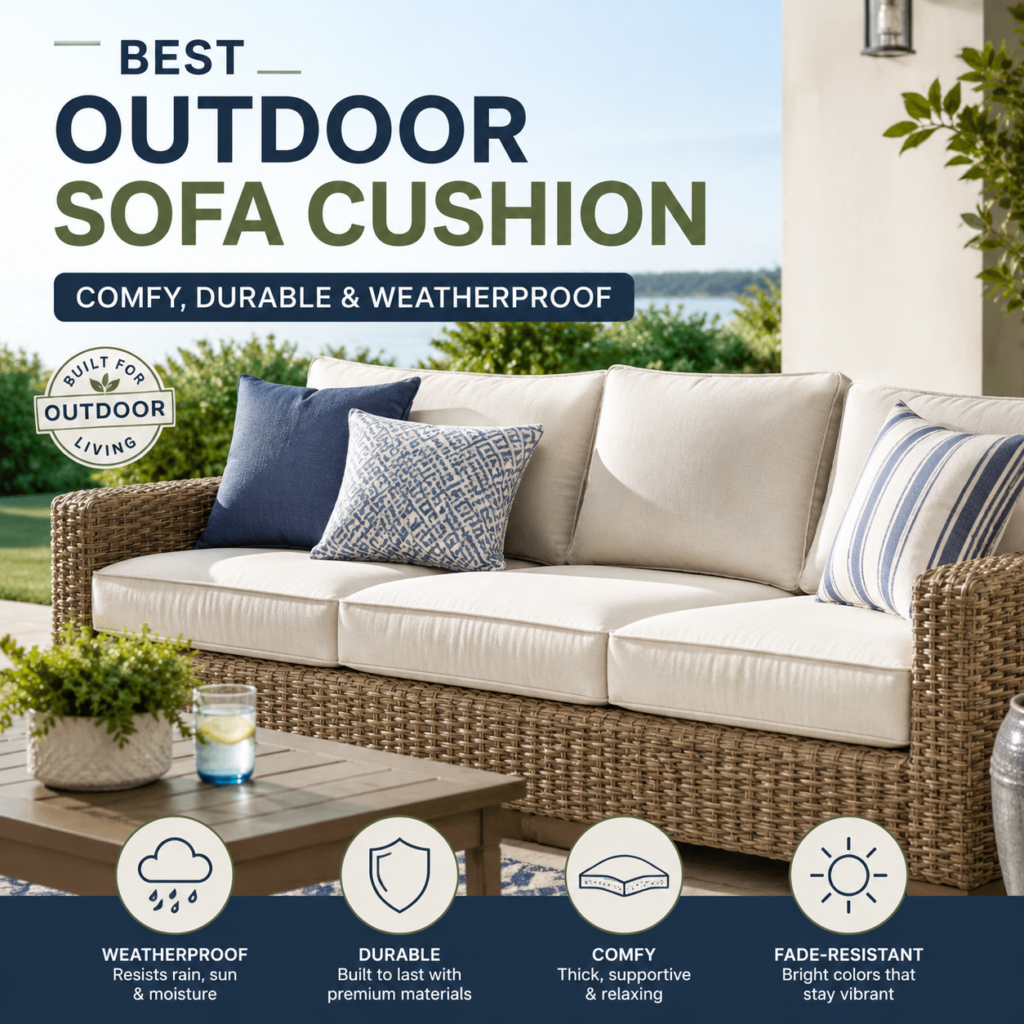
An outdoor sofa cushion is a padded cushion designed specifically for outdoor seating, such as patio sofas, garden couches, porch loveseats, and sectional seating. Unlike indoor cushions, outdoor versions are made to handle sunlight, moisture, temperature changes, and regular exposure to the elements.
A good outdoor sofa cushion should provide:
- Comfortable seating
- Weather resistance
- Durable fabric and filling
- Easy maintenance
- A fit that matches your outdoor sofa frame
These cushions are often used on outdoor wicker sofas, metal patio sofas, wooden lounge sets, and modular outdoor sectionals. If you are comparing styles, it can also help to read a broader outdoor cushions guide before choosing a finish or fill.
Why Outdoor Sofa Cushions Matter
Many people focus on the sofa frame and overlook the cushions, but the cushion is what makes the seat comfortable enough for everyday use. A well-chosen outdoor sofa cushion can:
- Improve comfort and support
- Enhance the appearance of your patio
- Extend the life of your furniture
- Make outdoor spaces feel more inviting
- Help protect the frame from wear and sitting pressure
If your outdoor sofa feels hard, old, or unattractive, replacing the cushions can completely refresh the space without buying a whole new furniture set. The right outdoor sofa cushion also helps your seating feel more finished, especially when you want your patio to look intentional and welcoming.
How to Choose the Right Outdoor Sofa Cushion
Choosing the right cushion depends on fit, material, comfort, and weather performance. Here are the most important factors to consider when shopping for an outdoor sofa cushion.
1. Measure the Sofa Carefully
The first step is to measure your outdoor sofa frame. You need accurate dimensions for:
- Seat width
- Seat depth
- Back cushion height
- Seat cushion thickness
- Armrest size, if applicable
A cushion that is too small may slide around, while one that is too large may look awkward or not fit properly. Always measure the actual seating area rather than guessing based on product photos. A precise fit is especially important if you plan to order a replacement outdoor sofa cushion for a sectional or a built-in patio bench.
2. Choose the Right Cushion Type
Outdoor sofa cushions usually come in several forms:
- Seat cushions: Designed for the sitting area
- Back cushions: Provide support for the back
- Box cushions: Thicker, more structured cushions
- Tufted cushions: Often more decorative and stable
- Loose cushions: Easy to move and replace
For most outdoor sofas, a combination of seat and back cushions gives the best comfort and appearance. If your furniture is part of a larger set, matching the shape of each cushion can also help the whole arrangement feel cohesive.
3. Look for Weather-Resistant Fabric
The fabric is one of the most important parts of an outdoor sofa cushion. Look for materials designed to resist:
- UV rays
- Moisture
- Mildew
- Stains
- Fading
Popular outdoor cushion fabrics include:
- Solution-dyed acrylic: Highly fade-resistant and durable
- Polyester blends: Affordable and widely used
- Olefin: Resistant to moisture and stains
- Sunbrella-style performance fabrics: Known for strong outdoor performance
If your patio gets full sun, a UV-resistant fabric is especially important. If your area is humid or rainy, water resistance and mildew resistance should be top priorities. For practical care standards, the EPA’s mold cleanup guidance is a helpful reference when you want to keep outdoor textiles dry and clean.
4. Check the Cushion Fill
The filling affects comfort, support, and how well the cushion holds its shape over time. Common filling materials include:
- Polyurethane foam: Common and supportive
- Quick-dry foam: Ideal for wetter climates
- Polyester fiberfill: Soft and lightweight
- Wrapped foam cores: Combine softness and structure
For long-term outdoor use, quick-dry foam or high-density foam often performs better because it resists water buildup and flattening. If comfort is your first priority, look for an outdoor sofa cushion with a balanced foam core and a softer outer wrap.
5. Consider Thickness and Firmness
A thicker cushion is not always better. The best choice depends on how the sofa is used.
- Thicker cushions: More plush and comfortable, especially for lounging
- Medium-firm cushions: Balanced comfort and support
- Firm cushions: Better shape retention and easier sitting posture
If you plan to spend long periods outdoors, choose a cushion that feels supportive without being too hard. A well-made outdoor sofa cushion should stay comfortable through long conversations, family meals, and relaxed weekend use.
6. Make Sure the Style Matches Your Outdoor Space
An outdoor sofa cushion should fit the look of your patio, balcony, deck, or garden. Consider:
- Color
- Pattern
- Shape
- Piping or trim
- Overall style
Neutral tones create a clean, timeless appearance, while bright colors and patterns can make the space feel lively and bold. Dark colors may hide stains better, but lighter shades often create a fresher look. If you want a coordinated setup, it can help to pair your sofa with matching pieces such as an outdoor sofa cushion set that keeps the design consistent across the seating area.
Best Materials for Outdoor Sofa Cushions
The material of the cushion cover and the filling both affect quality and lifespan. The best outdoor sofa cushion uses materials made to perform outside.
Fabric Materials
Solution-dyed acrylic
- Excellent fade resistance
- Soft feel
- Easy to clean
- Premium choice for outdoor furniture
Olefin
- Good stain and moisture resistance
- Durable and lightweight
- Often more affordable than acrylic
Polyester
- Budget-friendly
- Can perform well with proper treatment
- Usually less durable than premium outdoor fabrics
Filling Materials
High-density foam
- Supports shape well
- Comfortable for seating
- Can retain water unless designed for outdoor use
Quick-dry foam
- Best for rainy or humid environments
- Allows water to drain and dry more quickly
Polyfiber fill
- Soft and comfortable
- Less structured over time
- Better for back cushions than seat cushions in many cases
When possible, look for a construction that combines a supportive core with a weather-ready outer shell. That combination gives an outdoor sofa cushion a better balance of comfort, longevity, and everyday practicality.
What to Avoid
Some materials may look attractive at first but perform poorly outside. Avoid fabrics that are not rated for sun and moisture exposure, thin inserts that flatten quickly, and covers that cannot be removed or cleaned easily. A good outdoor sofa cushion should make maintenance simpler, not harder.
How to Clean an Outdoor Sofa Cushion
Regular cleaning helps extend the life of your cushions and keeps them looking fresh.
Routine Cleaning
For general maintenance:
- Remove loose dirt with a soft brush or vacuum
- Wipe the fabric with mild soap and warm water
- Rinse lightly if the care label allows it
- Let the cushion air dry completely before use
Deep Cleaning
If the cushion has stains or mildew:
- Check the care tag first
- Use a fabric-safe cleaner
- Test the cleaner on a small hidden area
- Scrub gently with a soft cloth or sponge
- Rinse thoroughly and dry in a shaded, airy area
Avoid harsh bleach unless the manufacturer specifically allows it, as it may weaken fibers or fade the fabric. A well-maintained outdoor sofa cushion should keep its color and structure longer when cleaning is done gently and on a regular schedule.
Cleaning Tips
- Clean spills as soon as possible
- Do not store cushions while damp
- Avoid machine washing unless the cover is removable and labeled safe
- Use a soft brush instead of rough scrubbing tools
How to Protect Outdoor Sofa Cushions
Even high-quality cushions need protection to last longer. Here are simple ways to keep them in good condition.
Use Cushion Covers
Protective covers help block rain, dust, pollen, and UV exposure. They are especially useful if the sofa stays outdoors year-round.
Store Cushions When Not in Use
If possible, store cushions in a dry place during:
- Heavy rain
- Winter months
- Long periods of non-use
A deck box, storage bench, or indoor closet can help preserve the cushion shape and finish.
Keep Them Dry
Moisture is one of the biggest threats to outdoor cushions. If they get wet:
- Stand them up to allow drainage
- Air dry in a ventilated area
- Avoid putting them back on the sofa until fully dry
Rotate Cushions Regularly
Rotating cushions helps prevent uneven wear, sagging, and fading from sun exposure. This simple habit can make an outdoor sofa cushion last noticeably longer.
Use Shade When Possible
If your seating area gets strong afternoon sun, adding a patio umbrella or overhead cover can reduce heat and UV exposure. Extra shade is one of the easiest ways to protect both the frame and every outdoor sofa cushion in the set.
Common Problems with Outdoor Sofa Cushions
Even the best cushions can develop problems over time. Here are the most common issues and what they mean.
Fading
Sun exposure can cause fabric colors to fade gradually. Solution-dyed fabrics tend to resist this better than standard dyed fabrics.
Flattening
Cushions lose loft after repeated use. This usually happens when the foam or fill breaks down. Replacing the insert or choosing a denser fill can solve the problem.
Mold or Mildew
Moisture trapped in the cushion can lead to mold or mildew growth. Proper drying and breathable storage help prevent this.
Water Absorption
Some cushions soak up water instead of shedding it. For outdoor use, quick-dry materials and water-resistant covers are much better choices.
Slipping or Sliding
Cushions that move around are usually the wrong size or lack ties, non-slip backing, or proper shape. A better fit or a cushion with securing features can fix this issue.
Seam Wear
Seams can break down before the fabric does, especially if the cushion is used heavily or stored improperly. Reinforced stitching and quality zippers are useful features to look for in an outdoor sofa cushion.
When Should You Replace Outdoor Sofa Cushions?
It may be time to replace your outdoor sofa cushion if you notice:
- Persistent fading
- Torn fabric
- Flat or lumpy filling
- Odors that will not go away
- Mold damage
- Loss of support
- Cushion size no longer fitting the sofa properly
Replacing cushions is often more affordable than replacing the whole sofa frame, especially if the frame is still in good condition. In many cases, new cushions can make an older patio set feel current again.
How to Find Replacement Outdoor Sofa Cushions
When shopping for replacement cushions, focus on these points:
- Exact measurements
- Compatible shape and style
- Outdoor-rated fabric
- Durable filling
- Easy-to-clean cover
- Ties, zippers, or fasteners if needed
If your sofa is a standard size, you may find ready-made cushions that fit well. For unusual shapes or custom furniture, custom outdoor sofa cushions may be the best option. Browsing a specialized product page like wholesale waterproof outdoor sofa cushions can also help you compare construction features and sizing options.
Before You Buy
Double-check the product details for thickness, cover material, insert type, and cleaning instructions. If possible, compare the new cushion to your old one while measuring. Even a small difference in depth or height can affect how the cushion sits on the frame.
Custom vs. Ready-Made Outdoor Sofa Cushions
Ready-Made Cushions
Pros:
- Faster to buy
- Usually more affordable
- Widely available
Cons:
- Limited sizes and colors
- May not fit perfectly
Custom Cushions
Pros:
- Exact fit
- More style options
- Better for unique furniture
Cons:
- Higher cost
- Longer production time
If your sofa has a non-standard frame or you want a tailored look, custom cushions can be worth the investment. A custom outdoor sofa cushion also gives you more control over the firmness, fabric, and finish.
Best Practices for Long-Lasting Outdoor Sofa Cushions
To get the most from your cushions:
- Choose weather-resistant materials
- Store them when not in use
- Clean spills promptly
- Avoid standing water
- Use covers during harsh weather
- Buy the correct size
- Inspect seams and zippers regularly
These simple habits can significantly extend cushion life and help maintain comfort and appearance. The more consistently you care for your outdoor sofa cushion, the better it will perform across changing seasons.
Seasonal Care Checklist
- Spring: Brush off dust, check for mildew, and air cushions out before regular use
- Summer: Rotate cushions and use shade during strong sun exposure
- Fall: Clean stains before storage and inspect for seam damage
- Winter: Store cushions indoors or in sealed outdoor storage if weather turns wet or freezing
Frequently Asked Questions About Outdoor Sofa Cushions
Are outdoor sofa cushions waterproof?
Not always. Many are water-resistant, which means they can handle light moisture, but they may still absorb water in heavy rain. True waterproof cushions are less common. It is better to look for quick-dry and weather-resistant designs rather than assuming a cushion is fully waterproof.
What is the best fabric for outdoor sofa cushions?
Solution-dyed acrylic is often considered one of the best fabrics because it resists fading, handles weather well, and feels comfortable. Olefin is also a strong option for durability and moisture resistance.
Can outdoor sofa cushions stay outside all year?
Some can, but it depends on the material and climate. Even durable cushions last longer if protected from heavy rain, snow, and prolonged sun exposure. Covering or storing them during harsh weather is recommended.
How do I stop outdoor cushions from getting moldy?
Keep them dry, clean them regularly, and store them in a ventilated area. Mold often appears when cushions remain damp for too long.
Why do outdoor sofa cushions flatten?
Flattening happens when the filling compresses or breaks down over time. High-density foam and quality inserts hold shape better than low-grade filling.
What size should an outdoor sofa cushion be?
The best size is the one that fits your frame exactly or leaves only a very small amount of room for movement. Accurate measuring is the safest way to avoid slipping, bunching, or awkward gaps.
Conclusion
An outdoor sofa cushion is more than a decorative accessory. It plays a major role in comfort, durability, and the overall look of your outdoor living area. The best cushions are made from weather-resistant fabric, supportive filling, and properly measured designs that fit your furniture well.
Whether you are replacing old cushions or buying new ones for the first time, focus on quality materials, proper sizing, and easy maintenance. With the right outdoor sofa cushion, your patio can become a more comfortable, stylish, and inviting place to relax. If you want to keep improving the rest of your setup, pair it with other weather-ready pieces and choose materials that are built to last.




Add comment