
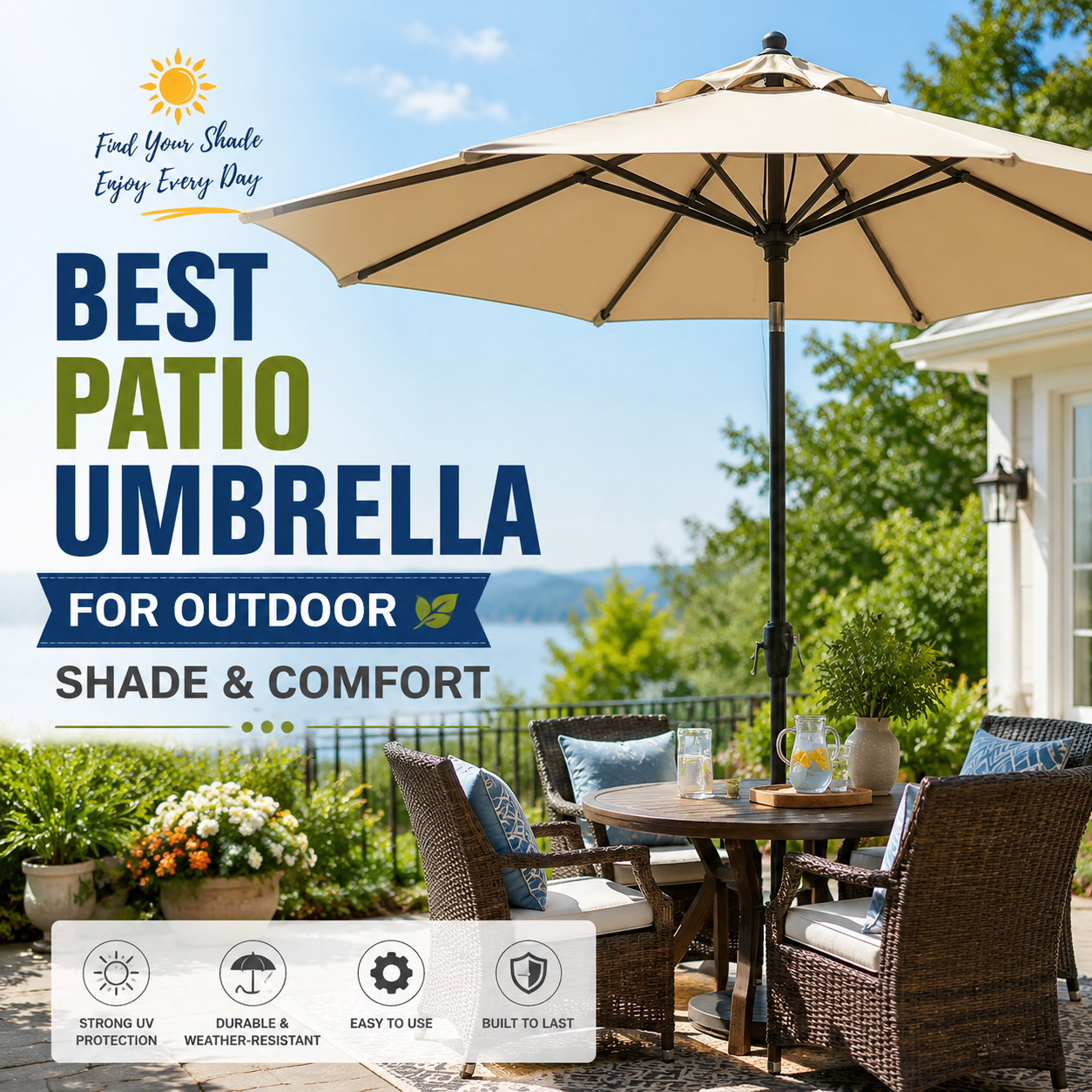
An outdoor patio umbrella is one of the simplest and most effective ways to create comfortable shade in a backyard, patio, deck, or poolside space. Whether you want to protect guests from harsh sunlight, make outdoor dining more enjoyable, or add style to your setup, the right umbrella can transform an outdoor area quickly and affordably.
This guide explains what to look for in an outdoor patio umbrella, how to choose the right size and style, where to place it, and how to keep it safe and long-lasting.
- What Is an Outdoor Patio Umbrella?
- Why Use an Outdoor Patio Umbrella?
- Types of Outdoor Patio Umbrella Options
- How to Choose the Right Size
- Best Materials for Outdoor Patio Umbrellas
- What Features Should You Look For?
- How to Place and Anchor It Safely
- Care, Cleaning, and Storage
- Can It Stay Outside All Year?
- How to Match Style to Your Space
- Outdoor Patio Umbrella vs Pergola
- Common Questions
- Final Thoughts
What Is an Outdoor Patio Umbrella?
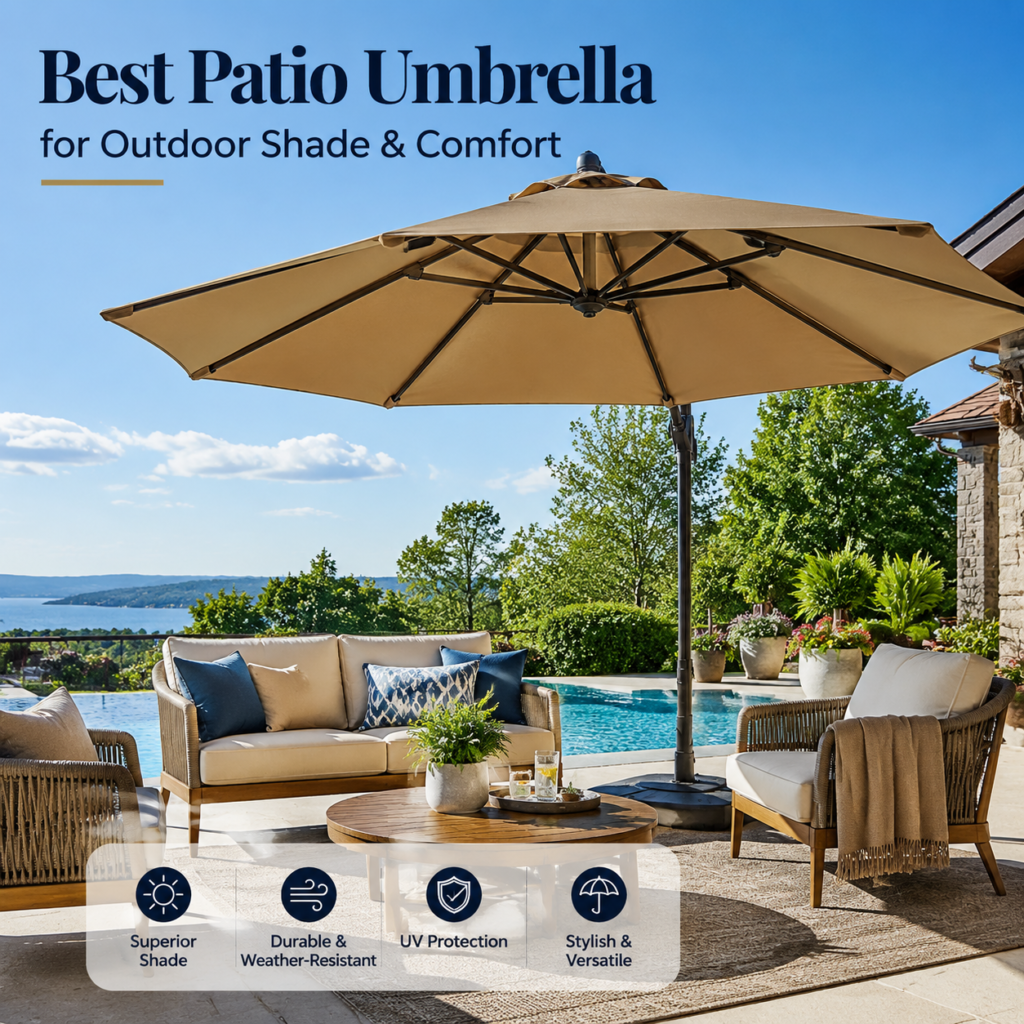
An outdoor patio umbrella is a freestanding or table-mounted shade canopy designed for exterior use. It helps block sunlight, reduce heat, and improve comfort in outdoor living spaces. Unlike indoor umbrellas, outdoor patio umbrellas are made with weather-resistant materials that can handle sun exposure and light moisture.
They are commonly used for:
- Patios and decks
- Outdoor dining areas
- Garden seating spaces
- Poolside lounges
- Cafés and restaurants
- Balcony setups
For homeowners and business owners alike, an outdoor patio umbrella offers a flexible shade solution that works in many layouts without requiring major construction.
In commercial settings, the same basic idea applies, but durability, base weight, and coverage area matter even more. Larger seating areas often need stronger frames and wider canopies to keep shade consistent throughout the day. For that reason, many buyers compare patio umbrellas alongside other shade systems before making a final decision.
One of the biggest advantages of this shade option is its simplicity. You can place it where you need it, move it when your layout changes, and close it when the weather shifts. That flexibility makes it appealing for seasonal use and for spaces that serve different purposes at different times of day.
Why Use an Outdoor Patio Umbrella?
An outdoor patio umbrella does more than provide shade. It improves the usability and comfort of your outdoor space in several ways:
- Sun protection: Helps reduce direct UV exposure
- Temperature control: Makes seating areas cooler
- Comfort: Allows people to stay outside longer
- Style: Adds color and structure to your patio design
- Flexibility: Can be opened or closed as needed
For many homeowners, an outdoor patio umbrella is a practical upgrade that costs less than permanent shade structures like pergolas or awnings. It is also easier to reposition if the sun changes direction or if you rearrange furniture during the season.
Another benefit is that umbrellas can create zones in an open-air layout. A shaded dining area, a separate lounge corner, and a poolside seating spot can each feel more defined without adding walls or fixed construction. That makes the umbrella useful for both small and large outdoor spaces.
If you are comparing shade products for a larger space, this commercial patio umbrella guide can also help you evaluate durability, placement, and performance.
In practice, the right umbrella can improve how a space functions every day. Guests are more likely to linger over meals, children can play in a cooler spot, and outdoor furniture is less likely to feel too hot to sit on during peak sunlight. Those small quality-of-life improvements add up quickly in real use.
Types of Outdoor Patio Umbrella Options
Choosing the right type depends on your space, furniture layout, and how you plan to use it.
1. Market Umbrella
A market umbrella is the most common style. It has a straight pole and a round or square canopy. These are often used over patio tables and are ideal for general backyard use.
Best for: Dining tables, compact patios, everyday shade
Market umbrellas are popular because they are straightforward to use and easy to understand. They come in many sizes, colors, and frame materials, which makes them a versatile option for residential and light commercial spaces. If your main goal is reliable shade for a table or a small seating group, this style is usually a strong starting point.
They also tend to be the easiest style for first-time buyers to set up. The basic design is familiar, replacement parts are usually easy to find, and the canopy shape works well in both casual and more polished outdoor settings.
2. Cantilever Umbrella
A cantilever umbrella, also called an offset umbrella, has a side pole and an overhead canopy. This design keeps the pole out of the center, giving you more open space underneath.
Best for: Lounge seating, large decks, poolside areas, sectional furniture
Cantilever models are especially useful when the table or sofa arrangement makes a center pole inconvenient. They are also easier to position over odd-shaped spaces because the canopy can extend from the side rather than directly from the middle of the furniture layout.
Because of their larger canopy and offset design, these umbrellas usually need more weight and a more careful setup. They are a smart choice when flexibility matters and you want a cleaner, more open feel under the shade.
Another advantage is that they can create shade over furniture that would otherwise be difficult to cover. For example, a sectional or a chaise lounge setup often works better with an offset frame because no center pole interrupts the seating area.
3. Tilting Umbrella
Tilting umbrellas let you adjust the canopy angle to follow the sun. This is useful when sunlight changes throughout the day.
Best for: Areas with shifting sun exposure
If your patio gets morning sun on one side and afternoon sun from another direction, a tilt feature can make the umbrella far more useful. Instead of moving the whole unit, you can adjust the canopy to improve coverage.
For smaller patios, a tilt mechanism can help extend the usable time of the shade without needing a larger umbrella. That can be especially helpful if your outdoor area gets strong sunlight early in the morning or later in the afternoon when the angle is low.
4. Half Umbrella
A half umbrella is designed to sit flush against a wall or railing. It works well in narrow spaces where a full round umbrella would take up too much room.
Best for: Balconies, small patios, tight corners
Half umbrellas are a smart solution for apartment balconies and compact outdoor corners. They provide usable shade without making the area feel crowded, and they can help maximize every inch of available floor space.
This style is often overlooked, but it can be the best choice when the main challenge is limited space rather than maximum coverage. It is also practical when furniture has to sit close to a boundary and there is no room for a full center pole.
5. Solar or LED Patio Umbrella
Some models include built-in solar lights or LED lighting. These are useful for evening gatherings and outdoor dining after sunset.
Best for: Entertaining, outdoor dining, decorative ambiance
Lighting is not only decorative; it also extends the time you can comfortably use the space. A shade canopy with integrated lights can make a patio feel more polished and practical after dark.
If your patio is used in the evening, this option can reduce the need for extra string lights or floor lamps. It combines shade and ambiance in one product, which keeps the area neat and easy to manage.
6. Heavy-Duty Commercial Models
In restaurants, cafés, hotels, and resort spaces, heavier commercial models are often the best choice. These are built for repeated use, more frequent opening and closing, and stronger wind resistance than entry-level residential units.
When comparing commercial-style options, buyers often focus on frame strength, canopy fabric quality, and the type of base support needed. For businesses that need dependable long-term performance, it is worth reviewing a broader supplier range before making a purchase decision.
Businesses should also think about how the umbrella will hold up during busy service hours. Frequent movement, more foot traffic, and longer exposure to sun all increase wear, so commercial buyers generally benefit from stronger hardware and better fabric construction.
How to Choose the Right Size
Size is one of the most important factors when buying an outdoor patio umbrella. A canopy that is too small won’t provide enough shade, while one that is too large may overpower your space or become unstable in the wind.
A good size also depends on where the umbrella will sit. A table-mounted unit may need a smaller canopy than a freestanding model used beside a lounge set.
The right size should also match how much movement happens in the space. A dining area with chairs that are constantly pulled in and out benefits from a canopy that extends enough to keep guests shaded even when seats shift slightly. A lounge area may need broader coverage because people recline or move around the furniture more freely.
Common Size Guidelines
- 6 to 7.5 feet: Small bistro tables and compact areas
- 8 to 9 feet: Standard patio tables and small seating areas
- 10 feet or more: Larger dining tables and lounge spaces
- 11 to 13 feet+: Large outdoor sections, cantilever setups, or broad shade coverage
Tip for Table Use
Choose a canopy that extends at least 2 feet beyond the table on each side. This helps cover seated guests more effectively.
If you want a deeper buying checklist, the EPA’s UV Index guidance is a helpful reminder that shade is only one part of good sun protection.
Measuring your furniture before purchasing is one of the easiest ways to avoid disappointment. It helps to note the table width, the number of chairs, and the path people use to walk around the setup. A few minutes of measuring can prevent an umbrella from feeling too cramped or too oversized once it arrives.
It can also help to consider the viewing angle from inside the home. If the umbrella will be visible from a kitchen window, living room, or upstairs balcony, the size and color should look balanced from more than one angle. That extra planning step often leads to a better overall result.
Best Materials for Outdoor Patio Umbrellas
The materials used in an outdoor patio umbrella affect its durability, appearance, and weather resistance.
In general, the best products combine a fade-resistant canopy with a sturdy frame and a stable base. That combination gives you better long-term value and fewer maintenance problems.
Canopy Material
Look for fabrics that resist fading and moisture, such as:
- Polyester: Affordable and widely available
- Acrylic: Better color retention and stronger sun resistance
- Olefin: Durable, fade-resistant, and good for outdoor conditions
A canopy with UV protection is ideal if the umbrella will be used often in direct sun.
The fabric should also be easy to clean and dense enough to feel substantial in daily use. Thicker fabric can help the umbrella look better for longer, especially in bright climates where fading happens faster.
Water resistance is another helpful feature, but it should not be confused with full waterproofing. Most patio umbrellas are built to repel light moisture and dry quickly, not to stay exposed in heavy rain for long periods. That distinction matters if your climate changes quickly.
Pole Material
Common pole materials include:
- Aluminum: Lightweight, rust-resistant, and easy to move
- Steel: Strong and sturdy, but may require rust protection
- Wood: Attractive and classic, though it may need more maintenance
Aluminum is often a good balance of strength and convenience. Steel can be a better fit when maximum rigidity matters, while wood creates a warmer decorative look for traditional outdoor spaces.
If you want a cleaner modern look, aluminum often pairs well with neutral canopy colors and minimalist furniture. Wood, by contrast, usually suits warmer finishes and more classic layouts. Either can work well if the rest of the patio design feels consistent.
Frame and Rib Construction
The ribs support the canopy, so look for reinforced materials and good workmanship. A stronger frame helps the umbrella withstand regular use and light wind.
Details such as hinge quality, joint smoothness, and connection points can make a big difference in how the product feels over time. A well-made frame opens more smoothly, stays aligned better, and tends to hold its shape longer through repeated use.
It is also worth checking how easy the frame is to maintain. A design that allows you to tighten fittings or replace small parts can save time later, especially if the umbrella is opened and closed every day during the warm season.
Base and Support Materials
The base is just as important as the pole and canopy. Weighted bases may be made from concrete, resin, steel, or combinations of materials designed to improve stability. In some setups, the base is hidden inside a decorative housing so it blends into the patio design while still doing the important work of keeping the umbrella upright.
What Features Should You Look For?
If you want the best outdoor patio umbrella for your space, consider these features:
Crank Lift
A crank system makes opening and closing the umbrella simple.
Push Button Tilt
This lets you angle the canopy to block low sun.
Auto-Tilt or Collar Tilt
These offer more convenient adjustment for changing sunlight conditions.
Ventilation
A vented canopy allows wind to pass through more easily, which can improve stability.
UV Protection
A canopy with UV-resistant fabric helps protect people and outdoor furnishings.
Base Compatibility
Make sure the umbrella works with a suitable weighted base. Without proper support, even a high-quality umbrella can become unsafe.
Replacement Parts and Serviceability
If you plan to use the umbrella often, it helps to choose one with accessible replacement parts or readily available support. Small components such as crank handles, pins, and canopy ties can wear out over time, and a product that can be serviced is usually easier to maintain.
Color and Fade Resistance
Neutral colors tend to blend easily with most outdoor settings, while brighter colors can create a stronger visual statement. In either case, fade resistance matters because the umbrella will spend long hours in direct sunlight. A better fabric finish can help preserve the look of the canopy and reduce the need for early replacement.
Ease of Use
For many buyers, convenience is one of the most important features. If the umbrella is hard to open, hard to close, or difficult to reposition, it may not get used as often as it should. Simple mechanisms encourage regular use and make the product more enjoyable in everyday life.
It can also be helpful to compare how the umbrella feels when you operate it with one hand versus two. The smoother the operation, the more likely it is to become part of your normal routine instead of a task you avoid.
How to Place and Anchor It Safely
Placement affects both comfort and safety. A well-positioned outdoor patio umbrella can shade key seating areas without blocking movement or creating hazards.
For Dining Areas
Center the umbrella over the table so the canopy provides even coverage. Make sure chairs can move freely without hitting the pole.
For Lounge Areas
Use a cantilever umbrella or offset style to shade seating without blocking movement.
Near Pools
Place the umbrella where it shades chairs or loungers without interfering with walking paths.
On Windy Areas
If your patio gets strong wind, choose a stable base and consider a lower-profile or vented design. Avoid placing umbrellas in exposed, highly gusty areas unless they are designed for that use.
Base Weight Recommendations
- Small umbrellas: At least 30 to 50 pounds
- Medium umbrellas: Around 50 to 75 pounds
- Large umbrellas or cantilever styles: Often 100 pounds or more, depending on the design
If your umbrella is used in a table, the table may provide extra support, but a proper base is still important.
Additional Stability Tips
- Use a base made for the umbrella size
- Tighten all fittings before each use
- Close the umbrella during high winds
- Use a protective cover when not in use
- Place the umbrella on a flat surface
For larger commercial setups, a heavier support option like an 160kg outdoor umbrella base can improve stability when the umbrella is used in demanding conditions.
It is also a good idea to check local weather patterns before deciding where to keep the umbrella. Even a strong product can struggle if it is left fully open in a location that regularly experiences gusts or sudden storms. Planning for the worst-case weather condition is usually safer than relying on a calm forecast.
When possible, place the base where it will not create a tripping hazard and where the umbrella can be closed without bumping railings, walls, or nearby furniture. A little spacing around the unit makes daily use simpler and safer.
Care, Cleaning, and Storage
Regular maintenance keeps your umbrella looking good and working properly. With simple care, an outdoor patio umbrella can stay attractive and functional through many seasons.
Cleaning the Canopy
- Brush off loose dirt
- Mix mild soap with water
- Wipe the fabric gently with a soft cloth or sponge
- Rinse with clean water
- Allow it to dry fully before closing
Avoid harsh cleaners or bleach unless the manufacturer specifically allows them.
Caring for the Frame
- Wipe the pole and ribs with a damp cloth
- Check for rust, loose screws, or worn parts
- Lubricate moving joints if recommended by the manufacturer
Storage Tips
- Keep the canopy dry before covering or storing
- Use a fitted umbrella cover
- Store in a garage, shed, or indoor space during off-seasons
For a maintenance-friendly shade setup, it also helps to choose a supplier known for durability and replacement support. You can review this outdoor umbrella supplier guide for additional buying context.
If your umbrella sees regular use, make cleaning part of your monthly routine during the warm season. Removing dust, pollen, and light stains early usually makes the canopy easier to maintain and helps the product continue to look fresh.
It is also worth inspecting the canopy at the beginning and end of each season. Look for worn stitching, bent ribs, or fabric fading so you can address small issues before they turn into bigger problems.
Can It Stay Outside All Year?
Many outdoor patio umbrella products are designed to handle regular exposure to sun and occasional moisture, but leaving them outside year-round is not always ideal.
In mild climates, you may be able to keep the umbrella outdoors for most of the year if it is properly closed and covered. In harsher climates, seasonal storage is a better option.
Best Practice
- Close the umbrella when not in use
- Store it indoors during storms, snow, or long periods of bad weather
- Use a cover when the umbrella remains outside
If you live in an area with extreme weather, seasonal storage will help extend the life of your umbrella.
Sun exposure is another reason to stay proactive. Even when an umbrella remains structurally sound, long-term UV exposure can slowly affect color, fabric texture, and hardware performance. Protecting the umbrella when it is not in active use is one of the easiest ways to preserve its appearance and function.
In colder regions, storing the umbrella before winter can also reduce the chance of moisture damage. Ice, snow, and freezing temperatures can be hard on joints and fabric, so a few months of indoor storage may significantly extend product life.
How to Match Style to Your Space
Besides function, your umbrella should fit the look of your outdoor area.
For Modern Spaces
Choose neutral colors, clean lines, and aluminum frames.
For Traditional Patios
Wood poles and classic canopy colors often work well.
For Pool Areas
Light colors help create a fresh look, while fade-resistant fabrics are especially important.
For Dining Spaces
A coordinated umbrella can tie together tables, chairs, and cushions for a polished appearance.
When you want a coordinated shade setup with larger commercial seating, browsing a market umbrella wholesale option can help you compare styles and sizes more efficiently.
If your space has a strong resort, café, or hospitality feel, it can also help to think about the umbrella as part of the overall atmosphere. Color, shape, and frame finish should support the furniture and flooring around it rather than compete with those elements. A well-chosen canopy can make even a simple patio feel more deliberate and inviting.
Try to match the umbrella to the scale of the space as well as the style. A bold canopy can be a great accent in a simple setting, while a subtle neutral tone may be better when the furniture already has a strong visual presence.
Outdoor Patio Umbrella vs Pergola
Both can provide shade, but they serve different purposes.
Outdoor Patio Umbrella
Pros:
- Easy to install
- Portable
- More affordable
- Adjustable and flexible
Cons:
- Less permanent
- May require a heavy base
- Can be affected by wind
Pergola
Pros:
- Permanent structure
- Strong visual impact
- Can support lighting or climbing plants
Cons:
- Higher cost
- More installation effort
- Less flexible than an umbrella
If you want a quick, movable solution, an outdoor patio umbrella is usually the better choice.
Some property owners choose both over time: a pergola for the main architectural frame and an umbrella for adjustable midday shade. That combination can work especially well if the sun changes direction during the day or if parts of the patio need more coverage than others.
For people who like to change their layout seasonally, the umbrella is easier to adapt. A pergola may look more permanent and refined, but the umbrella wins on convenience when furniture, traffic patterns, or use cases change throughout the year.
Common Questions
What size patio umbrella do I need?
The right size depends on your table or seating area. Measure the space first and choose a canopy that extends beyond the area you want shaded.
What is the best patio umbrella for wind?
A vented umbrella with a strong frame, heavy base, and the ability to close quickly is generally a better choice for breezier conditions. However, no umbrella should be left open in dangerous wind.
Can I use a patio umbrella without a table?
Yes. Cantilever umbrellas and some freestanding models are designed for use without a table, as long as they have a proper weighted base.
How long does an outdoor patio umbrella last?
Lifespan depends on the materials, weather exposure, and maintenance. A well-cared-for umbrella can last several seasons or longer.
Is a cantilever umbrella worth it?
If you want shade without a center pole in the middle of your space, a cantilever umbrella is often worth the higher price. It works especially well for lounge areas and large outdoor seating arrangements.
What should I check before buying?
Look at the canopy fabric, frame strength, UV resistance, base requirements, and the warranty. Those details matter as much as the style itself when choosing an outdoor patio umbrella.
Do I need a special base for a large umbrella?
Yes, in most cases. Larger canopies and offset designs place more stress on the support system, so a heavier and properly matched base is important for safety and daily performance. The bigger the umbrella, the more attention should be given to its foundation.
What is the easiest umbrella style for everyday use?
For many people, a simple market umbrella with a crank lift is the easiest option. It is familiar, quick to open, and works well for standard table layouts without requiring a complex setup.
How to Keep Shade Comfortable All Day
The best shade solution is not only about blocking sun at noon. It should also stay comfortable through the full day as the sun moves. A tilting model may be enough for smaller patios, while larger spaces often benefit from a repositionable setup. If the sun shifts across your seating area, it may help to adjust the umbrella before guests arrive rather than after the heat becomes noticeable.
Another useful strategy is to combine the umbrella with other shade-friendly features such as trees, outdoor curtains, or repositioned furniture. This creates layered comfort and can reduce the need to rely on one single shade source.
For many patios, the best result comes from thinking about shade as a system rather than a single product. The umbrella does the main work, but surrounding elements can make the space feel cooler, more private, and more usable across more hours of the day.
Final Thoughts
An outdoor patio umbrella is a smart investment for anyone who wants more comfort, shade, and style in an outdoor space. The best choice depends on your area size, sun exposure, furniture layout, and how much flexibility you need.
By choosing the right type, material, size, and base, you can create a shaded area that looks great and performs well throughout the season. With proper care and storage, your outdoor patio umbrella can remain a reliable part of your outdoor living space for years.
Take the time to measure, compare materials, and think about how the umbrella will be used in real life. A thoughtful purchase usually pays off in comfort, appearance, and durability.

Add comment