
A waterproof beach umbrella is designed to give you reliable shade and weather protection during trips to the beach, picnics, patios, and other outdoor activities. If you are searching for one, the main goal is usually simple: you want an umbrella that can handle sun, wind, and light rain without failing when you need it most.
The best outdoor umbrella is not just about blocking sunlight. It should also be sturdy enough for outdoor use, easy to carry, and made with materials that resist water and wear. In this guide, you’ll learn what a waterproof beach umbrella really means, how to choose the right one, and which features matter most.
What Does “Waterproof Beach Umbrella” Mean?
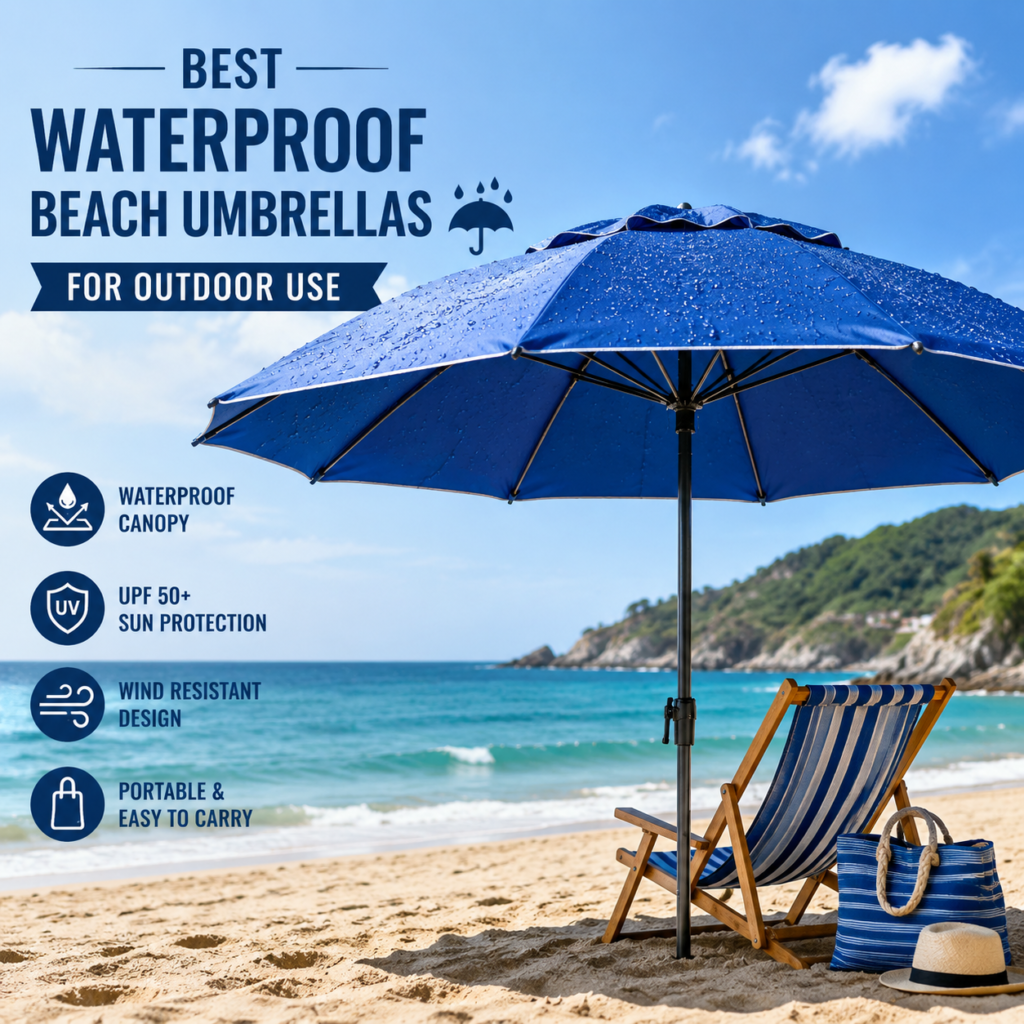
A waterproof beach umbrella model is made for outdoor use and helps protect against both sun and moisture. In practical terms, this usually means:
- The canopy is made from a water-resistant or waterproof fabric
- The frame is built to withstand outdoor conditions
- The base or anchor system helps keep it stable in wind and on sand
- The design is portable enough for beach trips and outdoor events
It is important to understand that not every beach umbrella is fully waterproof in the same way a rain umbrella is. Some are water-resistant, which means they can handle light moisture and drizzle. Others use coated fabrics that provide stronger waterproof protection.
That distinction matters because beach gear is often exposed to salt air, sand, humidity, and changing weather. A well-made waterproof beach umbrella can give you shade in bright conditions while still offering useful protection when the weather becomes less predictable. It can also be easier to use across different outdoor settings because you are not limited to perfect weather.
In simple terms, this type of umbrella is meant to do more than one job. It should shade you from direct sun, help protect fabric and gear from moisture, and stay usable after repeated outdoor exposure. That is why the details of the canopy, pole, ribs, and anchor matter as much as the label on the box.
For many buyers, the phrase also implies convenience. A dependable outdoor umbrella should open easily, pack down without a struggle, and fit into a regular vehicle or storage space. If a product is too fragile or bulky to bring often, it may not be practical even if the canopy material looks impressive on paper.
Another point to keep in mind is that “waterproof” can describe different parts of the umbrella. Sometimes it refers to the canopy fabric, while other times it may describe a protective coating, seam treatment, or storage cover. Reading the product description carefully helps you understand what level of weather protection you are actually getting.
Why Choose a Waterproof Beach Umbrella?
A waterproof beach umbrella gives you more flexibility than a standard sun umbrella. At the beach, weather can change quickly. A clear sky can turn cloudy, and sea spray or sudden drizzle can make a normal umbrella less useful.
Here are the main benefits:
1. Protection from Sun and UV Rays
Most people buy beach umbrellas primarily for shade. A good outdoor waterproof umbrella often also offers UV protection, which helps reduce direct sun exposure. The Skin Cancer Foundation explains why shade and UV protection matter for daily outdoor use in its sun safety guidance at Sun Protection Fact vs. Fiction.
For beach use, this matters because the sun reflects off sand and water, increasing the amount of light and heat you feel. A canopy that blocks more UV can make a long afternoon outside much more comfortable. It may also help reduce how often you need to move your chair or towel to chase shade.
Strong sun protection also matters for families with children or anyone who spends several hours outdoors at once. A shaded area can reduce glare, help keep drinks and snacks cooler, and make it easier to relax without constantly repositioning your setup. When a canopy combines water resistance and UV blocking, it becomes a more practical all-day solution.
2. Better Performance in Light Rain
If you are at the beach, park, or campsite and the weather shifts, a waterproof canopy can keep you drier for longer. That makes your umbrella more useful throughout the day, not just when the sun is out.
Even when rain is brief, a wet canopy that absorbs water can sag, become heavier, and dry slowly. A better-coated fabric sheds moisture more efficiently, which helps the umbrella return to normal use faster. This is especially helpful for families and groups that stay outdoors for hours.
This feature also gives you a little more peace of mind when the forecast is uncertain. Instead of packing up the moment clouds appear, you may be able to continue using the umbrella during a short shower or a damp morning. That added flexibility can be valuable if you like spending time outside and do not want every weather change to interrupt your plans.
3. More Durability Outdoors
Waterproof and weather-resistant materials usually hold up better against outdoor conditions, including moisture, humidity, and salt air. When you choose a waterproof beach umbrella, you are often also choosing a product that is better prepared for repeated use.
That durability matters if the umbrella will be opened and closed often, carried in a vehicle, or stored between trips. A better-built model may resist fading, fraying, and corrosion more effectively than a basic umbrella intended only for occasional shade.
Durability also affects the long-term value of your purchase. A slightly more robust frame or canopy may cost more upfront, but it can save money if it lasts through several seasons instead of one. For shoppers who use beach gear every summer, that difference is often worth paying attention to.
4. Versatility
You can use the same umbrella at the beach, by the pool, on the patio, during camping trips, or at outdoor events.
This versatility is one reason many people prefer a single umbrella that can handle multiple environments. Instead of buying one shade product for the beach and another for the backyard, you may get more value from a model that balances portable design with weather protection.
If you are comparing several outdoor shade ideas, it can help to think about where the umbrella will spend most of its time. A casual weekend beach setup needs different features than a unit used regularly at a rental property, café, or outdoor seating area.
Versatility also matters for storage. If the umbrella can work in more than one setting, you are less likely to leave it unused in the garage. A product that moves easily from beach trips to backyard use often feels like a better investment because it supports more of your outdoor routine.
Key Features to Look For
When shopping for a waterproof beach umbrella, focus on features that improve comfort, safety, and durability.
Waterproof or Water-Resistant Canopy
The canopy material is one of the most important parts. Look for fabrics such as:
- Polyester with waterproof coating
- Olefin or solution-dyed fabrics
- Treated canopy materials with sealed seams
A waterproof coating helps repel water rather than absorb it. This is especially helpful if you expect light rain or morning dew. Sealed seams can also reduce the chance of water passing through stitch lines, which is a small detail that makes a big difference over time.
If you plan to leave the umbrella open for long periods, fabric quality becomes even more important. Thin or low-grade materials can look fine at first but may fade quickly or lose their protective finish. A better canopy should feel durable, dry reasonably fast, and stay presentable after repeated exposure.
UV Protection
For beach use, waterproofing alone is not enough. The umbrella should also offer UPF protection or UV blocking fabric. This helps protect skin from harmful sun exposure.
When a product lists UPF or similar protection details, it gives you a better idea of how much sunlight the canopy can block. That is a useful measure to check if your priority is long stays outdoors, especially in hot climates or at high-reflection areas like open beaches and poolsides.
In general, the higher the level of protection and the more coverage the canopy provides, the more comfortable the shaded area will feel. That matters not only for sun safety, but also for reducing eye strain and helping people stay under the umbrella longer without discomfort.
Strong Frame
A beach umbrella should have a frame made from materials like:
- Fiberglass
- Aluminum
- Reinforced steel
Fiberglass is often preferred because it is lightweight and flexible, which can help it resist wind damage. Aluminum is also popular because it is light and resistant to rust. Steel can offer strength, but it may be heavier and require better corrosion protection.
The frame should feel balanced rather than flimsy. A well-designed frame helps the canopy stay open smoothly and reduces the chance of snapping ribs when the weather shifts or the umbrella is adjusted.
If you notice that a pole flexes too easily or the joints feel loose, that is usually a warning sign. A frame does not need to be extremely heavy to be reliable, but it should feel solid enough to handle normal outdoor movement and repeated use.
Ventilated Canopy
A vented top allows wind to pass through more easily, reducing the chance of the umbrella flipping over. This is especially useful at the beach where breezes can be strong.
Ventilation is often one of the most overlooked features, but it can greatly improve comfort and performance. A vented umbrella tends to feel steadier in changing air movement and may also reduce strain on the pole and ribs.
Some buyers only think about ventilation after they experience a gust of wind. A vented canopy can make a real difference during long beach sessions because it helps the umbrella breathe rather than act like a sail. That small design feature can improve both safety and convenience.
Sand Anchor or Auger
A sturdy anchoring system is essential. Look for umbrellas with:
- Sand screws
- Auger-style anchors
- Deep sand spikes
- Weight bags or compatible bases
Without a secure anchor, even a good umbrella may not stay in place. Since beach sand can shift easily, the anchoring system should be designed for penetration and grip rather than simple surface support.
The best anchor depends on your beach conditions. Loose sand may require a deeper screw-style base, while firmer sand may work with a spike or pole system. If you regularly visit different beaches, it may be worth choosing a setup that gives you a little extra holding power so you are not limited to one type of shoreline.
Adjustable Tilt
An adjustable tilt mechanism helps you move shade as the sun changes position. This improves comfort throughout the day.
Tilt is especially useful during late morning and afternoon hours when the sun sits lower in the sky. Instead of moving the whole umbrella, you can change the angle to keep the shaded area where you need it most.
That flexibility is useful if your group is seated in one spot for several hours. It can help you preserve shade over a chair, picnic blanket, or cooler without having to re-anchor the entire umbrella. Over time, that makes the umbrella easier to live with and more likely to be used often.
Portable Design
If you plan to carry the umbrella to the beach, weight matters. A good portable umbrella should be easy to transport while still being sturdy enough for outdoor use.
Many buyers want a simple carrying bag or strap because it makes loading and unloading much easier. If you plan to walk a distance from the parking area to the sand, every extra pound matters. Portability should not sacrifice stability, but it should make the umbrella realistic to use often.
Think about how you will carry other beach items too. Chairs, coolers, towels, and toys can add up quickly. A lighter umbrella can make your entire trip easier, especially if one person in the group has to carry most of the gear.
Waterproof vs. Water-Resistant: What’s the Difference?
These terms are often used loosely, but they are not the same.
Water-Resistant
A water-resistant umbrella can handle some moisture. It may repel light rain or splashes, but it may not perform well in heavier wet conditions.
Waterproof
A waterproof umbrella is designed to block water more effectively. The canopy and seams are treated to prevent water from soaking through.
For beach use, a waterproof or highly water-resistant canopy is usually the better choice if you want more all-around protection. If you need the umbrella to work well beyond sunny days, the stronger option is often worth it.
It helps to remember that no canopy changes the fact that wind can still be the biggest challenge outdoors. A waterproof finish helps with moisture, but the frame and anchor determine how safely the umbrella performs when conditions become less calm.
In practical terms, many shoppers do not need a fully waterproof product every single day. What matters most is whether the umbrella sheds moisture well enough to remain useful when unexpected weather appears. If your local climate is humid or changeable, a stronger weather-resistant finish can be especially helpful.
Best Use Cases for a Waterproof Beach Umbrella
A waterproof beach umbrella is useful in many situations:
- Beach days
- Poolside lounging
- Camping trips
- Park picnics
- Outdoor markets
- Backyard gatherings
- Sports sidelines
If you need shade outdoors and want a little rain protection too, this type of umbrella is a practical choice.
It is also a helpful option for buyers comparing broader outdoor products, including commercial shade solutions and accessory items such as an Outdoor Umbrella Waterproof Cover Wholesale for storage and weather protection between uses.
At the beach, the umbrella can shelter snacks, towels, coolers, and personal items from direct sunlight. At a campsite or picnic, it can create a small protected area that feels more comfortable during the hottest part of the day. On patios or decks, it can serve as an easy seasonal shade solution when a permanent installation is not available.
For some buyers, the umbrella is also part of a larger outdoor setup. That may include folding chairs, side tables, tents, or other shade products. A waterproof canopy can complement those items by creating a more complete weather-ready space.
People who host guests outdoors may also appreciate how a dependable shade product improves the overall experience. Guests are more likely to sit longer, eat comfortably, and enjoy the space when they can move under shade whenever the sun gets intense or a light shower passes through.
How to Choose the Right Size
Size matters because a beach umbrella that is too small may not provide enough shade, while one that is too large may be hard to carry or secure.
Smaller Umbrellas
These are easier to transport and work well for one or two people.
Medium Umbrellas
A good balance of shade and portability for couples or small families.
Large Umbrellas
Best for bigger groups or people who want more coverage. These may need a stronger anchor and frame.
A common beach umbrella size ranges from 6 to 9 feet in diameter. If you want maximum shade, choose a larger canopy, but make sure it matches your transport and setup needs.
When choosing between sizes, think about where you will actually use the umbrella most often. A waterproof beach umbrella for a quick solo outing can be compact, while a family setup may benefit from a larger canopy and a deeper sand anchor.
It also helps to check the amount of shade the canopy gives relative to your beach chairs, cooler, and bag. An umbrella that is technically large but sits too high may not shade the area you need. A well-sized umbrella should cover the sitting zone without feeling unwieldy in the wind.
If you regularly travel with beach gear, a folding umbrella with a shorter packed length may be easier to manage than a larger model. On the other hand, if you mostly drive directly to the beach and set up near your vehicle, a larger and sturdier canopy may be the better long-term choice.
What Materials Work Best?
The best materials depend on your priorities, but these are often recommended:
Canopy Materials
- Polyester: Affordable, lightweight, and often water-resistant
- Solution-dyed fabric: Better fade resistance and durability
- Oxford fabric with coating: Strong and weather-resistant
Frame Materials
- Fiberglass: Lightweight and flexible
- Aluminum: Rust-resistant and easy to carry
- Steel: Strong but heavier
Pole Materials
A sturdy pole helps with overall stability. Aluminum and coated steel are common choices for outdoor umbrellas.
For shoppers who want more background on fabric choices for outdoor shade products, a related guide on outdoor garden umbrella material choices can be useful when comparing durability, UV resistance, and maintenance needs.
Material quality is important because salt, sand, moisture, and sunlight can all shorten the lifespan of cheaper outdoor products. A good canopy fabric should resist fading and dry efficiently. A good pole should resist rust or corrosion. A good rib system should flex enough to absorb movement without becoming unstable.
If you are buying for repeated weekend use, it is worth prioritizing weather resistance over the lowest possible price. A slightly better material can save time, reduce replacement costs, and make the umbrella more enjoyable to use.
Also consider how the materials feel in real use. A fabric that is too stiff may be awkward to fold, while a pole that is too thin may feel insecure in gusts. The best option usually balances comfort, portability, and performance rather than maximizing just one feature.
Wind Resistance Matters Too
A waterproof beach umbrella should not only handle moisture but also perform well in wind. Beaches are often windy, and poor wind resistance can lead to damage or poor stability.
Look for:
- Vented tops
- Fiberglass ribs
- Reinforced joints
- Deep sand anchors
- A tilting design that can be adjusted against the wind
Even the best umbrella should not be left unattended in strong winds. If a forecast suggests rough conditions, it is safer to lower the umbrella or pack it away entirely.
Wind stability is also one reason many buyers compare this category with other heavy-duty shade products. If you need a more rugged option for business or frequent outdoor use, it can help to review heavy-duty patio umbrella features and see how frame strength, anchoring, and canopy design differ from a beach-first model.
Beach environments are especially demanding because the umbrella has to deal with shifting sand as well as gusts of air. A sand anchor that works well in one setting may not perform as well in loose or dry sand, so the depth and type of installation matter. If you often visit windy beaches, choose a model with stronger ribs and a more secure base system.
It is also smart to pay attention to how the umbrella behaves when partially tilted. Some models catch wind more easily at certain angles, so a stable design should still feel controlled when you adjust it for shade. This is a small detail, but it can influence day-to-day safety and comfort more than many buyers expect.
How to Set Up a Beach Umbrella Safely
Proper setup is just as important as product quality.
Step 1: Choose a Firm Spot
Place the umbrella where the sand is compact enough to support the anchor.
Step 2: Insert the Anchor Deeply
Twist or push the anchor into the sand as directed by the manufacturer.
Step 3: Angle It Correctly
Slightly angling the umbrella can improve shade and reduce wind pressure.
Step 4: Secure the Canopy
Make sure the canopy is fully open and locked in place before use.
Step 5: Monitor Wind Conditions
If the wind picks up, lower the umbrella or pack it away.
These simple steps can make a big difference in how well a waterproof beach umbrella performs during a full day outdoors. Even a durable model depends on correct setup.
It is also smart to think about placement before you open the canopy. Try to keep the umbrella away from foot traffic, sharp objects, and anything that could catch the fabric if the wind changes. A few extra seconds spent positioning it correctly can prevent a lot of frustration later.
If children are nearby, place the umbrella where it will not be bumped easily. Keep bags and lightweight items from sitting where they could blow away. Safe setup is not only about anchoring the pole; it is also about creating a stable area around the umbrella that reduces accidental contact.
Common Questions About Waterproof Beach Umbrella Options
Are beach umbrellas really waterproof?
Some are, but many are only water-resistant. Always check the fabric description and product details.
Can I use a beach umbrella in the rain?
Yes, if it is waterproof or highly water-resistant. However, strong wind and rain may still make it unsafe.
Is UV protection more important than waterproofing?
For most beach users, yes. UV protection is often the most important feature. Waterproofing is an added benefit.
What is the best base for sand?
A sand anchor or auger-style base is usually the best choice for beach use.
How do I clean a waterproof beach umbrella?
Use mild soap, water, and a soft cloth. Let it dry completely before storing it to prevent mildew.
What should I look for if I plan to use it often?
If your waterproof beach umbrella will be used regularly, prioritize reinforced ribs, a corrosion-resistant pole, a vented canopy, and a carrying bag that makes transport easier.
Another common question is whether a more expensive umbrella is always better. Not necessarily. The best choice is the one that matches your weather exposure, transport habits, and how much shade you actually need. A lower-cost model may be enough for occasional use, while frequent beachgoers often benefit from a stronger frame and better canopy fabric.
Shoppers also ask whether they should choose a design with extra accessories. In many cases, a simple carrying case, tie strap, or replacement sand anchor can make the product much easier to live with. Small convenience features do not always appear in headline product descriptions, but they can improve real-world use a great deal.
Maintenance Tips for Longer Life
To keep your umbrella in good condition:
- Rinse off sand and salt after use
- Let the canopy dry before folding
- Store it in a carrying bag or dry place
- Check for loose screws or bent ribs
- Avoid using it in strong winds
- Clean the fabric regularly to prevent stains and buildup
Good maintenance can extend the life of your umbrella and help it stay waterproof longer. It also keeps the frame and fabric looking better over time, especially if the umbrella is exposed to saltwater air.
If you are comparing beach shade products with broader outdoor setups, you may also want to review a related guide on commercial patio umbrella wholesale options to understand how outdoor durability standards differ between casual and commercial use.
After each trip, drying the umbrella fully is one of the most important habits you can build. Moisture trapped in folds can lead to odors, mildew, and fabric wear. A quick rinse and air-dry routine usually takes only a few minutes but can significantly extend product life.
It also helps to store the umbrella in a cool, dry place away from direct sunlight when it is not in use. Even weather-resistant fabrics can degrade if they are left exposed for long periods when not needed.
If the umbrella includes moving parts, such as a tilt joint or push-button release, check them occasionally for sand buildup. A small amount of cleaning and light care can keep the mechanisms working smoothly and reduce unnecessary strain on the frame.
Buying Checklist for Outdoor Use
Before you choose a waterproof beach umbrella, use this quick checklist:
- Does the canopy offer waterproof or water-resistant protection?
- Does it include UV or UPF protection?
- Is the frame made from fiberglass, aluminum, or another durable material?
- Does it have a vented canopy for airflow?
- Is the anchor suitable for sand?
- Is the umbrella light enough to carry?
- Does the size fit your usual group or seating area?
- Are replacement parts or storage accessories available?
When you compare products using the same checklist, it becomes easier to see which one offers the best overall value. Some umbrellas look similar at first glance, but the details can be very different once you check the fabric, joints, and anchoring system.
If you are buying for a family, think beyond one person’s shade needs. Consider chairs, coolers, and how much room the shaded area should cover. If you are buying for travel, focus more on weight, folded size, and how easy it is to carry from the car to the beach.
You may also want to think about storage space at home. If you have limited room, a compact folded design can matter just as much as canopy size. A product that is convenient to store is more likely to be used often, which improves its practical value.
Where to Learn More About Outdoor Shade and Safety
For readers who want to dig deeper into outdoor protection, the U.S. Environmental Protection Agency offers helpful information about UV safety and sun exposure at EPA Sun Safety. It is a useful reference when comparing umbrella fabrics, shade coverage, and everyday outdoor protection habits.
Learning about sun safety can help you make a smarter purchase, especially if your waterproof beach umbrella will be used frequently during long summer days.
If you want to better understand how different shade products fit together, reviewing broader outdoor shade ideas can also help you plan a more comfortable setup for the beach, patio, or backyard. The more you know about fabric performance, anchoring, and weather resistance, the easier it becomes to choose a product that fits your routine.
That extra knowledge is especially useful if you are comparing products for more than one setting. A good outdoor umbrella for the beach may not be the same as the best umbrella for a patio or commercial space, but the basic ideas are similar: stable support, durable fabric, and effective shade.
What Makes the Best Waterproof Beach Umbrella for Outdoor Use?
The best option is the one that balances:
- Shade coverage
- Waterproof or water-resistant fabric
- UV protection
- Strong frame
- Good wind stability
- Easy portability
If you want one umbrella for several outdoor activities, focus on durability and weather resistance. If you only need occasional beach shade, a lighter and simpler model may be enough.
A well-chosen waterproof beach umbrella can make a beach day more comfortable, help protect you from changing weather, and provide reliable outdoor shade for many different settings. The right mix of canopy material, frame strength, and anchoring stability will give you the best overall value.
Before you buy, think about the weather where you live, how often you will carry the umbrella, and whether you need more sun protection or more rain protection. Those practical details matter more than a marketing label, and they will help you choose an umbrella that performs well year after year.
In the end, the best outdoor choice is the one that fits your habits. If you know you will spend long hours at the beach, choose a model with strong UV protection, a stable anchor, and a canopy that dries quickly. If your use is more occasional, focus on portability and ease of setup. Either way, a thoughtful purchase makes outdoor time more relaxed and dependable.


Add comment