
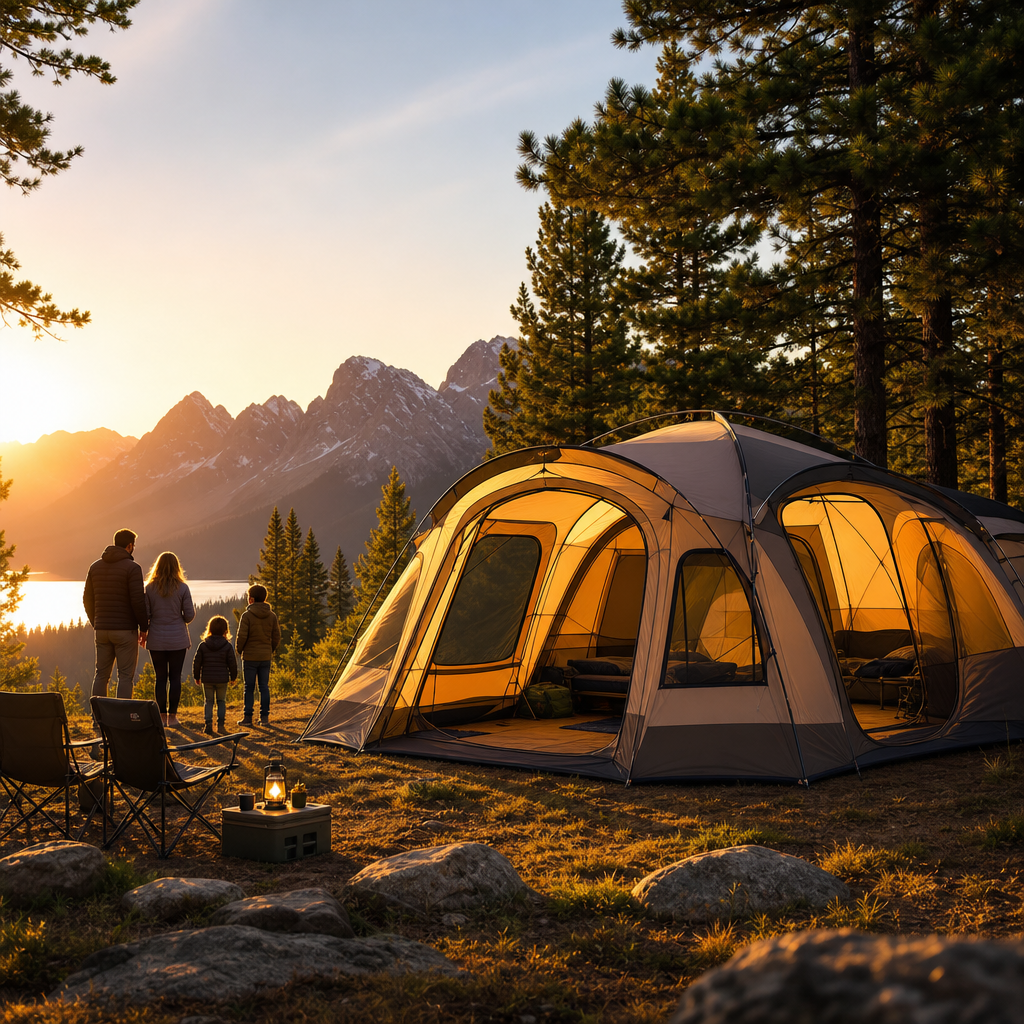
Family Tent Guide: How to Choose the Right Tent for Comfortable Camping
A family tent can make or break a camping trip. The right one gives everyone enough space to sleep, store gear, move around comfortably, and enjoy the outdoors without feeling cramped or stressed. The wrong one can lead to wet sleeping bags, poor ventilation, constant clutter, and a trip that feels more like survival than relaxation.
Whether you camp a few weekends a year or plan to spend entire vacations outdoors, choosing a family tent is about more than picking the biggest model on the shelf. Size, layout, weather protection, setup time, materials, and features all matter. A tent that works beautifully for a couple may be completely unsuitable for a family of five. Likewise, a huge tent may sound ideal, but if it takes an hour to pitch or is impossible to pack into your car, it may be more trouble than it’s worth.
This guide walks through everything you need to know about family tents: what they are, how to choose one, which features matter most, and how to match a tent to your camping style. If you’re shopping for your next outdoor shelter, this article will help you make a smarter, more comfortable choice.
What Is a Family Tent?
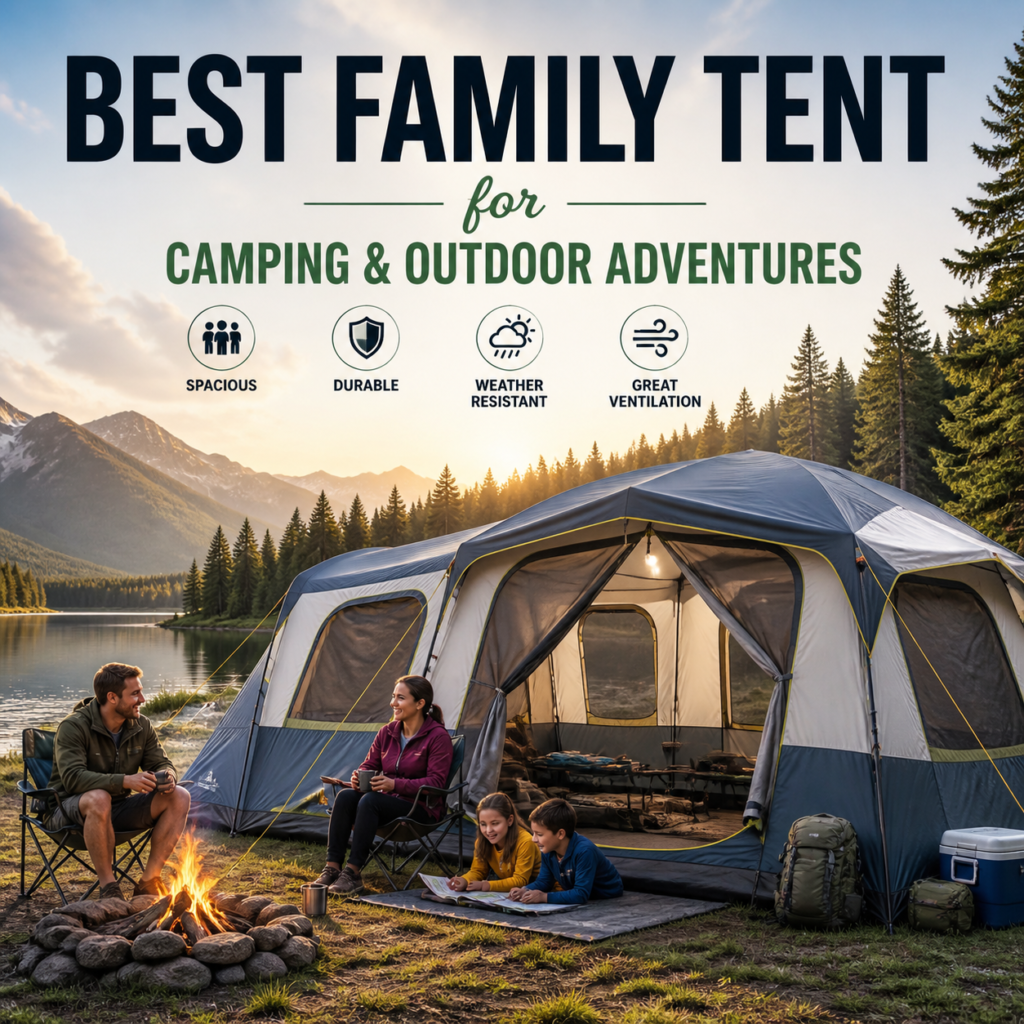
A family tent is a larger camping tent designed to accommodate multiple people, usually two adults and children, along with their gear. Unlike small backpacking tents, family tents are built for comfort, convenience, and livability rather than ultra-light portability.
They often include features such as:
- Multiple sleeping rooms or dividers
- Large vestibules or porches
- Tall center height for standing
- Multiple doors for easy access
- Good ventilation and windows
- Storage pockets and gear lofts
Family tents are commonly used for car camping, festival trips, state park stays, and long weekend getaways. Since they usually aren’t carried long distances, they can be larger and more feature-rich than backpacking tents.
Why a Family Tent Matters
Camping with a family means more than just sleeping together under canvas or polyester. You need a shelter that supports different routines, different sleeping habits, and a lot more gear. Kids may need space to move around. Parents may want privacy. Someone may need to get up in the middle of the night without stepping over everyone else.
A good family tent solves many common problems:
- It gives everyone enough room to sleep comfortably.
- It helps keep gear organized and off the sleeping area.
- It improves sleep by reducing crowding and humidity.
- It can separate sleeping and living spaces.
- It provides better protection from wind, rain, and bugs.
In other words, the right tent makes camping feel easier and more enjoyable. That matters a lot when you’re trying to keep everyone happy outdoors.
How to Choose the Right Family Tent
There is no single best family tent for everyone. The ideal model depends on your family size, travel style, climate, and how much comfort you want. Below are the main factors to consider.
1. Tent Capacity
Tent capacity is usually listed by the number of people it can fit: 4-person, 6-person, 8-person, and so on. However, those ratings are often optimistic. A “6-person” tent may technically fit six sleeping pads side by side, but it might not leave much room for bags, clothing, or moving around.
A practical rule is to choose a tent that is rated for at least two more people than will actually sleep in it if you want a comfortable experience.
For example:
- A family of 3 might prefer a 4- or 6-person tent
- A family of 4 may want a 6- or 8-person tent
- A family of 5 may need an 8- or 10-person tent
If you store gear inside the tent or have children who like extra space, sizing up is often worth it.
2. Tent Layout and Room Design
Family tents come in many layouts. Some are open-plan, while others are divided into separate rooms. The best layout depends on how your family camps.
Open-plan tents
These have one large sleeping area. They are simpler to set up and usually lighter than room-divided designs.
Best for:
- Smaller families
- Short camping trips
- People who want simplicity
Multi-room tents
These include one or more dividers, creating separate sleeping spaces. Some models have a central common area with side bedrooms.
Best for:
- Families with older children
- Parents who want privacy
- Longer camping trips
- Families that want a living area and sleeping area
Dome tents
Dome tents are often stable in wind and relatively easy to pitch. Larger dome tents can work well for families, though they may have less standing room than cabin-style tents.
Cabin tents
Cabin tents usually have nearly vertical walls and lots of interior space. They feel more like a small room than a traditional tent, which makes them popular for family camping.
Best for:
- Maximum comfort
- Standing height
- Families with gear and kids
3. Peak Height and Interior Space
One of the biggest differences between a cramped tent and a comfortable family tent is headroom. A tent with a tall peak height lets adults stand up, change clothes, and move around more easily. That is especially useful on rainy days when everyone may spend more time inside.
Look for:
- Enough height to sit up comfortably
- Standing room in at least part of the tent
- A floor plan that allows gear storage without blocking access
Interior dimensions matter just as much as peak height. A tall tent with a narrow floor may still feel tight. Check the sleeping area length and width carefully.
4. Weather Protection
A family tent should keep your family dry, warm enough, and protected from wind. Good weather protection is one of the most important things to evaluate.
Key features include:
Rainfly
A rainfly is the waterproof outer layer that covers part or all of the tent. Full-coverage rainflies usually offer better rain protection than partial ones.
Waterproof floor
Look for a bathtub-style floor that curves up at the edges to help prevent water from seeping in.
Sealed seams
Seam sealing reduces leaks at stitched areas, which are often weak points in heavy rain.
Strong frame
A well-built pole system helps the tent stand up to wind and resist sagging.
Ventilation
Weather protection is important, but so is airflow. Without ventilation, condensation can build up inside the tent, making everything damp even when it isn’t raining.
If you camp in unpredictable weather, choose a tent with a good balance of protection and airflow.
5. Setup Time and Ease of Assembly
A huge family tent is not very useful if it takes too long to set up, especially when you arrive at camp late or in bad weather. Some tents are designed for quick pitch systems, while others require more effort.
Things to consider:
- Number of poles
- Color-coded setup systems
- Hub-style designs
- Inflatable air tent systems
- Freestanding vs. stake-dependent tents
If you camp with young children, quick setup matters even more. A tent that can be pitched in 10 to 20 minutes may be much more practical than one that takes 45 minutes or more.
6. Weight and Packed Size
Since family tents are usually used for car camping, weight may not be the biggest concern. Still, a very large or heavy tent can be cumbersome to transport, unload, and store.
Before buying, check:
- Packed weight
- Carry bag dimensions
- Whether it fits in your vehicle
- How easy it is to repack after use
A tent with all the best features may still be inconvenient if it barely fits in the trunk or requires multiple people to carry.
7. Ventilation and Climate Comfort
A family tent can get stuffy quickly, especially when several people sleep inside. Good ventilation helps control temperature and reduce condensation.
Look for:
- Mesh windows
- Roof vents
- Adjustable ground vents
- Mesh ceiling panels
- Multiple doors for airflow
In hot weather, ventilation is crucial. In cooler weather, a tent with adjustable vents lets you manage airflow without sacrificing too much warmth.
8. Storage Features
Camping with a family means dealing with flashlights, water bottles, clothes, shoes, snacks, toys, and electronics. Built-in storage can keep the tent more organized.
Helpful storage features include:
- Interior pockets
- Hanging gear lofts
- Loops for lanterns
- Vestibules for muddy shoes and backpacks
- Room dividers with storage options
A tent with smart storage feels much larger and more functional than one with just sleeping space.
Types of Family Tents
Not all family tents are the same. Different styles work better for different needs.
Cabin tents
Cabin tents are among the most popular family tents because they provide excellent vertical walls and roomy interiors. They often feel spacious and are ideal for longer stays at established campsites.
Pros:
- Great headroom
- Comfortable for families
- Easy to live in
Cons:
- Can be less stable in high winds
- Often heavier and bulkier
Dome tents
Dome tents use curved poles to create a rounded structure. They are usually more aerodynamic than cabin tents, which can make them better in windy conditions.
Pros:
- Good stability
- Often easier to set up
- More compact than cabin tents
Cons:
- Less standing room
- Sloped walls reduce usable space
Tunnel tents
Tunnel tents use a series of hoops to create a long, tunnel-like shape. They often offer good space-to-weight efficiency and can include separate rooms.
Pros:
- Spacious for the footprint
- Good room divisions
- Efficient design
Cons:
- Need proper staking
- Can be less stable without good setup
Inflatable family tents
Instead of traditional poles, these tents use air beams. They are often marketed as quick and easy to pitch.
Pros:
- Fast setup
- Fewer poles to handle
- Modern convenience
Cons:
- Usually more expensive
- Repairs may require special kits
- Can be bulky
Family Tent Features Worth Paying For
When shopping, some features are nice to have, while others can significantly improve comfort. Here are the ones that often make the biggest difference.
Multiple doors
Two or more doors reduce bottlenecks, especially at night. They also help with ventilation and make it easier for kids and adults to come and go without disturbing everyone else.
Room dividers
Dividers can create privacy between adults and children or separate sleeping and living areas. This is especially useful on longer trips.
Large vestibules
A vestibule is a covered area outside the sleeping room but under the rainfly. It is perfect for storing boots, coolers, and wet gear.
Darkened sleeping areas
Some family tents offer darker fabric in sleeping areas to block early morning light. This can be very helpful when camping with children who wake up as soon as the sun rises.
Electrical access ports
If you camp at sites with power or use battery systems, an access port lets you run cables more neatly through the tent.
Durable zippers and materials
A family tent gets used a lot. Smooth zippers, reinforced seams, and strong fabrics extend the tent’s life and reduce frustration.
Matching the Tent to Your Family’s Needs
The best family tent depends on how you camp. Below are a few common family camping profiles and the tent style that may suit each one.
For weekend campers
If you camp occasionally and usually stay at developed campgrounds, comfort and easy setup may matter most. A cabin tent with good ventilation and a roomy floor plan is often ideal.
Look for:
- Easy assembly
- Comfortable standing height
- Enough room for sleeping and gear
For families with younger children
Young kids often need space for movement, naps, and unpredictable routines. A larger tent with a simple layout can make life easier.
Look for:
- Extra space beyond sleeping capacity
- Separate zones for sleeping and play
- Durable flooring and easy-clean materials
For families with older kids or teens
Privacy becomes more important as children get older. A multi-room family tent can help everyone feel more comfortable.
Look for:
- Divided rooms
- Multiple doors
- A larger footprint
For all-weather campers
If you camp in spring, fall, or rainy regions, weather resistance should be a top priority.
Look for:
- Full rainfly
- Strong frame
- Good staking points
- Sealed seams and waterproof floor
For hot-weather campers
Ventilation and shade are essential in warm climates.
Look for:
- Mesh panels
- Large windows
- Multiple vents
- Light-colored fabric that reflects sunlight better
Common Mistakes to Avoid
Buying a family tent is easier when you know what not to do. Here are some common mistakes campers make.
Choosing a tent that is too small
This is the most common issue. A tent rated for the exact number of people in your family may feel tight once sleeping bags, gear, and movement are factored in.
Ignoring setup complexity
A massive tent may look perfect online, but if it takes too long to pitch or requires several people every time, it may become a hassle.
Forgetting weather conditions
A tent that works well in summer may not hold up in wind or rain. Always consider the climate where you camp most often.
Overlooking ventilation
Poor airflow leads to condensation, damp bedding, and poor sleep. A family tent should breathe well.
Prioritizing size over usability
The biggest tent is not always the best tent. Think about how you’ll use it, where you’ll store it, and how easy it is to live in.
How to Set Up and Care for a Family Tent
A good family tent can last for years if you care for it properly.
Setup tips
- Practice at home before your first trip
- Read the instructions carefully
- Use a ground tarp or footprint to protect the floor
- Stake the tent properly, even in calm weather
- Keep zippers clean and aligned
Care tips
- Let the tent dry completely before storage
- Clean dirt and debris after each trip
- Store it in a cool, dry place
- Avoid packing it tightly while wet
- Inspect poles, stakes, and seams regularly
Good maintenance helps prevent mold, broken parts, and waterproofing issues.
Example: Choosing the Right Family Tent for a Trip
Imagine a family of four planning three summer camping trips a year. They usually stay at campgrounds with car access and bring a cooler, camp chairs, clothes, shoes, and some toys. They want enough space to play cards inside if it rains.
A 4-person tent would probably feel cramped. A 6-person tent might work, but an 8-person cabin-style family tent could offer much better comfort. With a tall ceiling, room divider, and vestibule, the family would have space to sleep, store gear, and relax without feeling packed in.
Now imagine a different family of five camping in windy mountain conditions. In that case, a giant cabin tent might not be the best choice. A sturdy tunnel or dome-style family tent with strong poles and better wind resistance may be more practical, even if it offers slightly less standing room.
The “best” family tent depends on your camping environment just as much as your family size.
Final Buying Checklist
Before you choose a family tent, ask yourself:
- How many people will sleep in it?
- Do I want room dividers or one open space?
- Will I need to stand up inside?
- How much rain, wind, or heat will I face?
- How fast do I need setup to be?
- Do I need vestibule space for gear?
- Will it fit in my vehicle and storage area?
- Is ventilation good enough for warm nights?
- Is the tent durable enough for repeated use?
If you can answer these questions clearly, you’ll be much closer to finding the right tent.
Conclusion
A family tent is more than a place to sleep. It is your home base for the trip, your shelter from the weather, and the space where family camping memories are made. The best tent for your family should fit your group comfortably, handle the conditions you camp in, and make setup and storage as easy as possible.
Focus on real usable space, weather protection, ventilation, and layout rather than just the number on the label. A thoughtfully chosen family tent can turn camping from a cramped compromise into a fun, relaxing, and memorable experience for everyone.


Add comment